
Issue #288: The Case for the David Jolly & Gwen Graham Ticket
Our best chance to turn the tide

(Reader note: This is a very long article that may be truncated in your email inbox. If the article cuts off in your email, you can simply click the title, which is a link that will take you right to the full article page.)
As Florida’s qualifying week came to an end, the Democratic Primary for Governor took several turns. Originally, a primary clash between David Jolly, a former Republican Congressman turned Democrat, and Jerry Demings, the Mayor of Orange County, was expected. The primary there would have tested if Democratic voters were willing to consider Jolly or instead go with a more established Democrat. However, on June 5th, the race for Governor was shaken up when Demings announced he was suspending his campaign due to a diagnosis of prostate cancer. Prayers and well-fishes poured in from all sides of the isle.
The political impact of this was that Jolly became the overwhelming front-runner for the Democratic nomination. Then, on June 10th, Jolly announced former Democratic Congresswoman Gwen Graham, the daughter of former Governor Bob Graham, as his choice for Lt Governor. The announcement came as Reverend RB Holmes, a prominent local Black minister in Tallahassee, embraced both as the ticket to win in November.
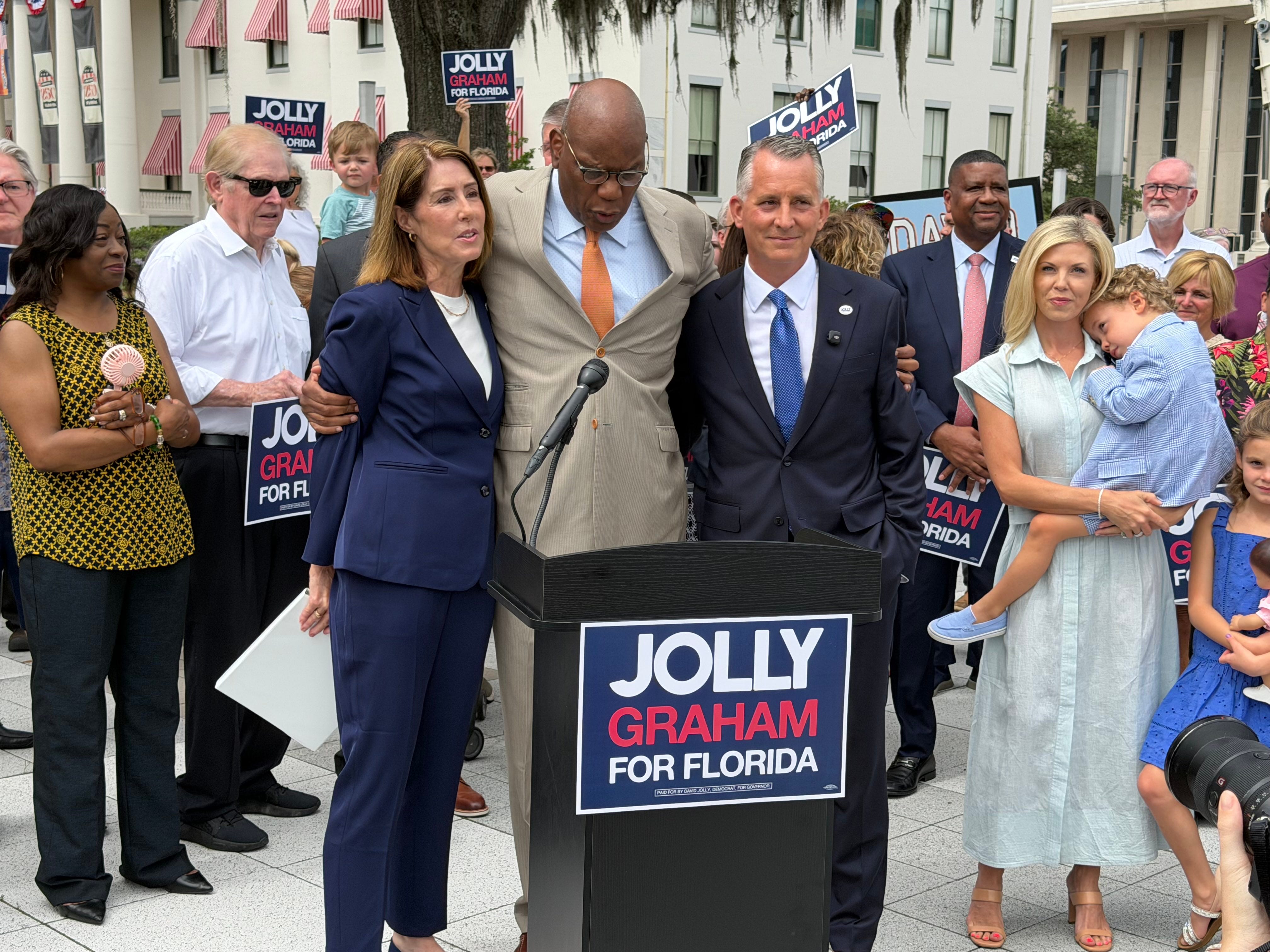
The selection of Graham, who was a moderate voice in the Democratic caucus while in the house, had led to a divided reaction in Democratic ranks. Many see the ticket, which can be framed as a bipartisan/moderate slate, as a smart choice for a state that has moved farther to the right. Others worry that the ticket offers little to the left or voters of color.
In this article, I want to make the case for the Jolly/Graham ticket to Democratic voters. This article aims to look at the state of politics in Florida, touch on how we got there, and why any path to victory MUST go this route. I want to also use this to answer and assuage any worries such a ticket.
To start, I want to look at the state of politics in Florida.
Florida’s Transition to a Red State
Florida’s shift from a pinnacle swing state and toward a Republican bastion has been well-covered in nationwide political circles. Once a state that often voted very narrowly for either side, Florida has trended further to the right in the last decade. This shift culminated in 2024 as Donald Trump won the state 13%, the largest margin for a Presidential race since 1988.
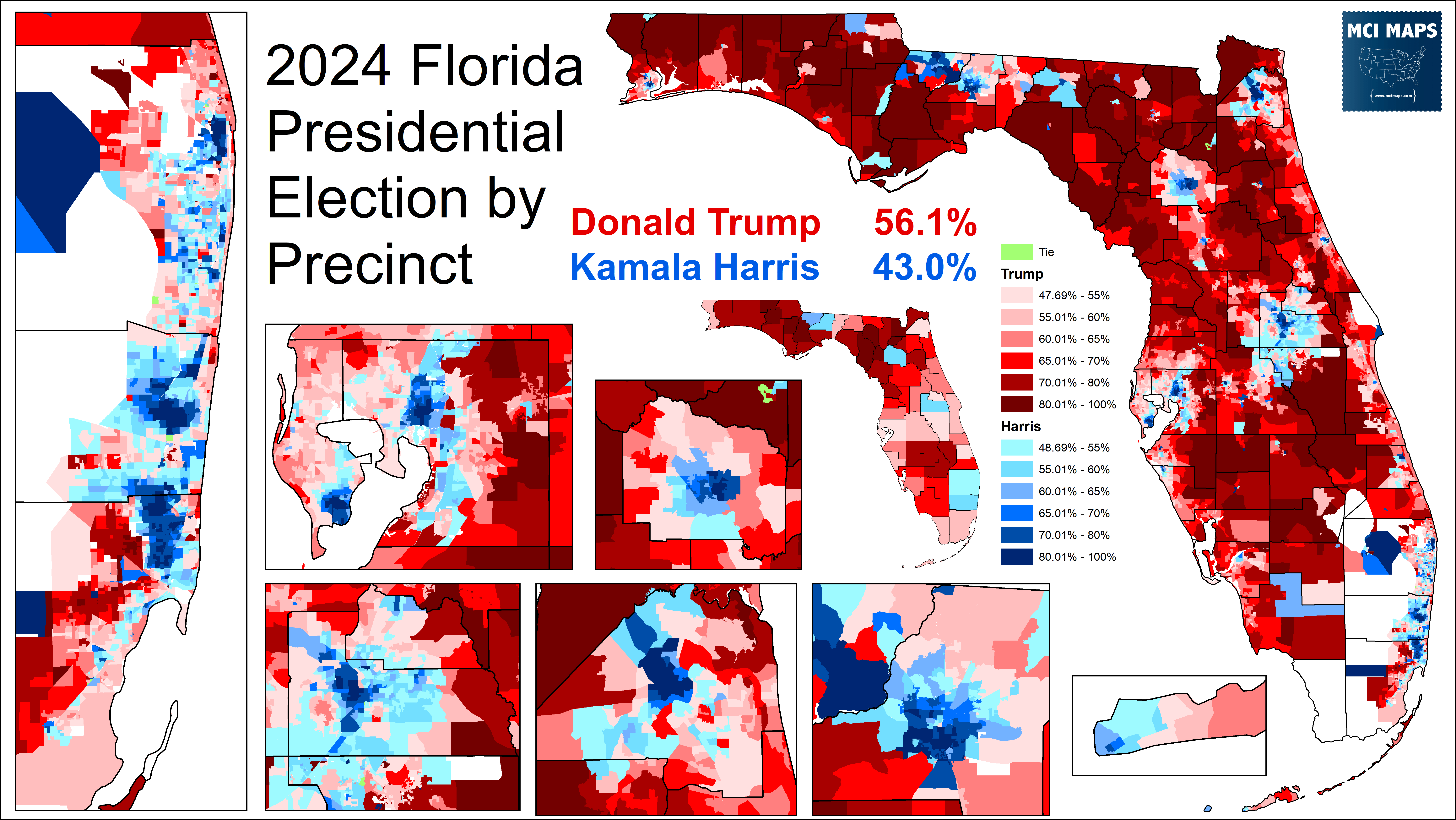
This victory for Trump was not a surprise. A high single-digits or low double-digits margin was predicted by many. It was not just that Trump had some unique appeal to Florida, but it was rather that Florida was not the swing state it once was.
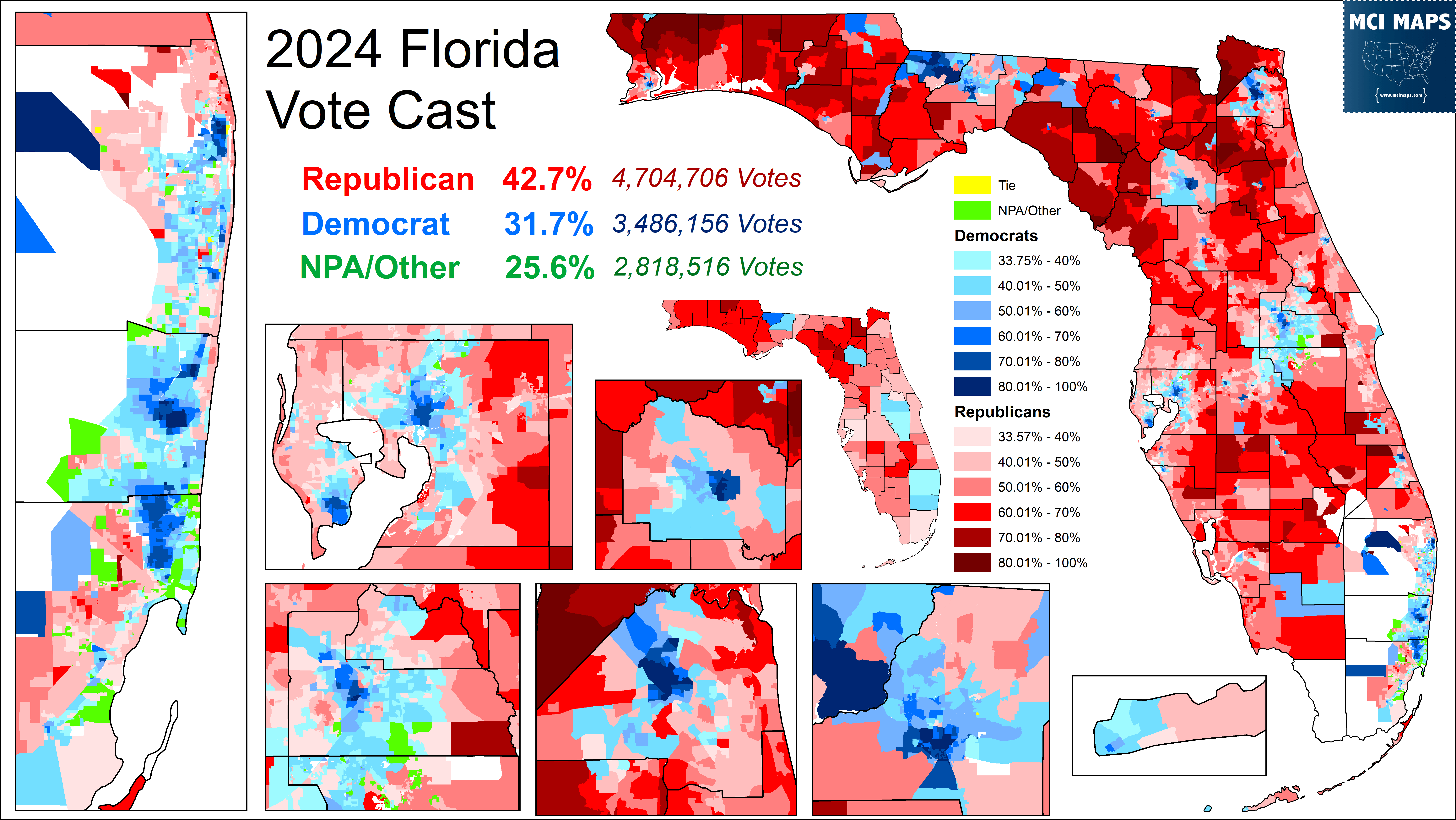
A series of electoral shifts had turned the state firmly red up-and-down ballot, with a voter registration that was solidly in Republican favor. The electorate that cast ballots was firmly Republican, with 1.3 more Republican ballots cast than Democratic ones.
How had things gotten to this point? I documented the 2024 election in these articles, in both races leading up to the vote and follow-up analysis.
However, the story of Florida in 2024 was set before the voting took place. A detailed look at how Florida went from a swing state to solidly red can be seen in my October 2024 deep dive.
!!Detailed Article: How Florida Turned Red!!
That article, 7,000 words of data and history, goes into how Florida transitioned to its modern electoral dynamic. I wrote it knowing, and saying, that Florida would go solidly for Trump in 2024. I highly recommend that piece for details, but I will offer up this summary of events below.
Florida’s Red Shift (Short Version)
For the 1990s and into the 2000s, Florida remained a very closely divided state. Statewide elections were often neck and neck; though Republicans established a modest advantage as the 2000s went on. In Presidential contests, the state leaned right of the nation but still in play for Democrats. When Obama won Florida in 2008 and 2012, his statewide margin was closer there than nationwide. Republicans maintained control of the state government from 1998 and onward. Democrats suffered several heart-breaking narrow losses for Governor in 2010, 2014, and 2018. I’ll discuss those races more in a minute. In 2016, Hillary Clinton narrowly lost Florida, but the state kept its swing state status.
The two big nails in the coffin for Florida Democrats are arguably the 2018 and 2020 election results. Despite 2018 being a blue-wave nationwide, Ron DeSantis defeated Andrew Gillum for Governor and Bill Nelson lost his Senate re-election to Rick Scott. Then, in 2020, the Biden/Harris ticket lost Florida by 3%, a worse showing than 2016 and moving Florida to the right of Arizona, North Carolina, and Georgia.
As a result of the losses, faith in Florida as a swing state, or one worth Democrats investing in, evaporated. Florida Democrats struggled to raise money and little to no national funds came in. The 2022 midterms, as a result, saw the Republicans hold a massive 20-1 monetary advantage in the state, leading to a lopsided turnout (which I covered here) that led to a string of Republican landslides. You can see more on those races here.
The 2022 midterm results only reinforced the lack of interest from national or state donors to invest in the party. As a result, a negative cycle began began, with bad results leading to no money, leading to bad results, and so on. The 2024 election was predestined by this cycle.
As Democrats in Florida debate the best path out of this negative cycle, lots of looking back at what went wrong has taken place. This has included lots of recriminations about candidates and strategy. Here the heartbreaking close Governor races of 2010, 2014, and 2018 loom large; as all three have cautionary but conflicting tales for Democrats.
Ghosts of Governor Races Past
Democrats in Florida suffered three heartbreaking losses for Governor thanks to all three being within almost 1%. Such close races lead to constant second guessing of strategy and “what went wrong.”
2010: Sink vs Scott
The 2010 Governor’s race was the first heartbreak. In that contest, Democrats had a strong contender in Alex Sink, who’d been elected State Chief Financial Officer in 2006. Sink faced off with Republican businessman Rick Scott, who’d self-funded his way into the Republican nomination. Scott had bested Attorney General Bill McCullum in a nasty Republican primary, largely winning as a Tea Party insurgent. However, Scott had very strong disapproval due to the Medicare fraud scandal his company had been involved with years ago. Sink, meanwhile, had positive approvals.
On paper, such a disparity in approvals meant Sink would have been a favorite. However, Scott had two benefits. First, he was self-funding tens of millions in his bid, allowing him to keep ahead of Sink in finances, even as she raised great deals of cash. In total, Scott spent over $60,000,000 of his own money in the Governor campaign. Second, and most important, was the 2010 midterm wound up being a massive red wave. With voters souring on Obama as the economic continued to struggle, and the Affordable Care Act being unpopular at that time, Republicans flipped Governorships and state houses across the country; in addition to taking the US House. Amid this red wave, Scott managed to narrowly win the the Governor’s contest by 1.2%.
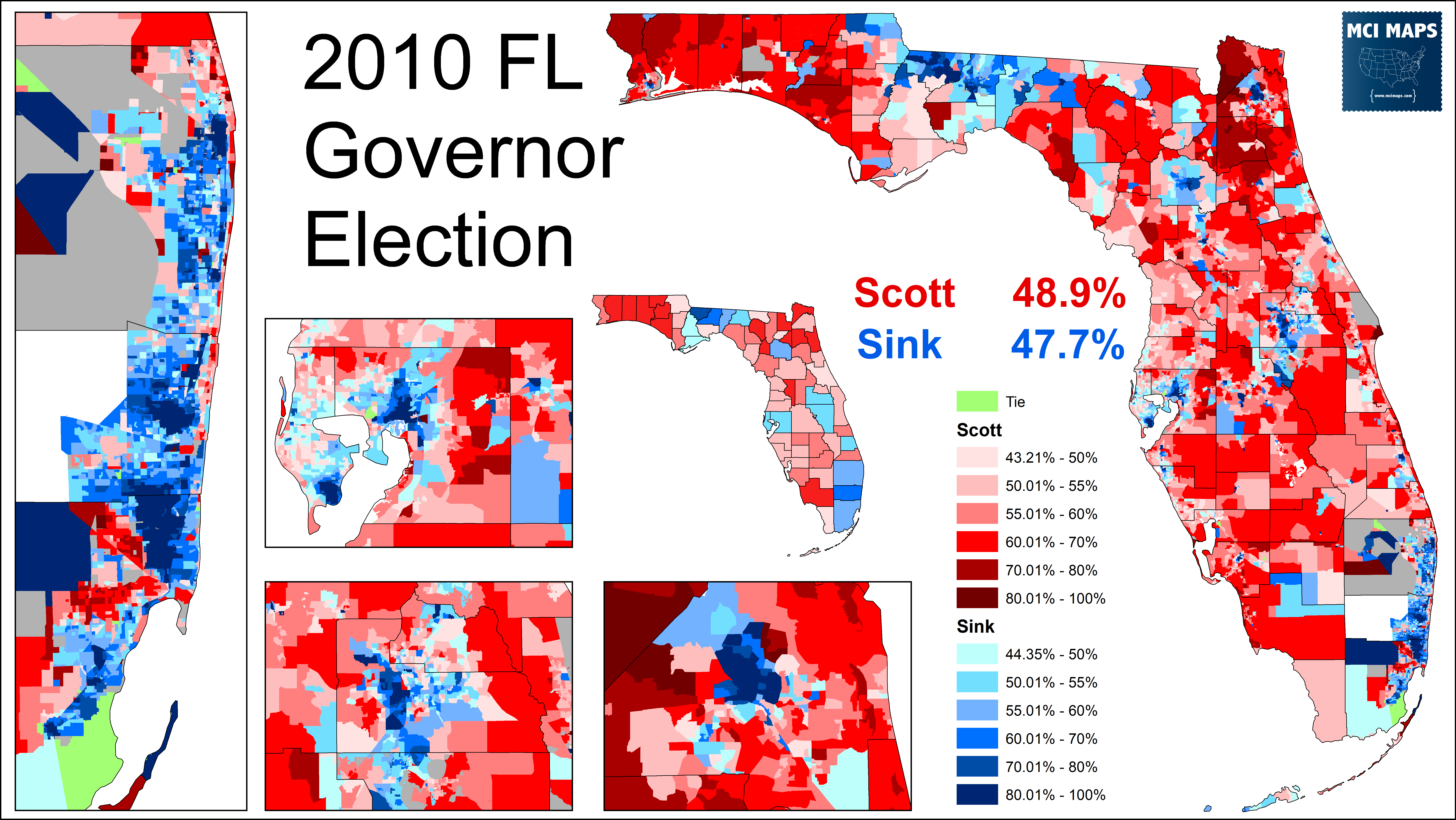
The Scott win came as Republican candidates for Attorney General, Chief Financial Officer, and Agriculture Commissioner won by double-digits. Sink, who’d run as a moderate, outperformed the Democratic slate by a wide margin. She managed to outperform Obama in many suburbs and rural communities. However, Sink suffered from lower Democratic turnout, with Southeast Florida seeing cratering Democratic vote totals. Many argued Sink had prioritized persuasion and not focused as much on get-out-the-vote. Blame there also rested on Obama’s campaign outfit, which worked hard on GOTV in 2008 but had not been as active in the midterms.
2014: Crist vs Scott
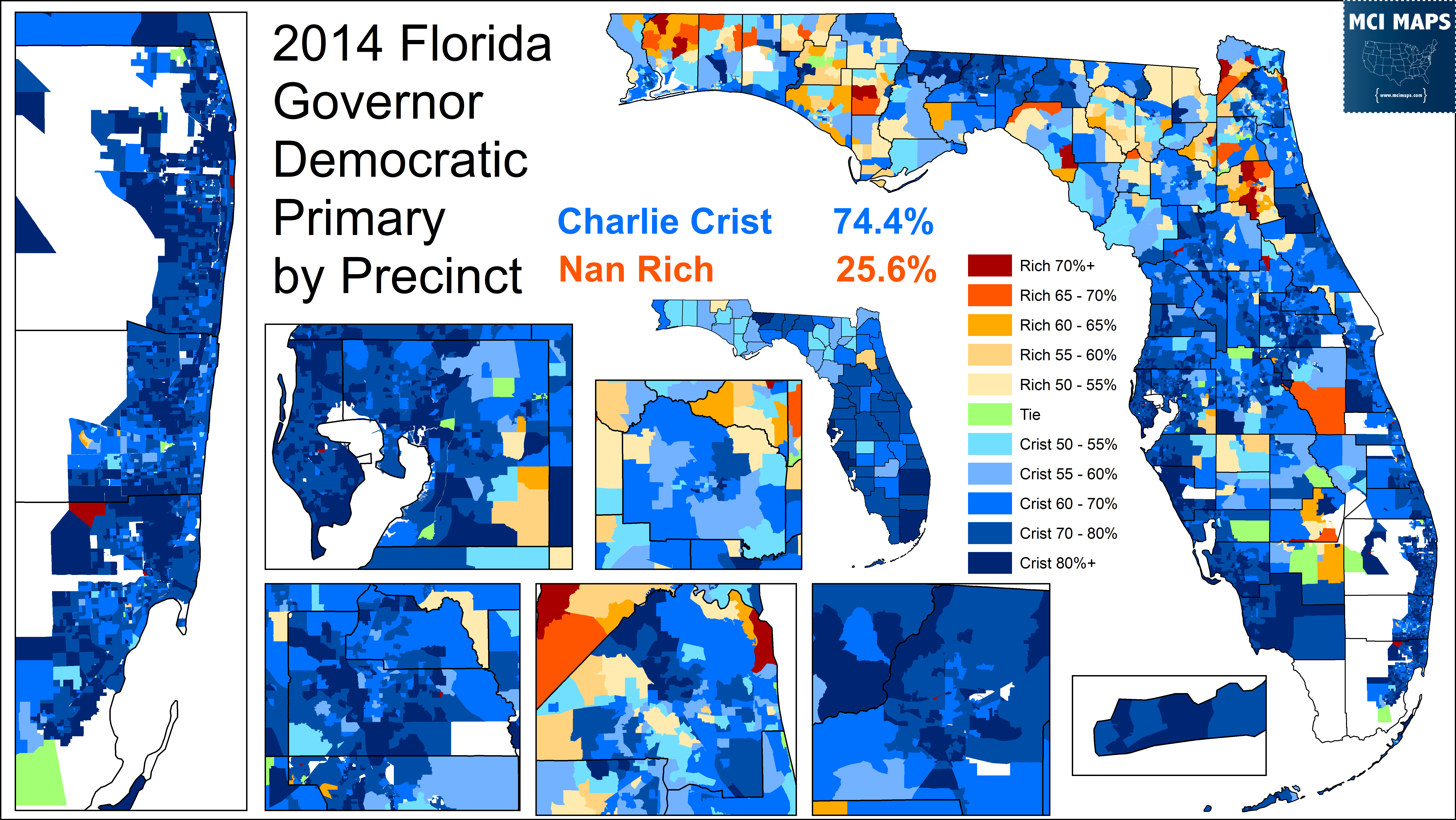
Four years later, Democrats tried again to win the Governorship. This had come after Obama won the state by 1%. Rick Scott remained unpopular and Democrats put their hopes in Charlie Crist, the former moderate Republican Governor who’d switched to the Democratic Party in 2012. Crist had to weather flack from left-wing voters and activists for his Republican past, but he easily won the Democratic Primary against liberal State Senator Nan Rich. In that primary, Crist largely lost conservative rural “protest votes” - a phenomenon I documented here - while otherwise easily prevailing in the contest.
The Crist campaign focused much more on turnout efforts, especially in South Florida. Polling had the Crist leading Scott at many points in the campaign. However, as the 2014 midterms also turned into a Republican wave, Scott got a boost. In addition, Scott quickly loaned his campaign $10,000,000+ at the last moment to run a final negative blitz on Crist, dragging his approvals down. As the results came in, Crist wound up narrowly losing by 1%.
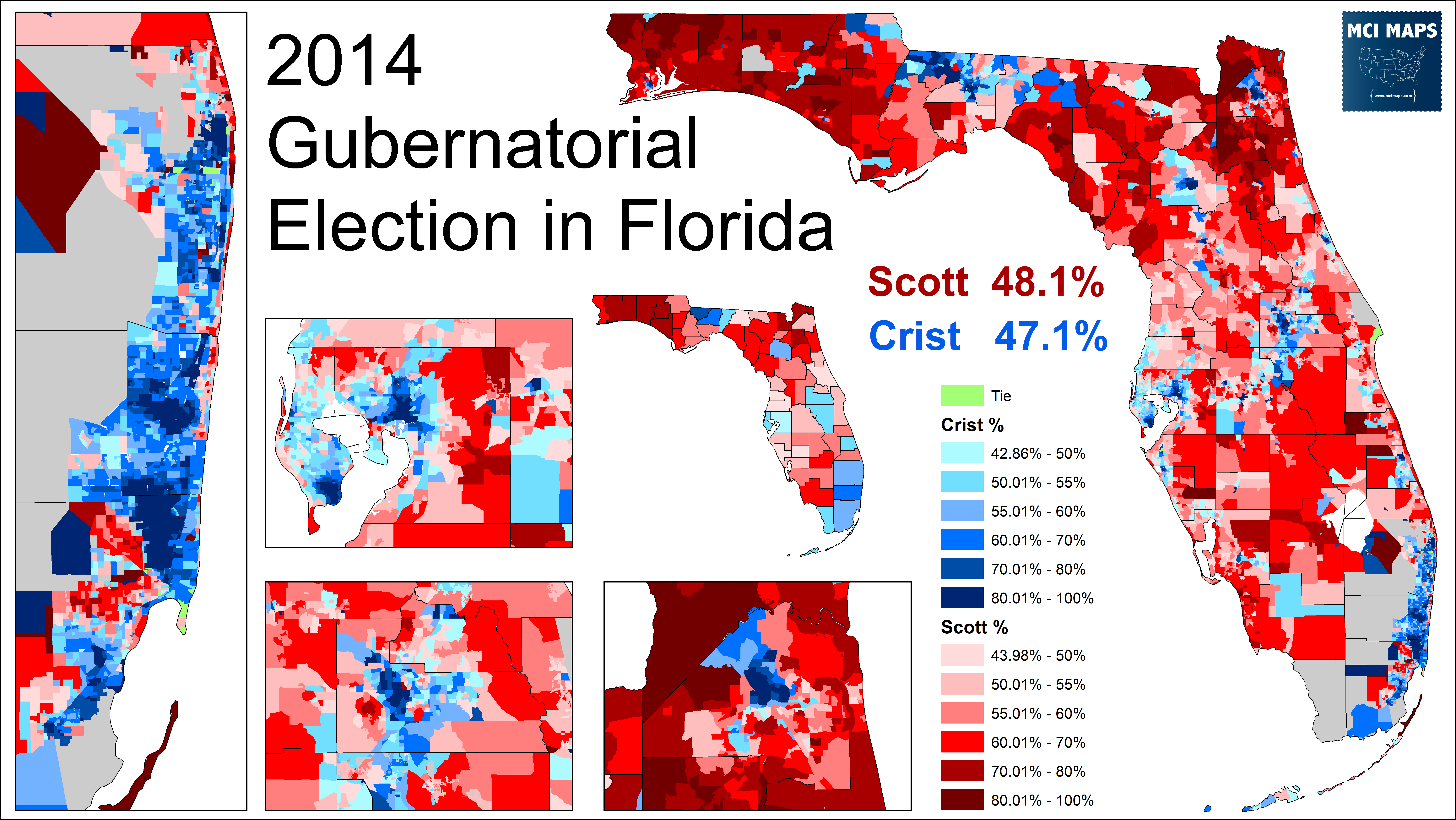
Like in 2010, Crist significantly outperformed the rest of the Democratic ticket, with cabinet races being double-digit landslides for the Republicans. Crist’s campaign was hardly perfect, and I covered many of its issues here. However, the campaign had succeeded in increasing Democratic turnout in Southeast Florida. However, Democratic turnout lagged in Orlando and Tampa, which the campaign had not spent as much time in.
Still, for all critiques, Crist would have likely won in a less red-wave environment. That midterm saw Republicans win the Maryland Governors race, almost win the Vermont Governors’ race, and flip 9 US Senate seats. Both Sink and Crist came very close, but ran in very red years.
2018: Gillum v DeSantis
In 2018, Democrats finally felt they had the opportunity to win the state Governorship. While Hillary Clinton had narrowly lost Florida two years earlier, Donald Trump was unpopular and the midterms looked likely to be a blue wave; a reversal of the 2010 and 2014 dynamics. Bill Nelson was running for re-election, being challenged by outgoing governor Rick Scott. By this point, Scott had finally become popular thanks to his hurricane response efforts and cold/technical attitude contrasting better with the boisterous Trump. In the Republican field, Congressman Ron DeSantis won the nomination thanks to the endorsement of Donald Trump, a saga I go into here.
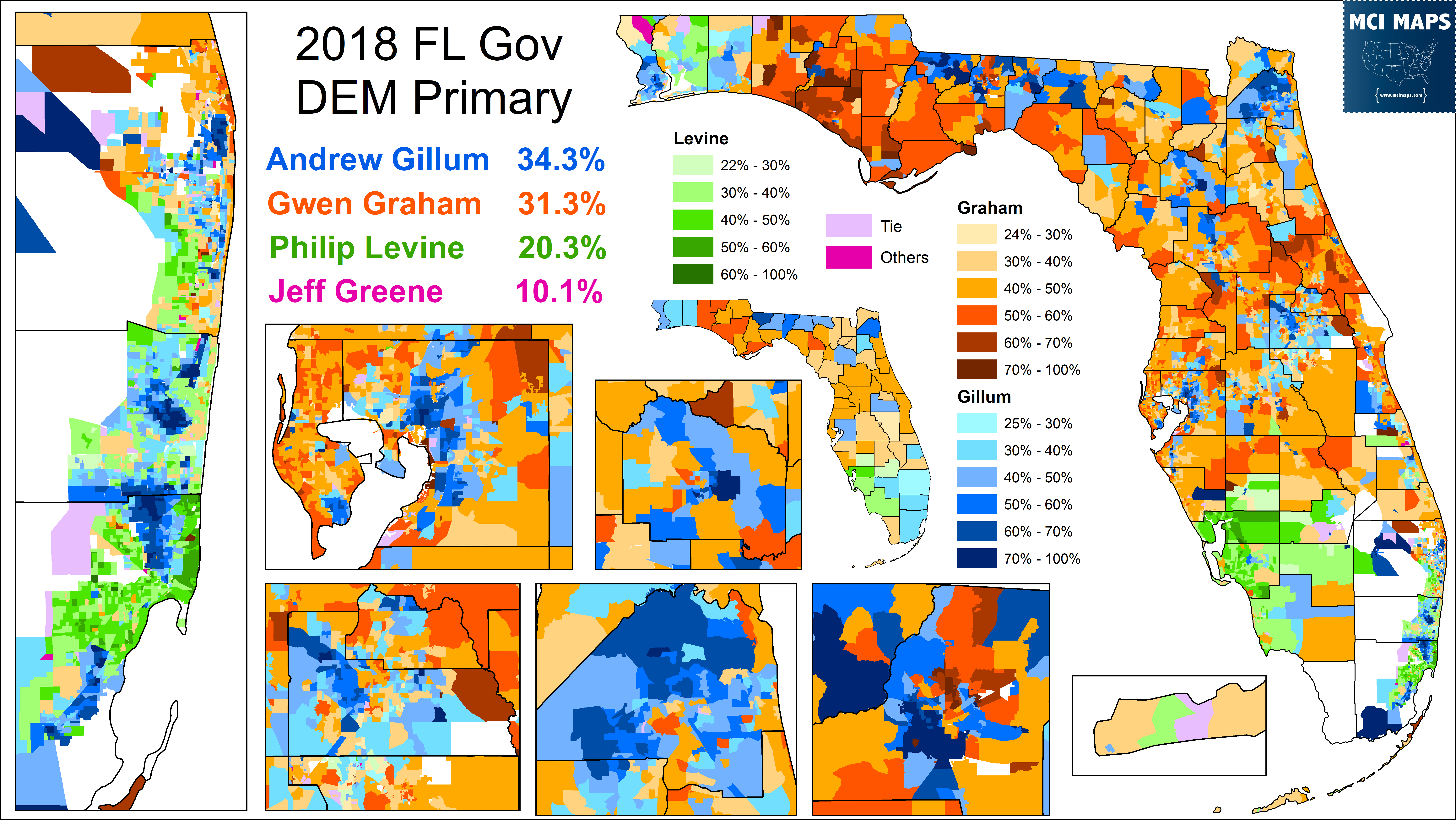
On the Democratic side, a multi-way primary took place that represented the debate within the party over ideology. The main three candidates where former Congresswoman Gwen Graham, Tallahassee Mayor Andrew Gillum, and Miami Beach Mayor Phillip Levine. Self-financer Jeff Greene also populated the race but was less of a contender. Gillum, who if he elected would be the state’s first Black Governor, occupied the left-wing side of the party while Graham and Levine were the more moderate candidates.
With a very divided field, Gillum secured a narrow plurality with a combination of support from Black voters and white liberals.
This set up a Governor clash between the liberal Gillum and the Trump-backed DeSantis. Gillum was perhaps limited by some of his more lefty-views, but was arguably more hamstrung by emerging ethics investigations going in in Tallahassee. This sordid drama I documented here. Gillum’s ties with developers in Tallahassee became a major campaign talking point.
However, the 2018 blue year made a Gillum victory still very possible, if not likely. The Gillum campaign also had a massive GOTV operation and his candidacy was believed to aid young and Black turnout. In addition, DeSantis was a bad candidate, with a campaign so disorganized that Trump dispatched operated Susie Wiles to right the ship late in the fall. Still, heading into the election, Democrats were optimistic that they’d win the Governors office. However, the heartbreak came when Gillum lost by just 40,000 ballots.
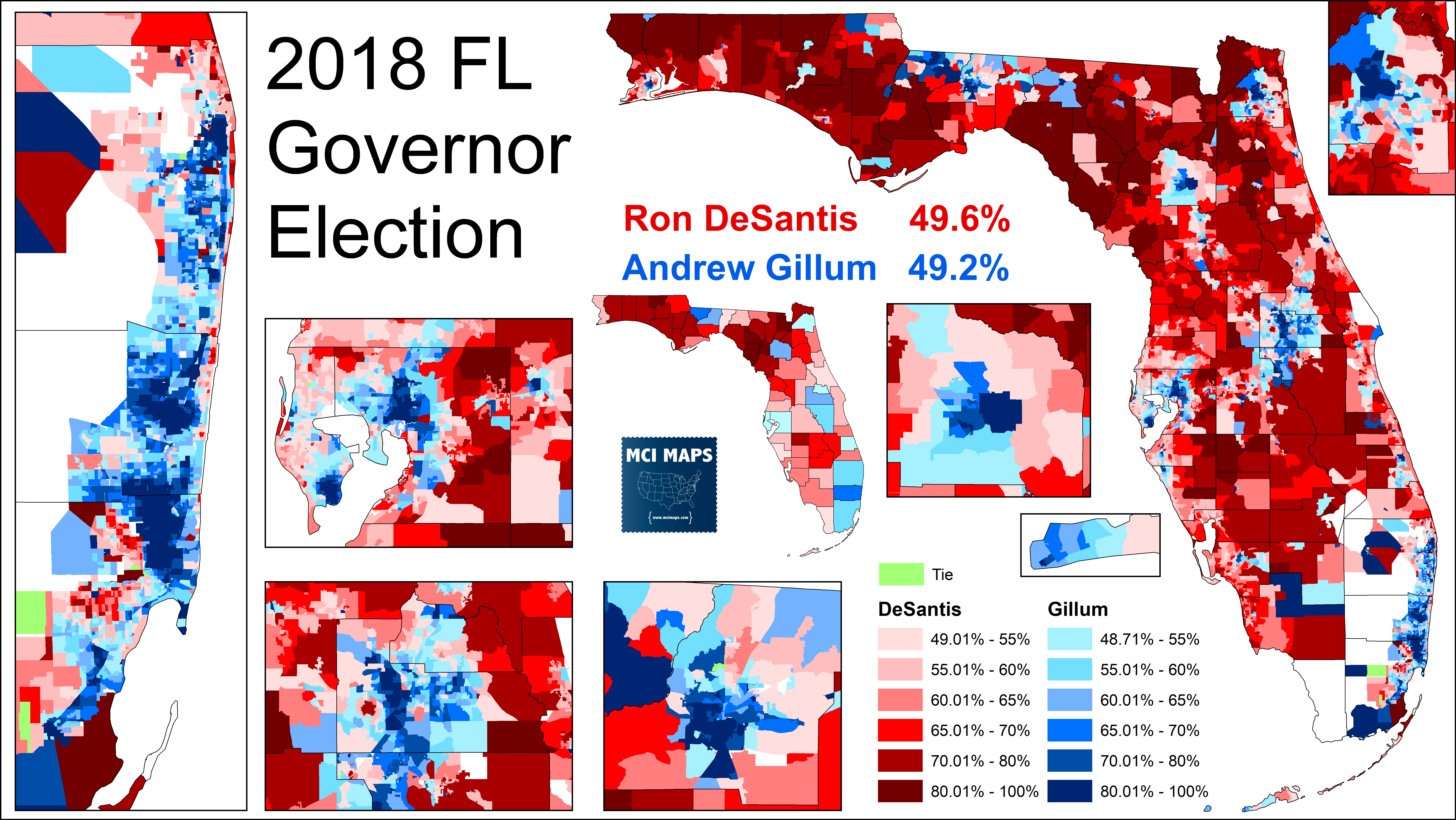
The results of the Governor’s race also came as Nelson lost to Rick Scott by just 10,000 votes, the clearest sign yet of the partisan shift that had taken place in the state. Just six years earlier, Nelson had won re-election by double digits. Democrats took some solace in Nikki Fried narrowly winning the Agriculture Commission race by around 7,000 ballots.
Comparing the Three Races
So, among the three Democratic contenders, who do you feel was the strongest candidate?
Gillum had the closest margin, but his loss also came in a blue midterm.
Sink and Crist lost in redder years, but also suffered depressed turnout, something at least partially on their campaigns.
The data paints cases for and against all the candidates. For example, below is a set of tables showing turnout in the three elections and how the candidate margins compared with the partisan makeup of the vote cast.
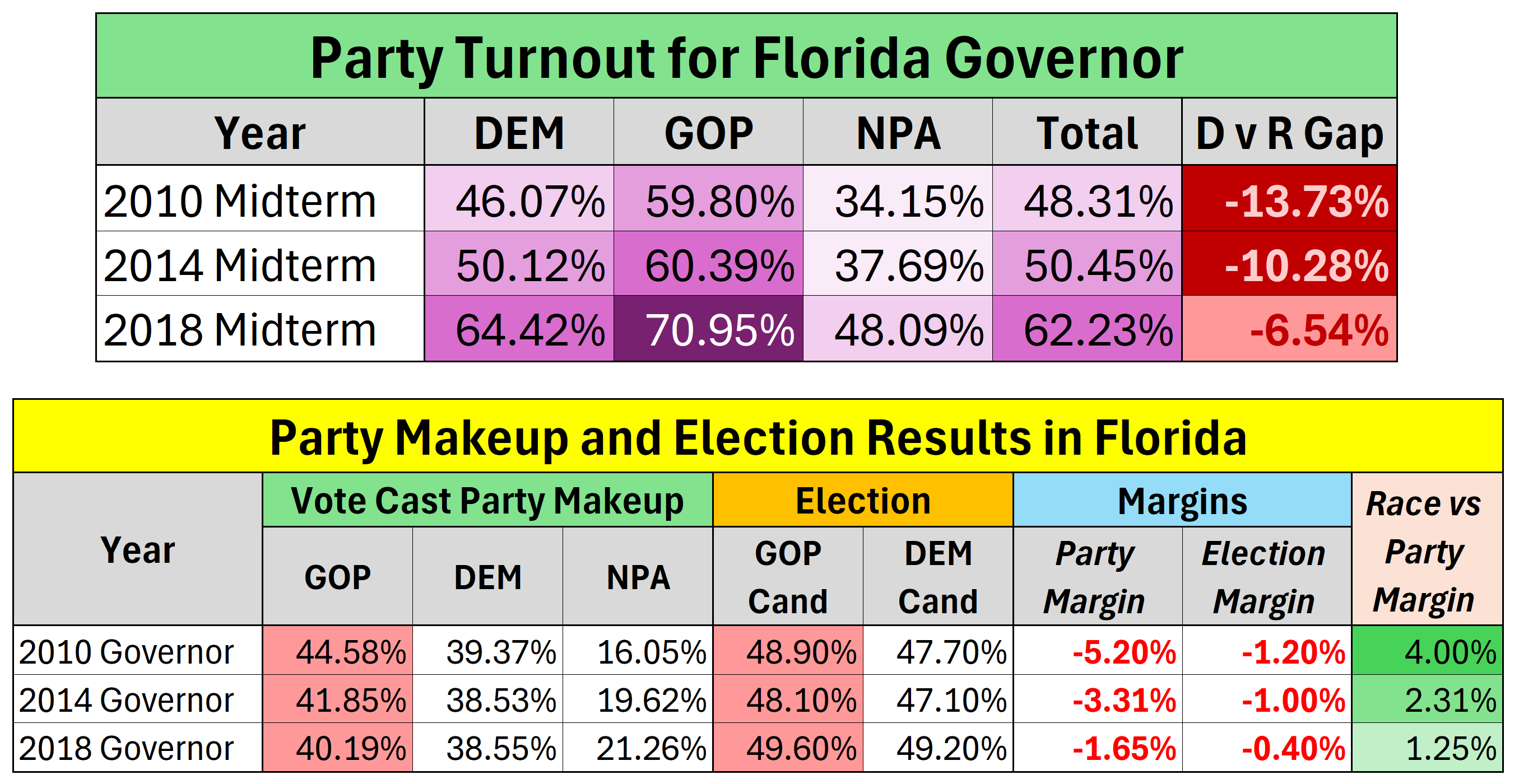
In the case of 2010 and 2014, Sink and Crist suffered horrendous turnout dynamics, with GOP turnout 10% to 14% higher than Democrats. As a result, both candidates faced Republican-friendly electorates. However, thanks to stronger crossover appeal, Sink and Crist outperformed the party margins. Gillum, meanwhile, had stronger turnout and hence the least red electorate, but outperformed the party metrics by less.
Events in all these races have items that can be blamed on the candidates and others blamed on national environments. Sink and Crist suffered from red wave midterms that saw Democratic turnout lower across many states. Gillum had a blue wave, but the loss of Nelson showed that Florida was trending in a redder direction.
2022: Crist vs DeSantis
By the time Democrats got to the 2022 midterms, nearly all focus on Florida from national forces had evaporated. The 2018 losses, coupled with Biden’s loss in the state in 2020, meant the Democratic nominee for Governor was likely to get no financial support. State Democrats were now struggling to raise any money, leaving whoever emerged as the nominee a massive underdog against DeSantis. With DeSantis looking at 2024 Presidential run, he’d built a massive financial warchest. In addition, just before the election, Republicans took the lead in voter registration for the first time in state history.
Charlie Crist, who’d been elected to Congress in 2016 from Pinellas County, defeated Agriculture Commissioner Nikkie Fried in a Democratic primary for the right to take on DeSantis. While both the Crist and Fried camps argued they were best positioned to run, the reality was neither had the money needed to win a campaign. Virtually no national money had come in to aid the Democratic ticket and Republicans held a 15-1 or 20-1 financial advantage.
This lack of funds greatly hampered voter turnout efforts; leading to an incredibly lopsided turnout dynamic. Republican turnout wound up being 15% higher than Democrats, with an electorate that was solidly Republican. As a result, Crist and the entire Democratic slate lost in landslides.
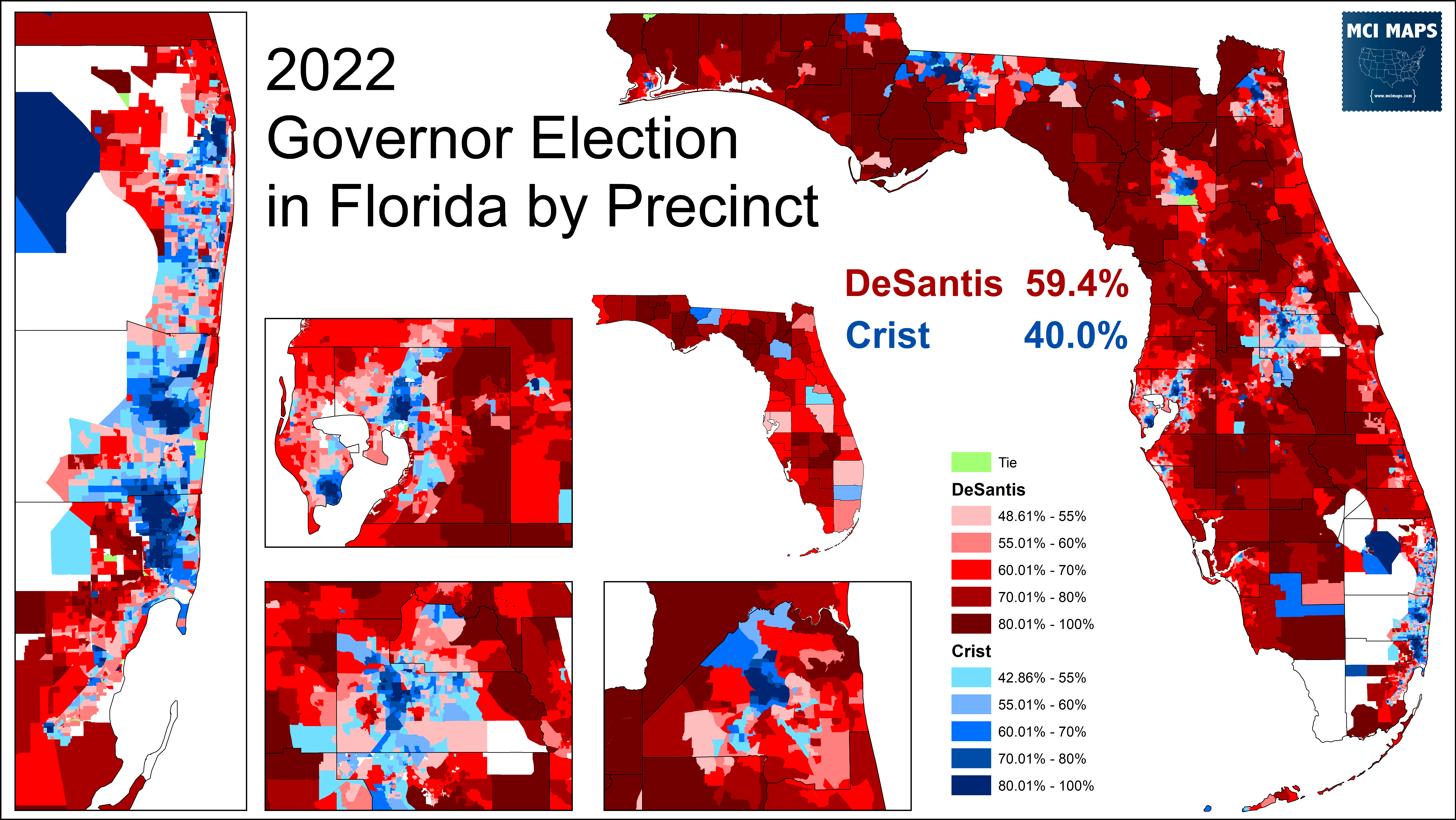
Some have laid the blame for this loss on Crist, arguing its “what happens when you give Democrats nothing to show up for by nominating a former Republican.” However, Crist had been a reliably liberal Democratic vote in the US House for six years by this point. In addition, we saw him nearly win back in 2014. No, the loss here, which also saw Val Demings losing the US Senate race by 16%, was a reflection of the bottom falling out for Democrats in Florida.
After these results, its no wonder little to zero national investment went to Florida in 2024.
The Current State of Play in Florida
Thanks to the 2022 and 2024 results in Florida, no one sees the state has anything but red. Its not Idaho or Tennessee red, but its still far from the swing state it once was. As such, the US Senate and Governor races in Florida remain ranked at Likely Republican, while states like Alaska, Ohio, and even Texas have competitive contests.
Easily the biggest issue for Florida Democrats right now is the voter registration story. I discuss the issues behind voter registration in this 2024 article, so I recommend going there for specifics. The short story is, restrictive state laws on volunteer voter registration have made any registration push a very expensive affair; something Florida Democrats don’t have the funds to engage in statewide. This has led to a consistent reddening of the voter pool.
Part of the reasoning for this increasingly-red electorate is that those moving to Florida are more conservative, often from the Midwest. Now in the above linked article, I do call into question that COVID saw some mass wave of right-wingers to Florida. The reasoning is there is no clear “spike” in registration at any point, but rather a steady stream of new registrations. These registrations, however, skew much more Republican. Few liberal-minded citizens find Florida an ideal place to move.
As of May of this year, the Republicans currently maintain a 1.4 million voter lead in registration, a full 11%.
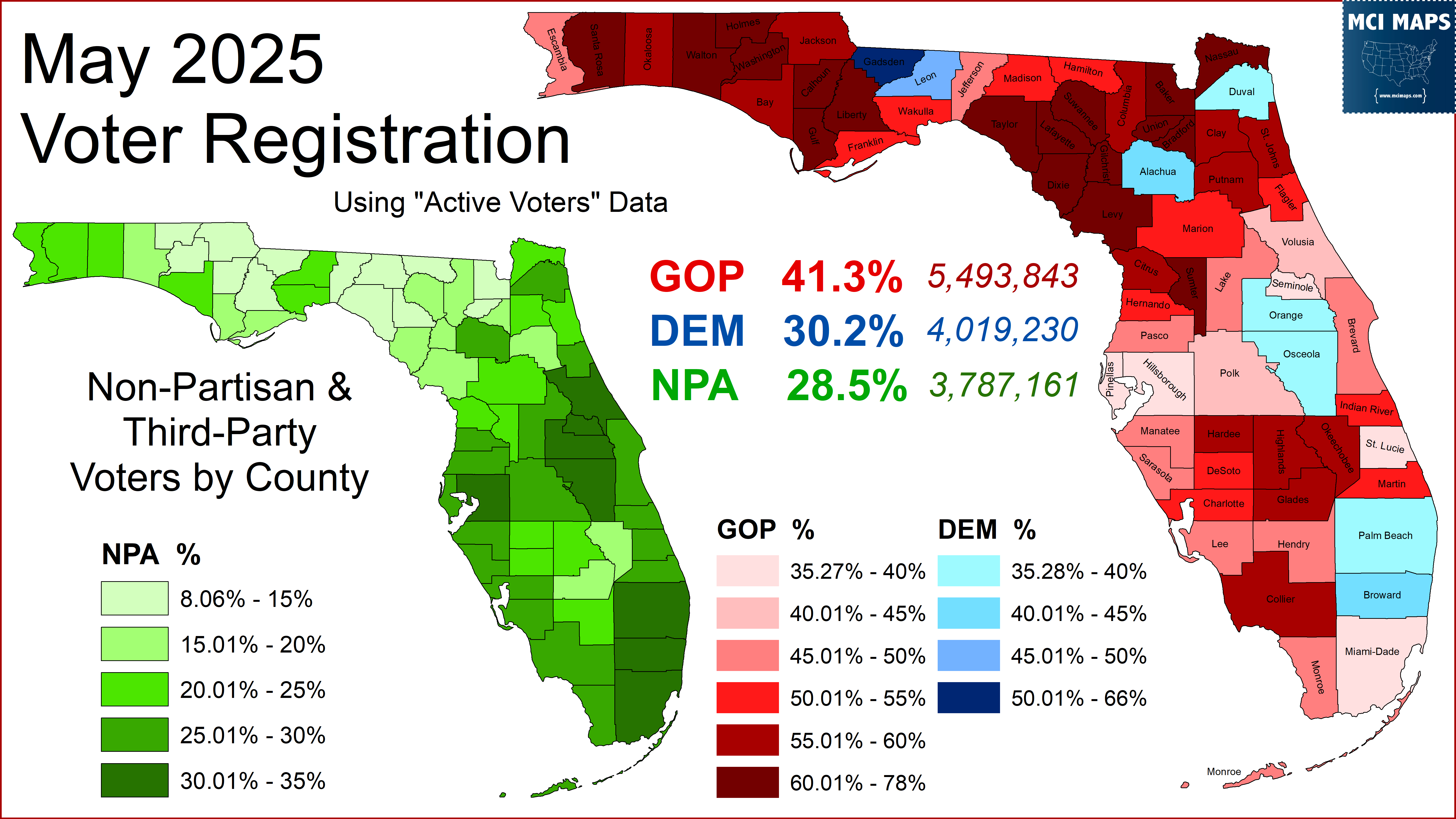
It is worth comparing this current registration situation with the last time Democrats went into a midterm during a Trump Presidency, which if the national polls are correct, will be a democratic wave similar to 2018. However, back in 2018 in Florida, Democrats had a 2% lead in voter registration. The shift since then can be seen below.
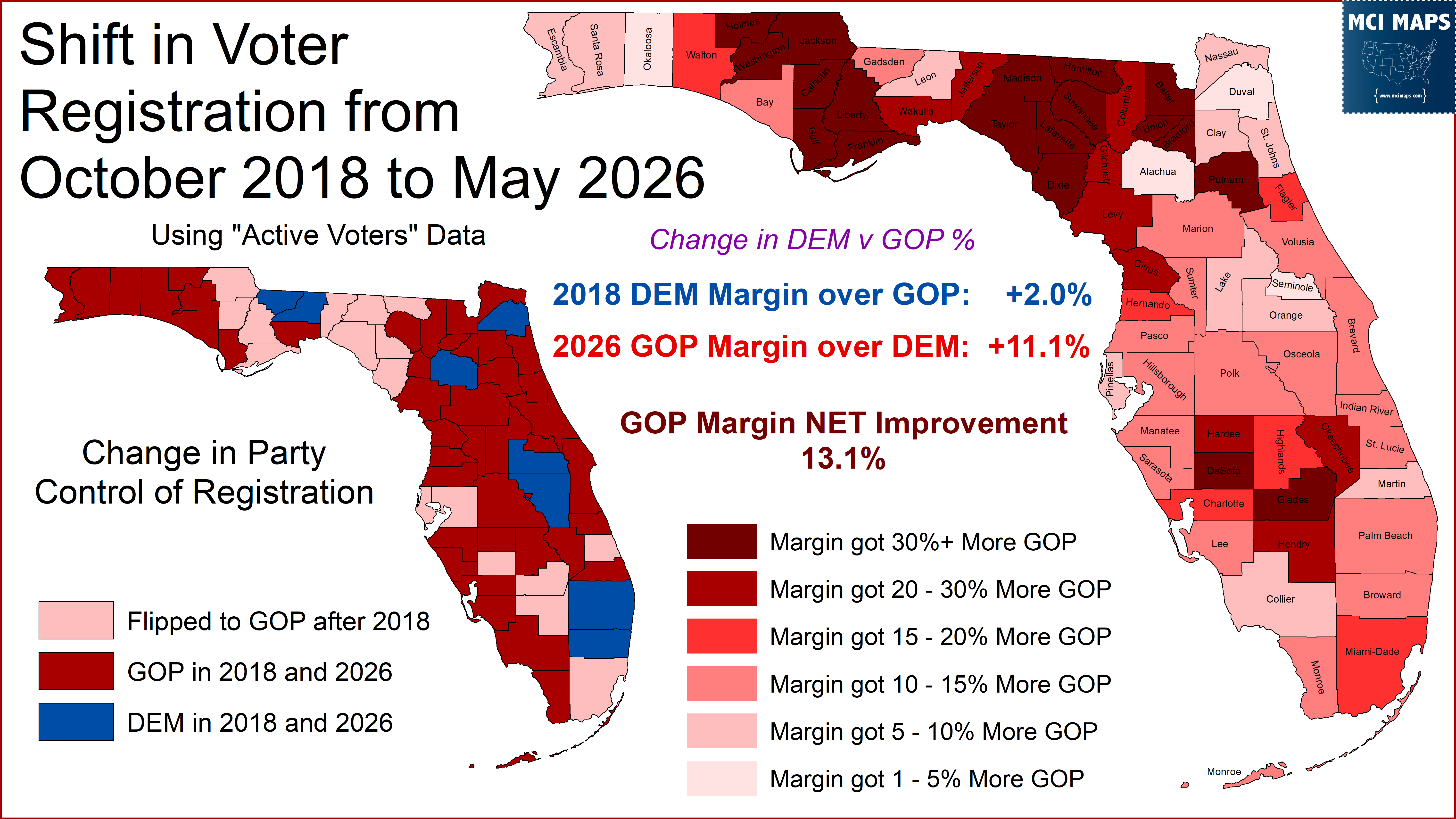
Some of the biggest percentage swings came in rural Florida, where old conservative democrats, most who largely voted Republican at the top of the ticket anyway, finally switched parties. You can read more on those votes here. The bigger story is the flipping of Pinellas, Hillsborough, and Miami-Dade to GOP pluralities.
The swings in the heavily populated counties are the biggest issue. Hence I made this map showing the raw shift in registration between the major parties. Here we see Republicans have improved massively over Democrats across the state, but especially in Southeast Florida and the Tampa Bay.
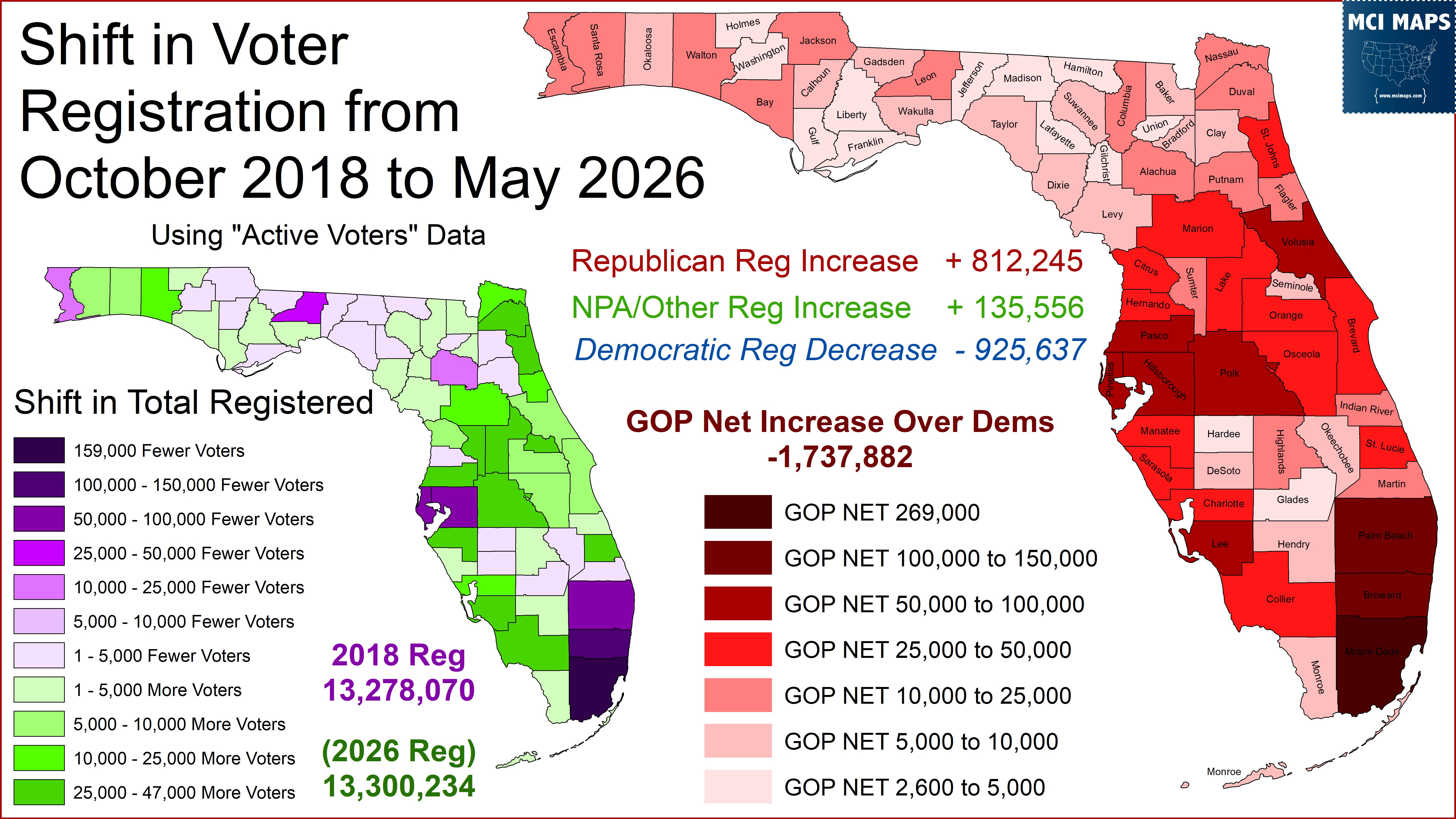
The smaller map to the left highlights an important point I delved into in my 2024 article on voter registration - which is that voter registration is declining in many places. A good deal Democratic decline is a result of being unable to make major registration pushes to replenish those that fall off the roll. As a result, as people naturally fall off the roll, fewer new people are being signed up, leading to a larger share of the population that is unregistered. Republicans, for their part as the party of older retirees and upper-income voters, are much easier able to keep their voter roll replenished. Democrats, meanwhile, struggle on this front.
The registration shift can be tracked below, going from 2012 to 2024. The second line in the graph shows the makeup of the vote cast.
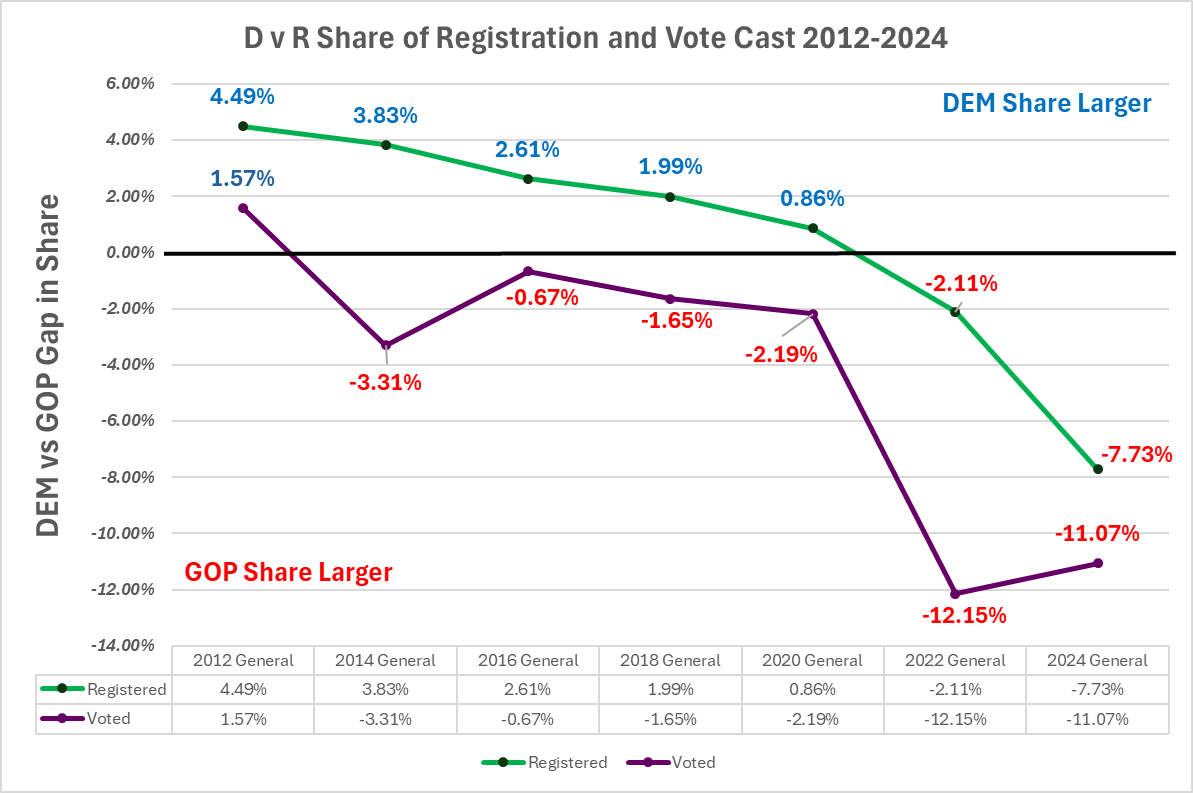
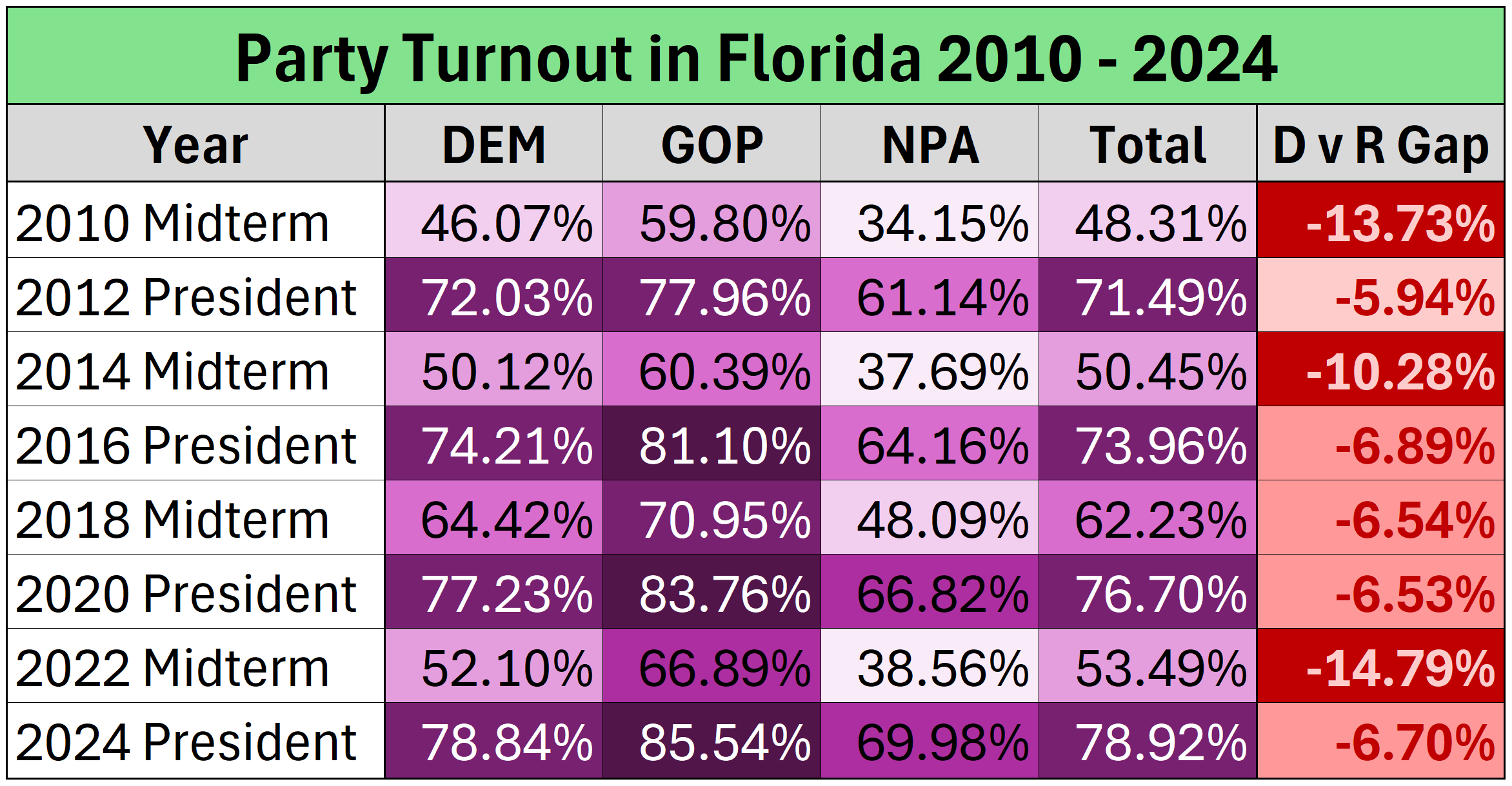
There you can see the 2022 turnout issues led to a massive drop in the vote cast. However, as we see in 2024, the registration gap led to a solid vote-cast gap there as well, even though the GOP turnout advantage in 2024 was similar to 2018.
So what does all this mean? We are looking at a VERY RED electorate in 2026. Democratic turnout could topple Republican turnout and we would still have a solid Republican vote cast. Hence the only way to possible win is with a massive over-performance of party metrics. We will need something similar to the over-performances seen in SD14 or HD87 in the recent special elections this spring. You can ready more on those contests here.
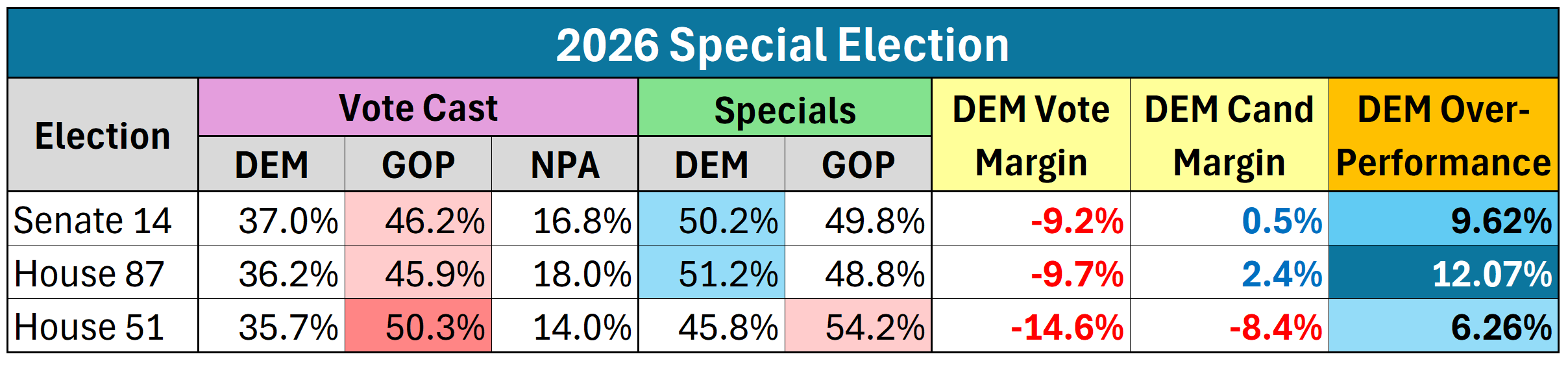
The Jolly/Graham ticket is making its case they are the best chance to get these over-performances.
So, without any more delay, lets look at David Jolly’s campaign. Who is this guy? Why is he running now? Lets discuss.
David Jolly’s Candidacy
David Jolly did not emerge in the Florida political scene until 2013. Before then, Jolly was most known as a lobbyist and attorney. He was close with Republican Congressman Bill Young, who served the Pinellas County region in Congress since 1971. In 2023, Congressman Young passed away, setting up a special election for the seat. Jolly ran for the post, earning the support of several Young family members and pledging to continue the legacy of the popular congressman. Jolly ran calling himself a “Bill Young Republican.”
Election to Congress
Jolly faced a very contentious Republican Primary. His main opponent was State House member Kathleen Peters. In the primary, Peters used Jolly’s time as a lobbyist against him; namely his donations to Democratic and Republican officials. A Peters mailer noted Jolly had given over $30,000 to Democratic officials. The primary race was nasty, but in the end Jolly won the nomination with 45% of the vote; with Peters at 31%. A more steadfast tea party candidate, Mark Bircher, got 24%.
Jolly went into a March 2014 special general election against former Florida CFO and 2010 Gubernatorial candidate Alex Sink. Democrats believed that with Sink as the nominee and with the district having narrowly backed Obama in the 2012 election, that a Democratic flip was possible. However, after an expensive campaign, Jolly narrowly edged Sink. Btw, Alex Sink has now endorsed Jolly for Governor.
Time in Congress
Jolly would serve in Congress from the spring of 2014 and through 2016. While in Congress, Jolly had a modestly conservative but fairly moderate voting record. Notable defections from the GOP came with his support for gun control, same-sex marriage rights, and supporting bans on oil drilling off the Florida coast. While initially elected an an anti-Obamacare push, Jolly would make headlines in 2017 for compliments to some parts of the law; namely the benefit of its protections when you face unemployment.
Jolly gained the most attention for being an anti-Trump Republican. Through his 2016 re-election, he refused to endorse Trump and made it clear Trump would not get his vote.
Mid-decade redistricting created a problem for Jolly in his 2016 re-election. A court-ordered remap led to a shift in the 13th Congressional district. While the 2012 lines had been gerrymandered to keep heavily Black downtown St Petersburg out of the district, the new district map made the 13th much bluer by including the the entire city. The whole remap process can be read about here. The result of the map changes was the district became several points bluerer. Then, on top of this, Charlie Crist announced he was running for the seat.
After an expensive battle, Crist edged out jolly by 4%. You can see the 2014 special Jolly won next to the 2016 loss.
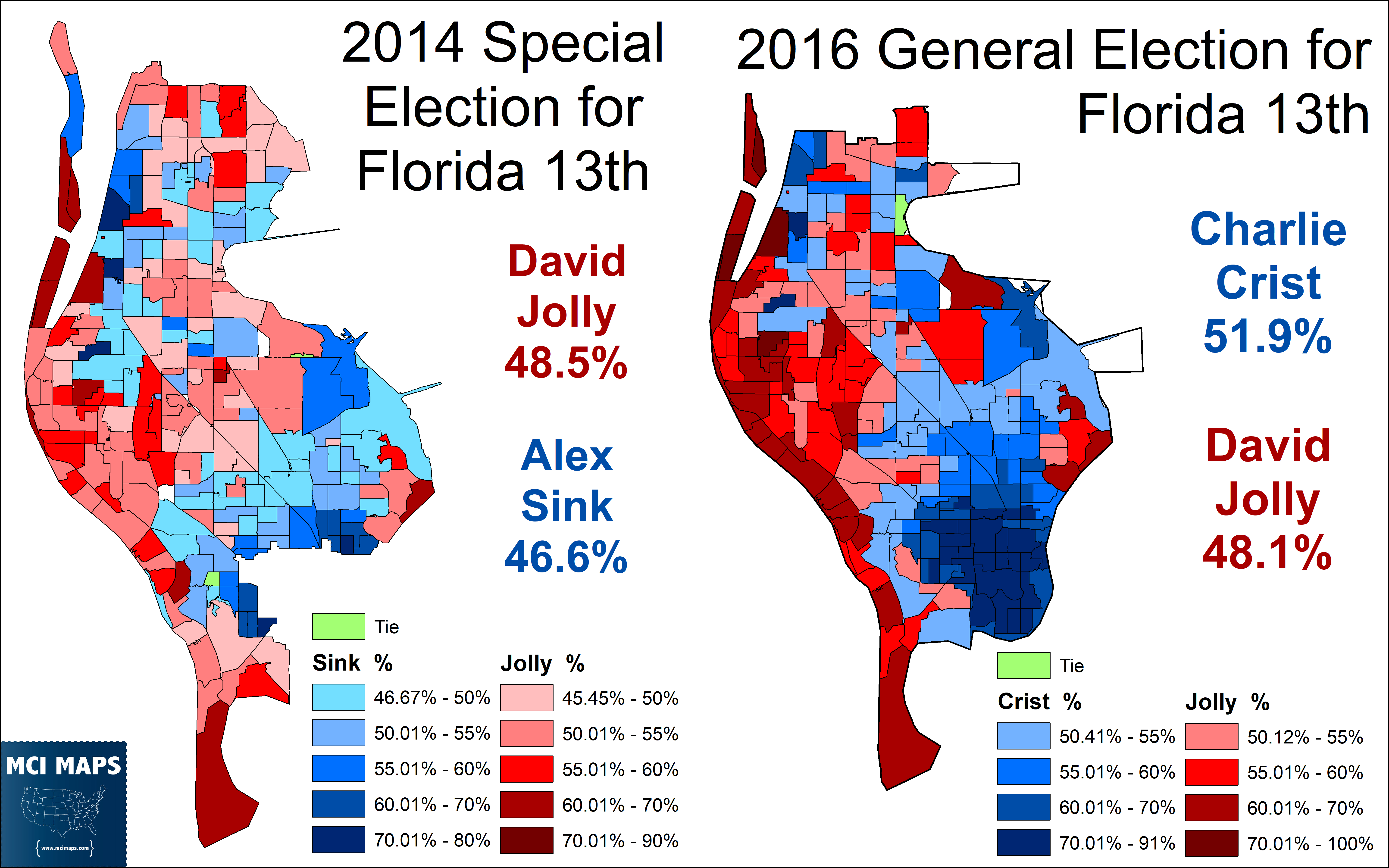
Redistricting almost surely cost Jolly the post. The new version of the 13th backed Clinton by 3%. However, had the old 13th layout been used, that would have backed Trump by 5.5%; potentially enough for Jolly to hold on. Jolly, however, likely would have suffered a primary loss in 2018 thanks to his anti-Trump sentiment; something that has happened to several other moderate Republicans.
Post-Congress, Never-Trump Republican
After leaving Congress Jolly remained a firm anti-Trump voice. Jolly even said in 2017 that it would be best if Democrats took back Congress in the 2018 midterms; namely to protect democratic freedoms. In 2018, Jolly left the Republican Party and became an independent.
Jolly has been rumored to run for office for several years; including running with Patrick Murphy in a joint ticket for Governor, but no such plans ever came to final fruition. A possible run in 2022 was also rumored but never came to pass. Jolly instead was largely seen on national TV, serving as an anti-Trump former-Republican voice.
Governor Campaign
Jolly announced his candidacy for the Democratic nomination for Governor in April of 2025. In his campaign, Jolly had run as a centrist to slightly left-of-center Democrat. In his campaign, he has not “punched left” - but kept up a campaign designed to appeal to both Democrats and disaffected Republicans. I think these more recent comments from Jolly sum it up best.
“I’m a proud Democrat. I’m excited to be a Democrat. But listen, we’ve got to build a coalition that looks different.”
This strategy contrasted greatly with moderate Democratic Senator Jason Pizzo. The Senator in question had long been rumored to consider a run for Governor. Pizzo, however, had spent much of the last year attacking the left and in doing so alienating many in the party. The Jolly entry into the primary cut off the moderate lane for Pizzo, and Jolly’s nicer image made him a far more appealing cross-over vote choice. This actually led to Pizzo QUITTING the party and registering as an independent the SAME DAY Jolly announced. I documented this whole saga here. I highlight this story to contrast it with Jolly. Pizzo constantly punched left, whole Jolly aims to build a big tent.
Jolly spent much of the last year campaigning and meeting with Democratic groups. In November, Jerry Demings, the Orange County Mayor, announced he was also running for the Democratic nomination. Demings, who originally made history in 2008 as Orange County’s first Black sheriff, was a serious contender for the primary. If you asked me how the nomination fight could have gone, I could make a case for either Demings or Jolly winning the nomination. Both candidates were still low on name ID and polling showed neither candidate with a clear lead in the primary. However, as I mentioned, due to Demings sad announcement of cancer he has withdrawn from the race. I hope only for the best on his road to treatment and recovery.
Demings’ withdraw has left Jolly has the presumptive nominee for Governor. He does not have the nomination locked up. His most notable challenge is Dotie Joseph, a State Representative from Miami who filed just last week. I’ll almost surely going write more on this primary later in the summer, after we see fundraising data. However, the general consensus appears to be Jolly is in the Charlie Crist in 2014 position, likely to secure the nomination.
Lets now look at Jolly’s choice for Lt Governor - Gwen Graham
Gwen Graham for Lt Governor
Anyone who has been involved with Florida politics for any amount of time is familiar with the Graham name. Bob Graham, who served as Governor from 1978 to 1986, and then as US Senator from 1986 to 2004, is a titanic figure in Florida political history. A reform-minded politician, Graham remained popular throughout his tenure in electoral spaces. I documented Graham’s rise in politics and elections in this article from 2024, shortly after his passing.
In 2013, Gwen Graham, one of Bob’s four children, entered the political arena herself. Gwen was serving as an administrator in the Leon County School District when she announced a challenge to Republican Congressman Steve Southerland, who’d won the seat in the 2010 midterm over longtime Democratic incumbent Allen Boyd. Graham was challenging Southerland in a district that had backed Romney in 2012. Graham, however, proved to be an incredibly strong candidate, raising large sums of money and demonstrating a retail political knack that aided in rural close-knit communities. While the race was initially seen as a likely Republican hold, the strong Graham campaign, which I documented in great detail in this 2014 retrospective, gave Southerland a fight he did not expect. As the campaign went on, the chances of a Graham victory increased
When the results came in on election night, despite it being a horrid night for Florida and national Democrats, Gwen Graham narrowly edged Southerland by 1%.
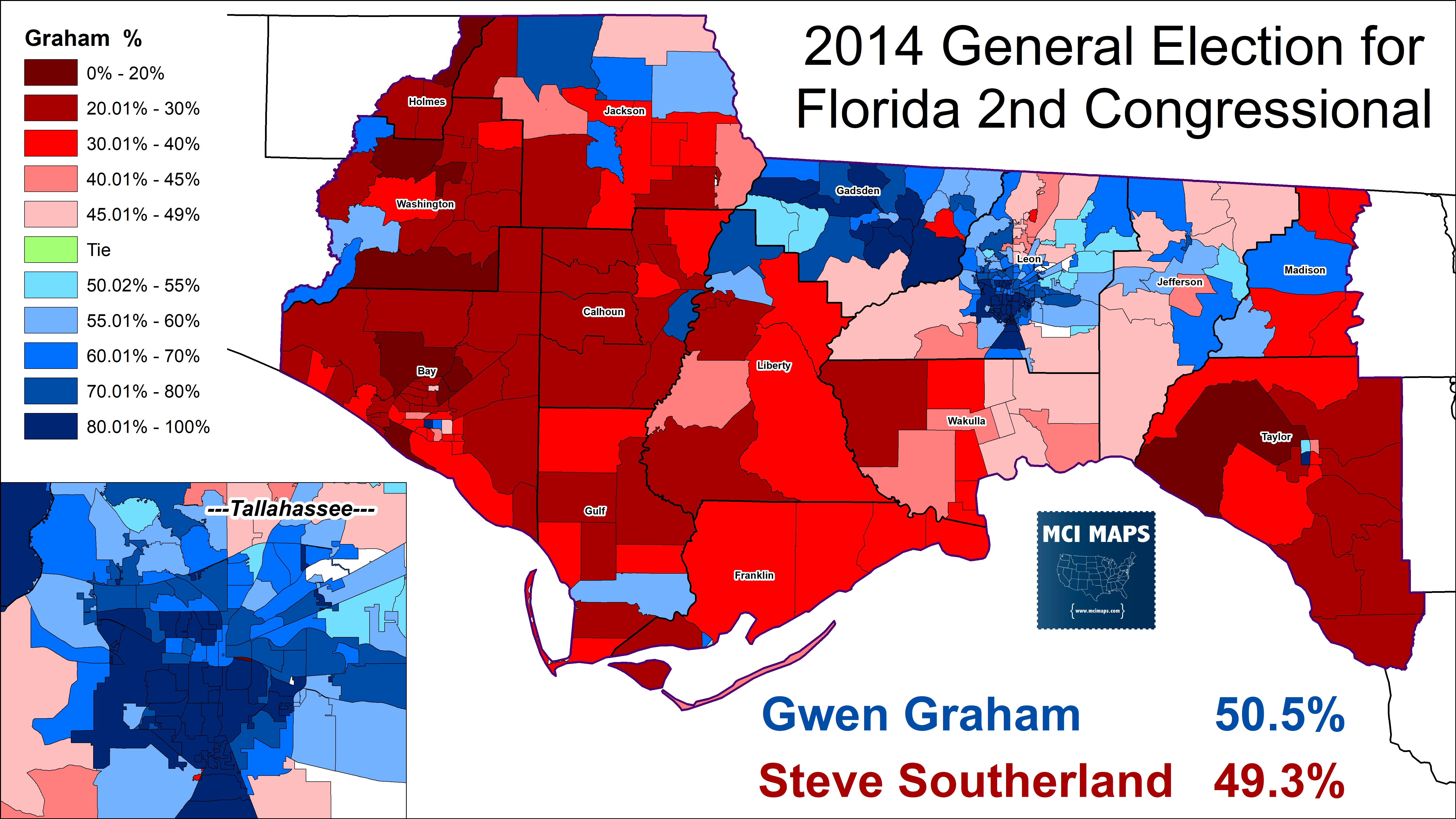
Graham’s win came as Rick Scott defeated Charlie Crist in the same seat. Graham’s win came by winning massive margins in the Tallahassee center, including flipping several Republican-friendly suburbs. She also managed to match or even slightly exceed Obama in the most heavily Black precincts of the district. The final piece of victory came from reducing losses in the rural areas. Graham’s victory made her one of only two Democratic challengers to defeat a Republican incumbent in the 2014 midterm.
Graham would be a left-of-center but moderate vote in Congress. Graham was more moderate on foreign policy and financial regulation issues, but was firmly liberal on social issues. Graham aimed to maintain a moderate image, as she was initially going to need to win re-election in 2016 in a still-reddish seat. However, as these scorecards show, Graham was hardly a right-winger.
Graham did not have a chance to see if her moderate record would secure her re-election. The 2015 redistricting process radically reshaped her district. Due to a new Black-plurality seat being drawn to connect Tallahassee and Gadsden, uniting the Black community of North Florida, Graham ended up in a very red seat that had voted almost 2-1 Republican.
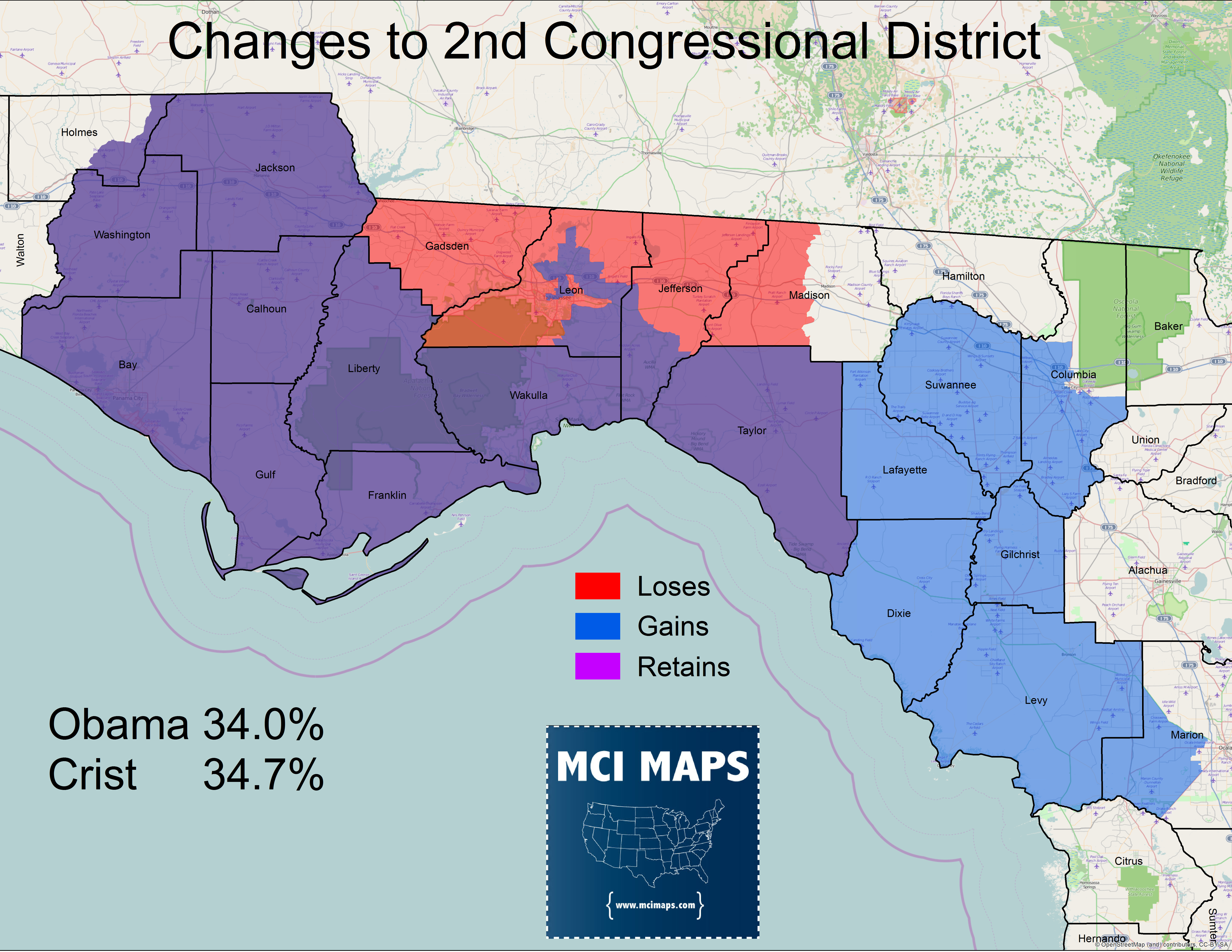
Graham was tasked with either running in a seat where any Democrat had 0% chance of winning, or making a play for the new 5th district.
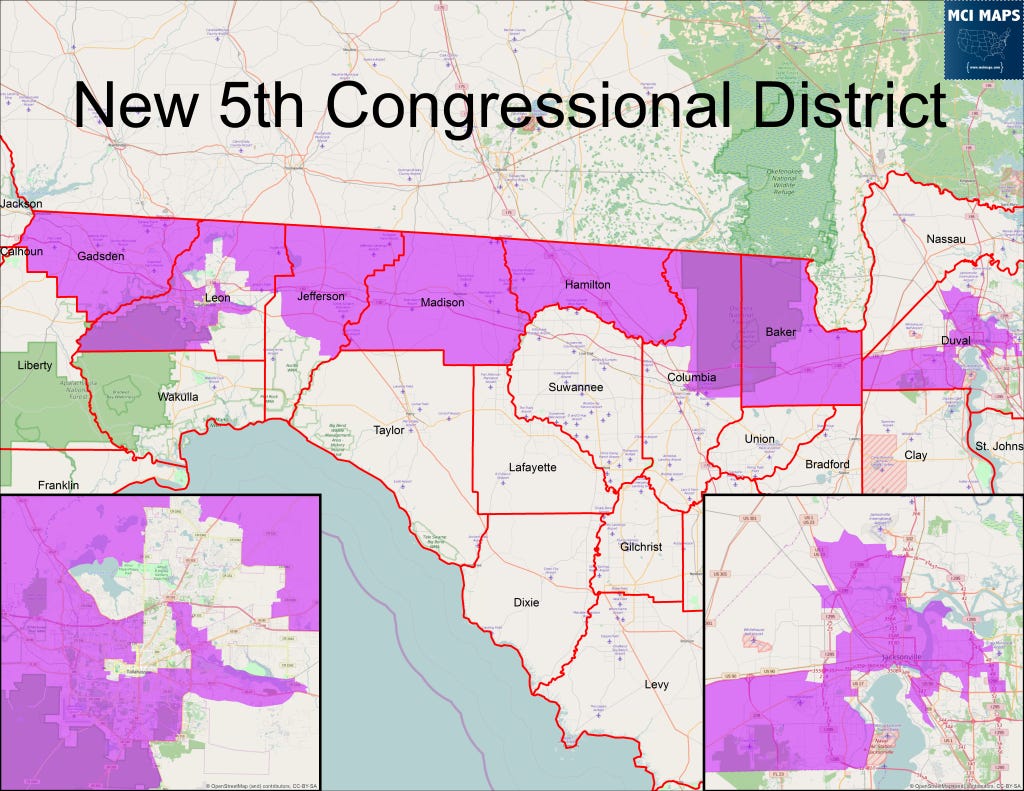
This new 5th district was heavily Democratic, and while it was majority-Black in a Democratic primary, it was still 35% white. As Black State Senator Al Lawson and Jacksonville’s Black congresswoman Corrine Brown sized each-other up for the seat, Graham could have tried to jump in and win with a split Black vote. I mention this because this is EXACTLY what Debbie Wasserman Schultz is doing in the Florida 20th this year. This move, of course, would have been morally wrong and a slap in the face to Black voters. Graham, of course, did not try this, putting her far above Schultz in my mind. Btw I wrote about the DWS drama in the 20th here.
Graham would instead finish her term in Congress, not running in 2016. As already discussed above, Graham ran for Governor in 2018, but narrowly lost the Democratic Primary. After Biden was elected in 2020, Graham would go to DC to work in the Department of Education.
Graham was considered to run for Congress again this year in the wake of Neal Dunn’s retirement in the 2nd. However, as we have seen, Graham has instead been pegged as Jolly’s running-mate.
Graham offers a unique value to the ticket, and its not just her moderate image. The same carries weight. Yes this is a very different Florida than the one of Bob Graham’s era, but the name still rings true for many. As I will discuss below, Lt Governors are rarely known and running mates normally have little to no impact on the performance of the ticket. The Graham name, however, is arguably the strongest Lt Governor pick in some time for the purposes of aiding such a ticket.
With that in mind, lets now address the concerns that have been raised.
Addressing Concerns about the Ticket
For all the strengths I believe this ticket presents, there are concerns and frustration that have bubbled up upon its announcement. I wanted to address these.
Nothing for the “Left”
One big complaint is that Jolly, a former Republican, did not try and appease the left with a more lefty choice for Lt Governor. I understand that frustration, but want to push back on that; a push-back I make as someone who is decidedly to the left of both Jolly and Graham.
The reality is, a left-wing Lt Governor does nothing really “for the left.” Florida’s Lt Governor is a very weak position, only existing to give the state someone if the Governor dies or resigns. A Florida Lt Governor only has power if the Governor decides to give it to them. With Gwen Graham, she and Jolly have long known each other from their time in Congress, and there is a greater chance she will get a role in an Administration. However, the power still rests with the Governor and there is no argument that a left-wing running mate would tilt the administration more to the left.
Choosing a left-wing running mate can easily be a cynical move, where Jolly runs with someone, but gives them nothing to do. At the end of the day, the left have to come to either trust Jolly or not, and a running mate isn’t going to be a real difference maker outside of a small activist ground. I think it is much better for the Jolly campaign to work to bring the all sides of the party together with his issue focuses and messaging, rather than pandering with a Lt Governor that is just there to be a left-wing window dressing. I will make my case on why Jolly can be trusted at the end of this piece.
Byron Donalds and the Black Community
With Bryon Donalds, a Black Republican Congressman from the Ft Meyer/Naples areas, the likely Republican nominee, some have expressed concerns about an all-white Democratic ticket bleeding non-white voters to Donalds. The argument is Jolly should have chosen a Black running mate to counter Donalds.
My first point I’d like to make also applies to the left-wing section above. The Lt Governor is a very weak position and is not much of a guarantee for any influence. It would be dishonest for Jolly to simply pick a running mate of color and use that to alleviate worries that he won’t care about their community. Instead I believe Jolly and Graham can demonstrate to Black voters that they will look out for everyone’s interests.
On the electoral calculus side, when it comes to selecting a Lt Governor pick, there has been little evidence such a running mate choice matters when it comes to demographic appeal. Rick Scott’s first Lt Governor, Jennifer Carroll, did not aid him with Black voters against Alex Sink. In 2014 Scott ran with Carlos Lopez-Cantera, which likewise did not help him with Hispanic voters. Considering how Scott did nothing with his Lt Governors, these choices were clearly pandering on his part.
On the Donalds front itself, I first want to point out that Black Republican candidates rarely outperform with Black voters. If you go back to an article I wrote on Florida Senate District 3, you can see that in 2022, when Republican Corey Simon defeated Loranne Ausley for State Senate, despite being a Black former football player for FSU, only barely outperformed in heavily Black precincts; and in some did worse than Ron DeSantis. Byron Donalds himself has shown no strong support with Black voters. In his state House runs and Congressional runs, he’s never really outperformed in the Black community. In 2020, when he was elected to Congress, the handful of heavily Black precincts in Ft Meyers saw little over-performance for him over Trump.
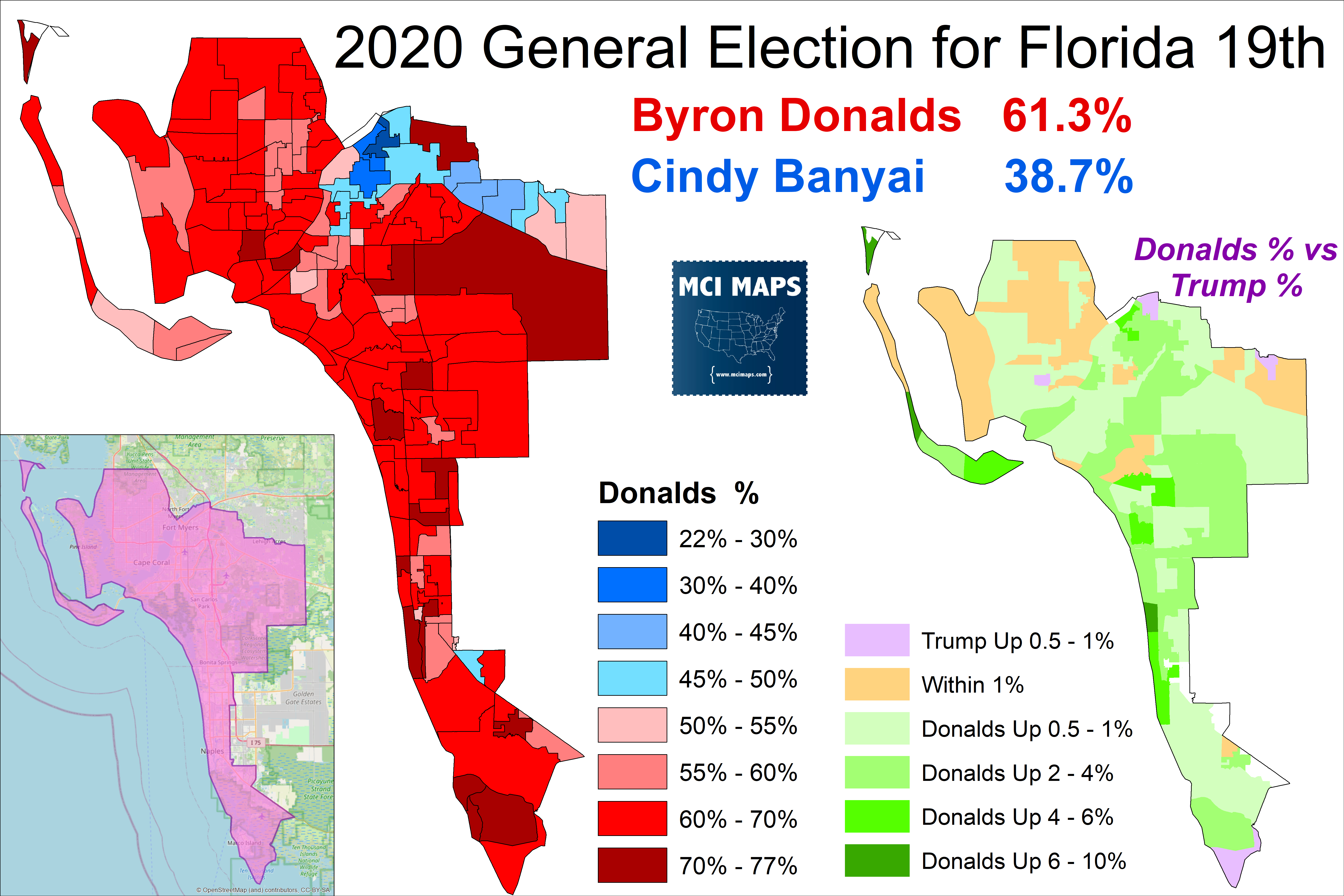
Donalds did about 2% better than Trump in the most heavily-Black precincts of the district; but those precincts were only 45% to 50% Black, and the overperformance could also be tied to white voters. Donalds was instead strongest over Trump in the lily-white suburbs of Naples. Meanwhile, when he was in the State House, Donalds never really over-performed in Hendry’s heavily Black Clewiston precinct.
Donalds not over-performing is not surprising, as he toes a very hard line on conservative issues. Back in 2023, I wrote a major article attacking Donalds for his claim that Black families were better off under Jim Crow!! Then, just two months ago, Donalds celebrated the GUTTING of the Voting Rights Act, saying such laws were not needed. Donald’s is quoted as saying…
“Systematic racism is in the past.”
As I wrote about here, the gutting of the VRA has led to racist redistricting already; with Memphis being carved up in Tennessee. However, according to Donalds, we have solved racism in America.
Donalds has never been the Black candidate of choice in his elections, losing the Black vote to white challengers. On top of this, his racial attitudes are far more right-wing than Jolly. While in Congress, Jolly was not a racist MAGA Congressman. In addition, Jolly has openly decried to the gutting of the VRA and gone after DeSantis for trying to downplay diversity issues. Jolly has said he wants to form a Office of Civil Rights in the Governor’s administration and has made it clear he believes there is still much work to be done on race relations.
“I don’t think that the disparate impact of prejudicial and racist policies of the last 100 years has now expired and now we’re a moment of great equality and equity, I don’t.
I think the disparate impact is still real today.”
I believe the best way to counter any worry of Donalds syphoning off Black is to emphasize the ways he differs from Donalds on race issues.
I also want to address a critique I’ve seen float around arguing that this ticket of Jolly/Graham is design to appeal to racists who won’t back Donalds in a general. My answer here is, no one of any political savvy thinks that racists whites would vote Jolly/Graham over Donalds. Anyone so racist as to not vote Donalds will likely just not vote, but they aren’t voting for a former Republican “traitor” and they probably aren’t pro-women either.
Also, my position is that Donalds will have little trouble consolidating the right-wing vote, including racists, regardless of the Democratic ticket is. The fact is, someone like Donalds, who attacks his own racial group, is the exact type of Black candidate racists LOVE to vote for. Someone who largely has racist attitudes can back Donalds and then brag that “see I’m not racist against anyone” and then go on about how BLM is a communist plot and that Obama was born in Kenya. Donald Trump is a massive racist and has endorsed Donalds. No, outside of a small sliver of hardened reactionaries, the racist whites will have no problem voting Donalds. I plan to do a more detailed article on Donalds and him backstabbing his own community in a future article, so keep an eye out for that.
The biggest issue for Jolly/Graham will be working hard to ensure Black turnout is up. This is not an issue that just a Jolly ticket will have. If you go to my 2024 Florida turnout analysis, you will see that even Harris struggle with youth and Black turnout.
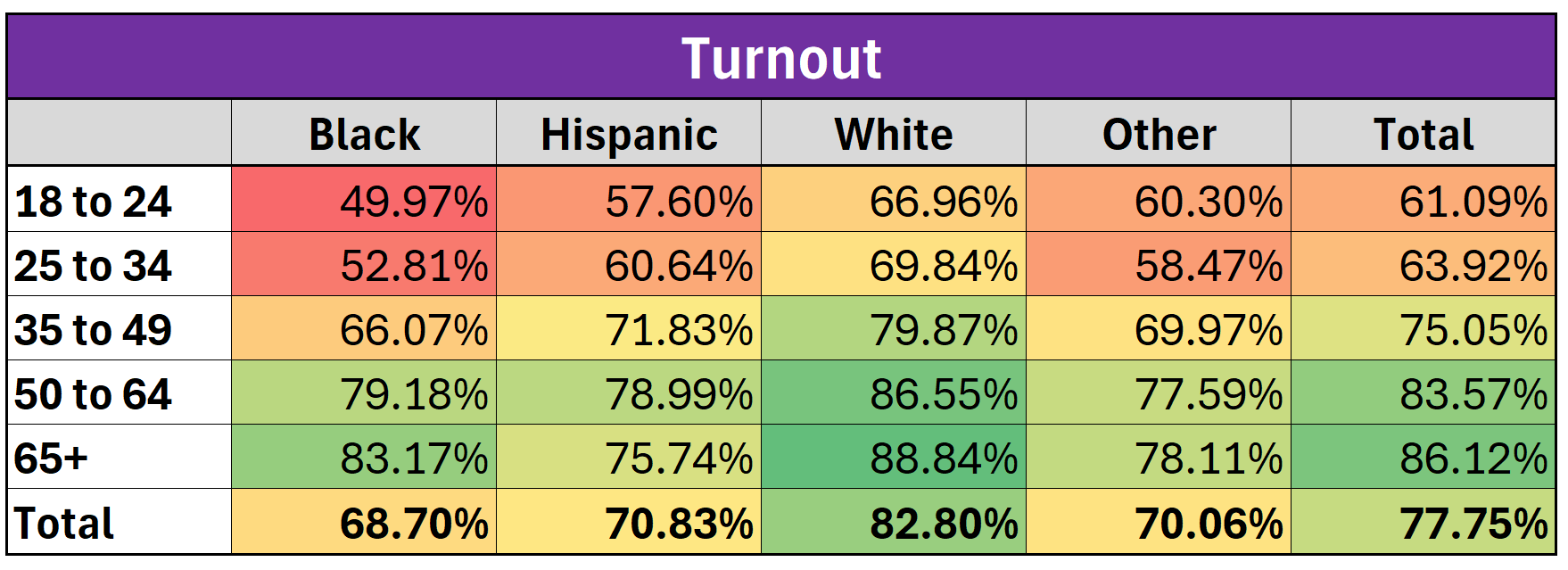
The burden is on Jolly to make sure voters have a reason to show up for him. But let me finish this article by laying out my final case for why every Democrat, of any age or color or gender, should look forward to a Jolly/Graham administration.
Final Thoughts: This is Just the First Step
I am sure I will be writing much more on this race as things develop. As I said I will likely cover the primary between Jolly and Joseph in more detail in a future article, and I plan to cover Donalds as he likely secures the GOP nomination. However, I want to leave with this final thing to consider, for those of you who have gotten to this point and are still not sold on the ticket.
If you, like me, are more on the left, and desire a more left-wing alternative, please consider the position we as a party are in. I hope that I have laid the electoral reality here. However, I don’t want this to be “just vote and be happy.” No, I want to just remind you that much good can be done with this ticket. A Jolly/Graham administration is one that
Won’t try to erase the sins of slavery and discrimination
Won’t push gerrymandered maps that erase Black and Hispanic districts
Won’t try and drive LGBT people back in the closet
Won’t try and prosecute women for what they do with their body
Won’t suspend local officials for political reasons
WILL use the budget veto to force more funding on critical services
WILL stand up the Trump administration on ICE an election interference
WILL use the bully pulpit of the office to advocate for those in need
Any Democratic administration will be limited by the fact the Republicans control the legislature. Its also critical the Republican super-majority in the House is broken this year. Even still, the Governor of Florida wields strong power, and that power can finally be directed toward everyday people.
On top of this, a Jolly/Graham ticket can be a major boon for Florida Democrats. Having the Governorship will break the negative financial cycle where donors, both in state and nationwide, only give to the Republicans. A Democratic Governor can be the spark for a new revival of the party, which will lift all votes, center and left. This election must be seen as a first step toward rebuilding. We need the Governorship to have any realistic hope at this effort.
Every state Democratic Party must look at their dynamics and see the best way to victory this November. In states like Montana or Nebraska, Democrats are rallying around independent candidates. Here, we don’t need to go that route and instead have a moderate Democratic ticket that maybe, just maybe, can pull off the upset of the decade. We must try and I believe this is our best chance at success.
With that, I am all in on Jolly/Graham for Florida.
This post has a lot packed into it; I focused on the last handful of years. Turnout does favor the MAGA party, especially with the current registration disparity.
Some aspects for consideration:
1) Is there any solid research on the effect of DeSantis stifling former felon voting? Any former felons get back the suffrage since DeSantis got re-elected?
2) What will the effect in 2026 be of DeSantis' efforts to minimize turnout by public harassment and detention, especially of Blacks, for alleged voter fraud? (The dramatic decline of D voting in 2022 appears to me to be one effect.)
3) Cord Byrd is a repeat of 2000 and Katherine Harris as Sec. of State; his purges in conjunction with the new voting rules has had an enormous effect on the party registration disparity. Is he still at it as the Nov. election approaches -- or will the US Supreme Court taboo on purges too close to the election hold up?
4) Trump's voting "rights" proposal looks bottled up in the Congress, especially as we get nearer to Nov. Luckily, the Florida bill voting that models Trump's bill will mostly not take effect until 2027. But some details of the Florida measure will take effect for the upcoming election. What should we look for? (In the past, it was simple to change parties for a primary election, but now that seems more complicated due to ID requirements, which I believe go into effect now.)
I believe Donalds can be beaten for the reasons you outline. But, the amount of campaign money he has received along with the Trump imprimatur gives him a lot of traction. Too bad the state MAGAs won't okay a debate for the primary. (I'm guessing Trump is opposed to a debate.)
Thanks!
With any luck, perhaps Republicans could be dumb enough to nominate James Fishback instead of Byron Donalds, thereby making a Dem flip the likely outcome.