
Issue #285: Debbie Wasserman Schultz Must NOT run in the 20th
DWS needs to show some solidarity with the Black community

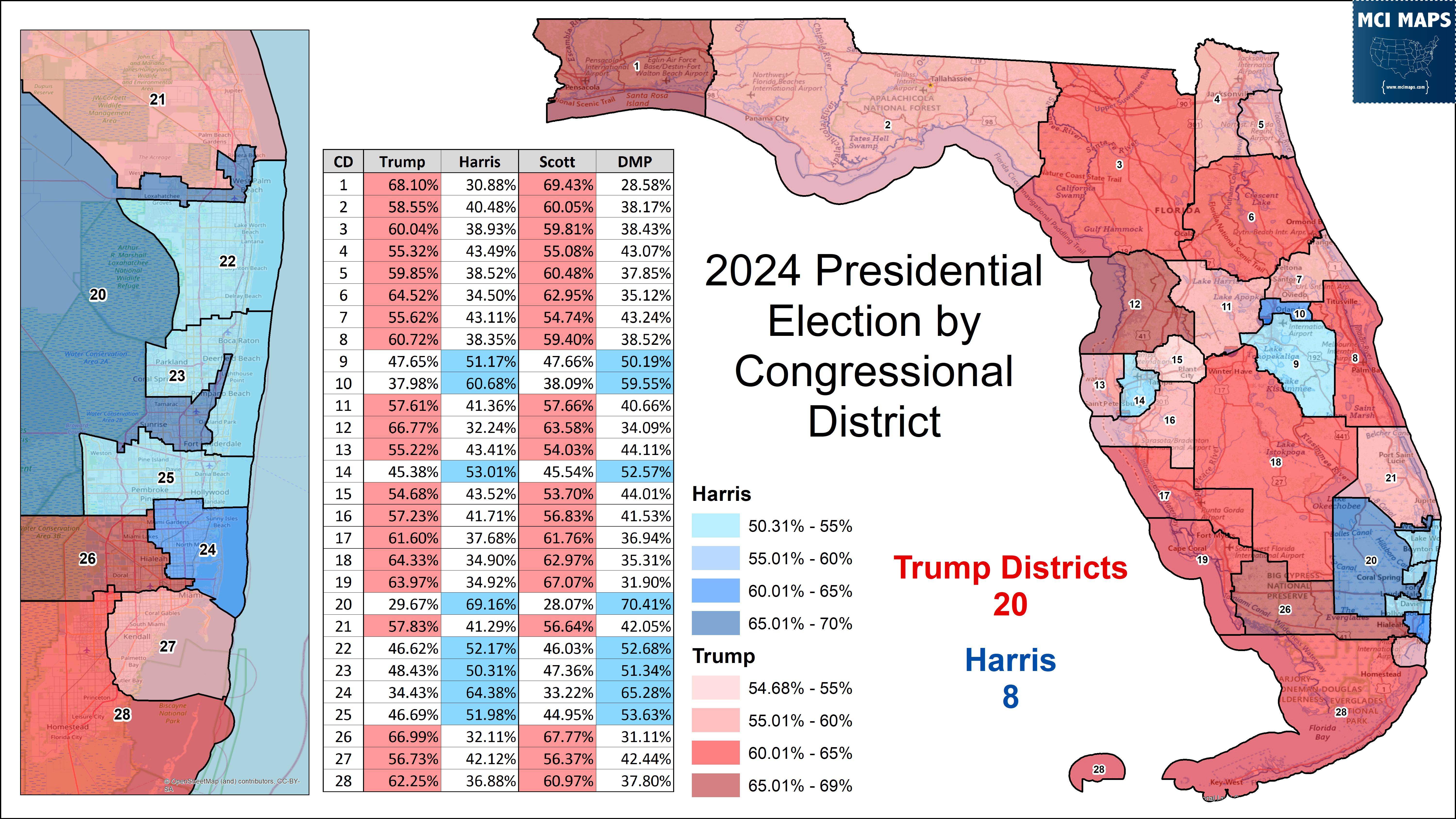
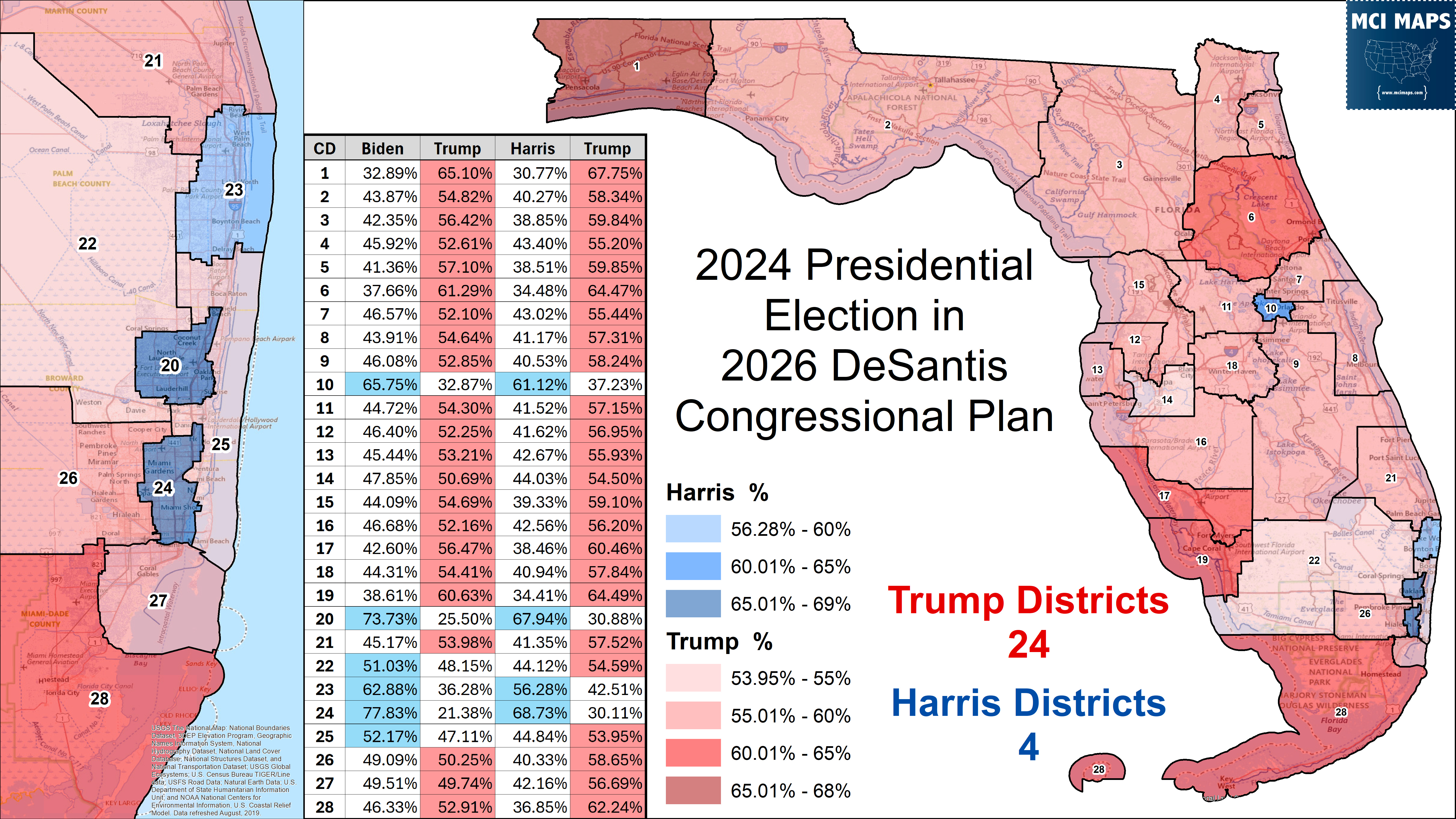
It has been less than two weeks since Florida passed its new Congressional map. A plan that targets four Democratic held seats. Florida already passed an extreme Republican gerrymander from 2022; a map that gave Trump 20 districts to Harris’ 8. However, the new plan further squeezes Democrats, leading to a 20-4 map.
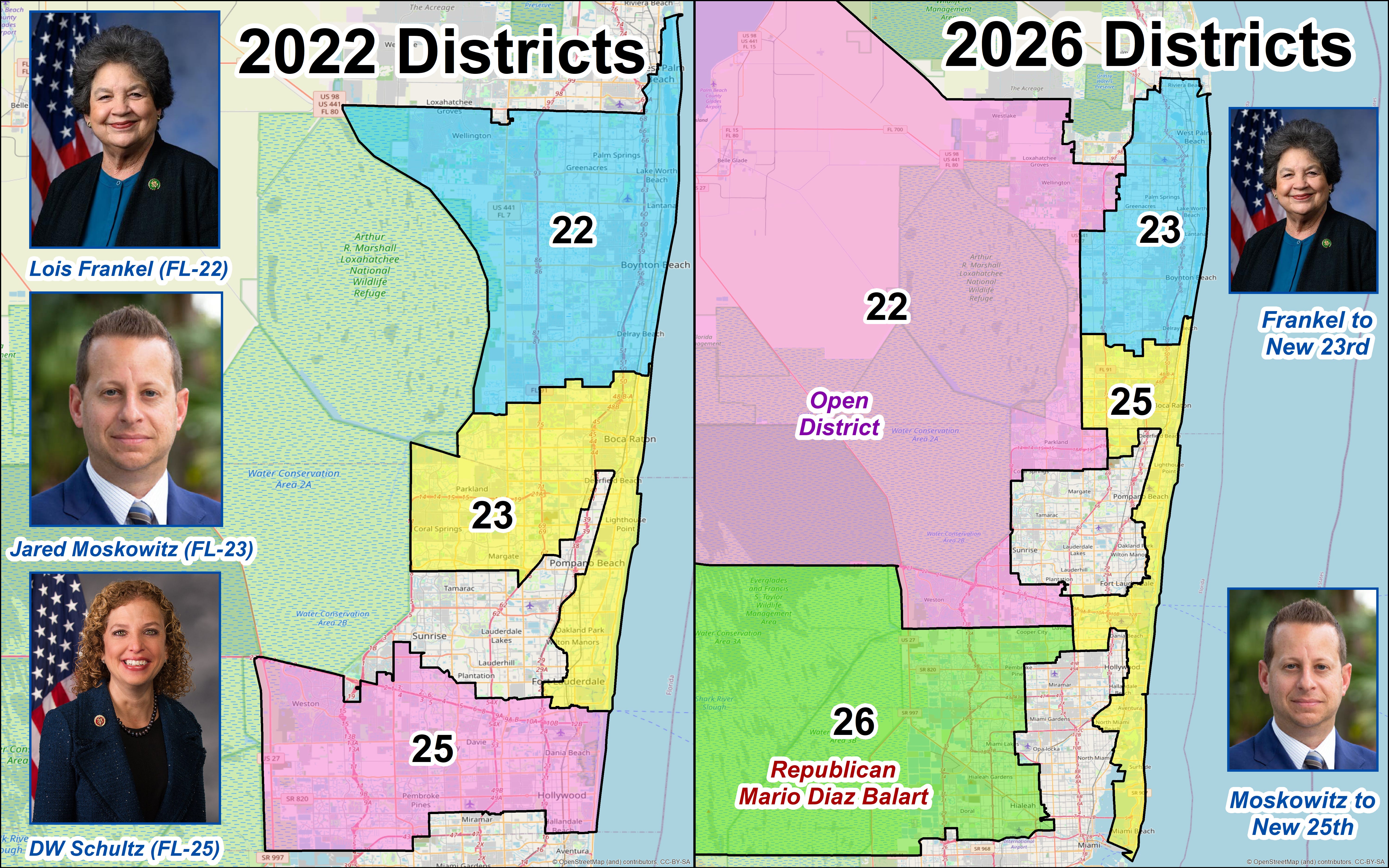
Both plans can be viewed back to back below. First the 2022 map, then the 2026 map.
I go over this plan in much more detail in this article below.

The plan in question is currently subjected to several lawsuits seeking to stop it from being implemented. The map not only is a blatant partisan gerrymander, something barred by Florida’s Constitution, but the map cracks Hispanic voters in the Central Florida region. This was the topic of my first follow up article after the map was introduced.

This article is going to look south, specifically at the Broward County region. Here, with several districts changing their makeup, there is a rumor developing that white Congresswoman Debbie Wasserman Schultz may run for the plurality-Black 20th Congressional district. This potential move has generated great frustration with Black leaders, and is likewise a move I am firmly against. However, many of you may be unfamiliar with this situation and why its so contentious and heated. This article will serve as an explainer for what is going on down in Broward County politics and why Schultz (DWS for short) making such a move has generated so much anger.
Lets dive in.
Changes to the 20th and 24th
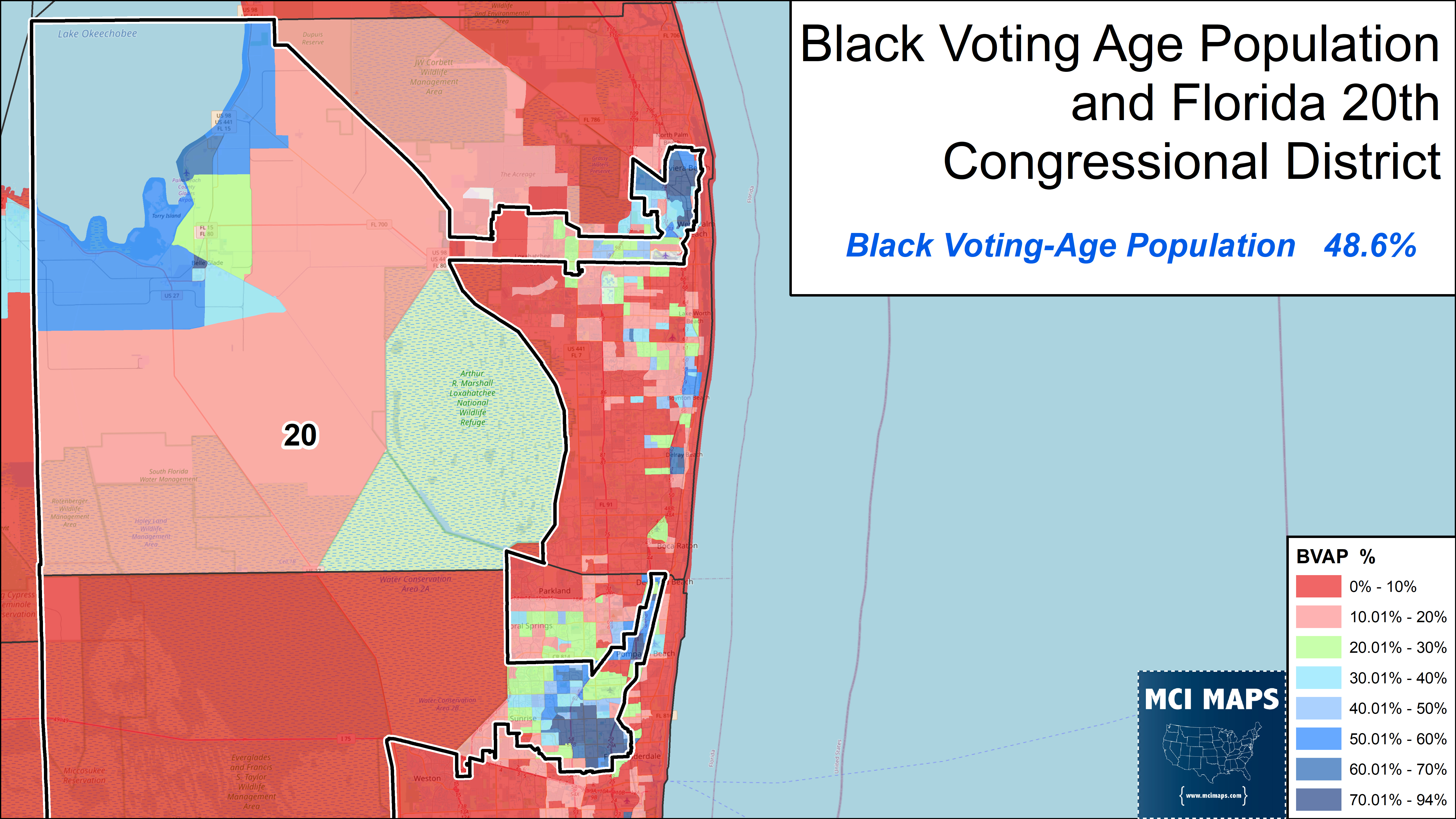
When Ron DeSantis made the call for redistricting in Florida, one of the districts he cited was the 20th Congressional district. The seat in question was a majority-Black district that united the Black communities of Palm Beach and Broward County. Such a layout has existed for several decades and was continued in the 2022 gerrymander that DESANTIS HIMSELF proposed to the legislature. You can look back at that whole saga here.
When the rumbling of a possible 2026 remap began last year, I wrote that changes to the 20th Congressional district was entirely possible. You can see my September article here.
In that piece, I pointed out a Black-plurality seat could be drawn just in Broward that would still be majority-Black in a Democratic primary (tantamount to election in such a seat). As I saw it, redrawing the 20th would be the excuse to start the mapping process, and then other changes would “just so happen” to benefit Republicans in surrounding seats.
The new layout for the 20th came out similar to what I expected, with the new seat being a plurality Black seat entirely in Broward. Meanwhile, the black-plurality 24th district, largely based in Miami-Dade County, moved inland and stretches further into Broward.
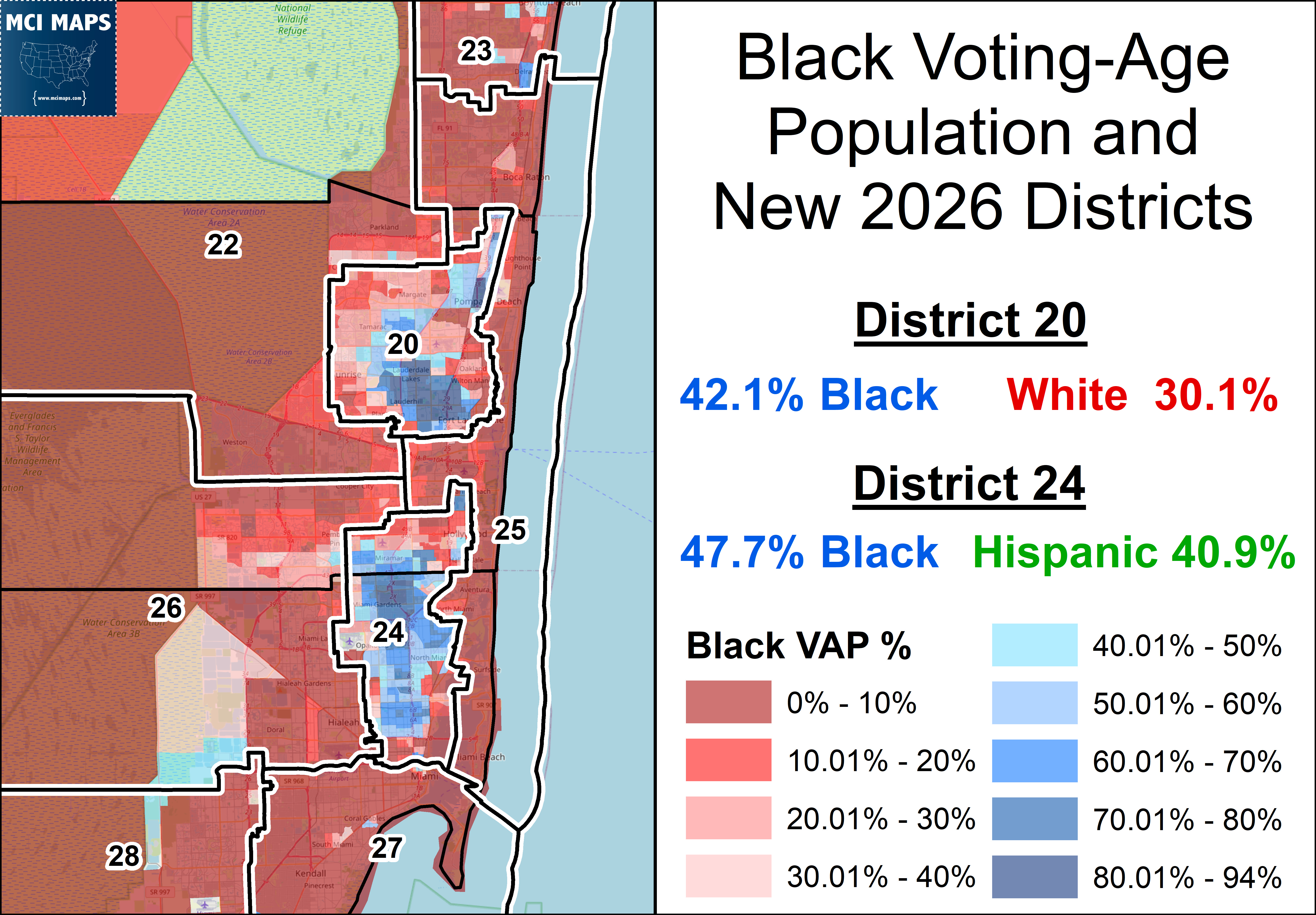
With the new layouts for the 20th and 24th, both still give Black voters an opportunity to elect a candidate of their choice. The 24th has a Democratic primary that is over 70% Black. The 20th, meanwhile, has a primary over 50% Black.
In terms of damage the map does to racial communities, the biggest story for Florida this time is more the changes to Hispanic districts. DeSantis already screwed over the Black community of Florida when he dismantled the North Florida Black district in 2022; which you can read back on here.
However, concerns about the future of Black representation from Broward County took a turn when the question emerged about who planned to run in what seat under the new map.
South Florida’s Musical Chairs
The changes to the makeup of Southeast Florida has caused major headaches for two of the regions Democratic members. Before the remap, three white Democrats, Lois Frankel, Jared Moskowitz, and Debbie Wasserman Schultz, all sat in light blue seats that backed Harris from a range of 2% to 6%. The new layout, however, converting two of those seats into much more Republican-aligned districts.
Lois Frankel saw her Palm Beach district, once numbered the 22nd but changed to the 23rd, become a Democratic vote-sink. She will run there, a region she has represented for decades across all levels of Government. Jared Moskowitz has made it clear that he will run in the new coast-hugging 25th district; which does have a large number of his current seats voters. The 25th voted for Trump by 9% in 2024 but voted for Biden by 5% in 2020.
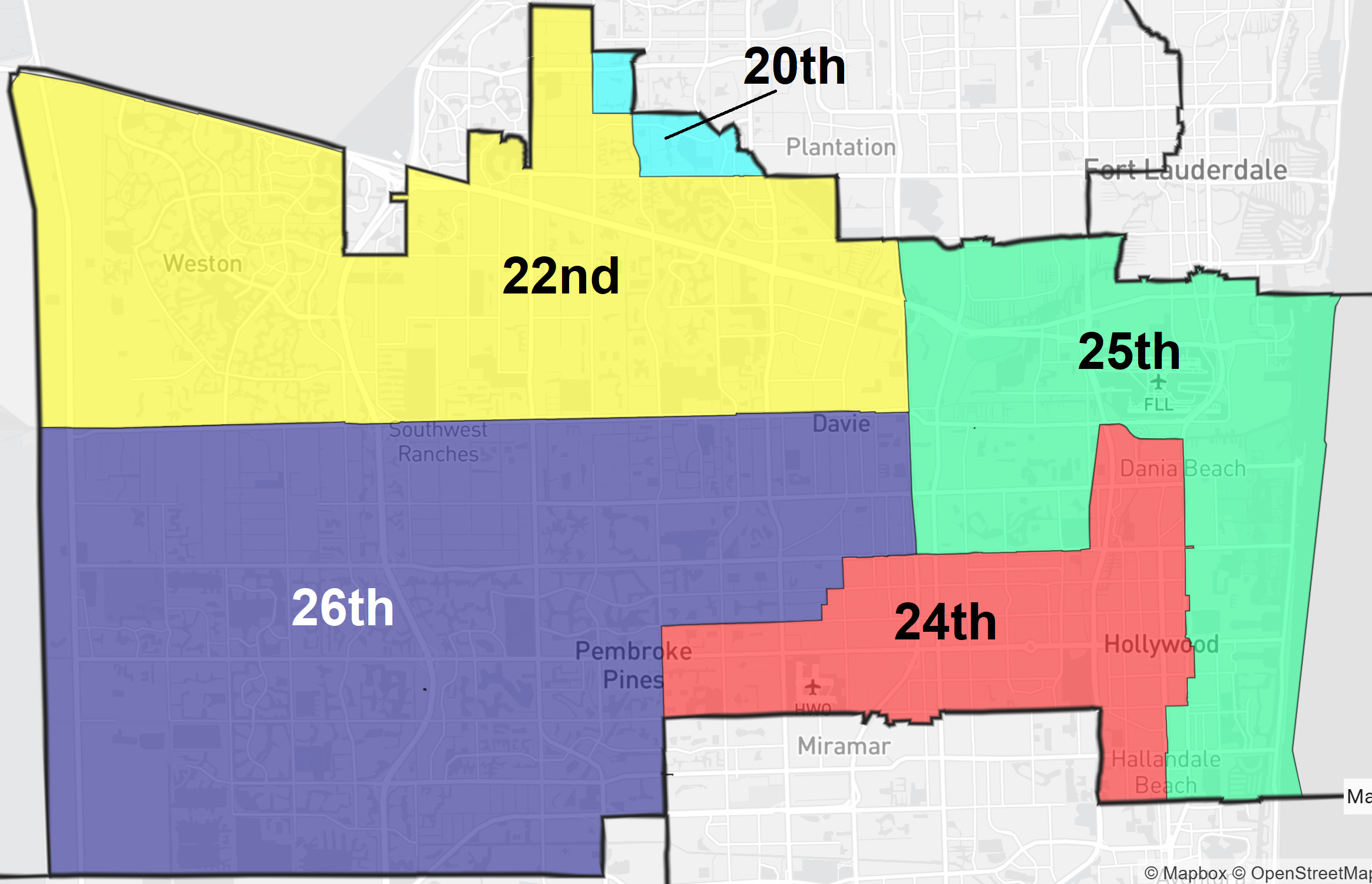
This situation has left Debbie Wasserman Schultz unsure what she will do. Her district has been carved up pretty thoroughly. None of the new districts hold a majority of her current seat. How her current district is split up can be seen below.
If Schultz is to run for re-election, she will be forced to do so in a district that is very different from the one she currently represents. In theory she has claim to try and run in either the 22nd, 25th, or 26th. I include the 20th in the below map because she had indicated she is considering that move, but as you can see, there is little overlap.
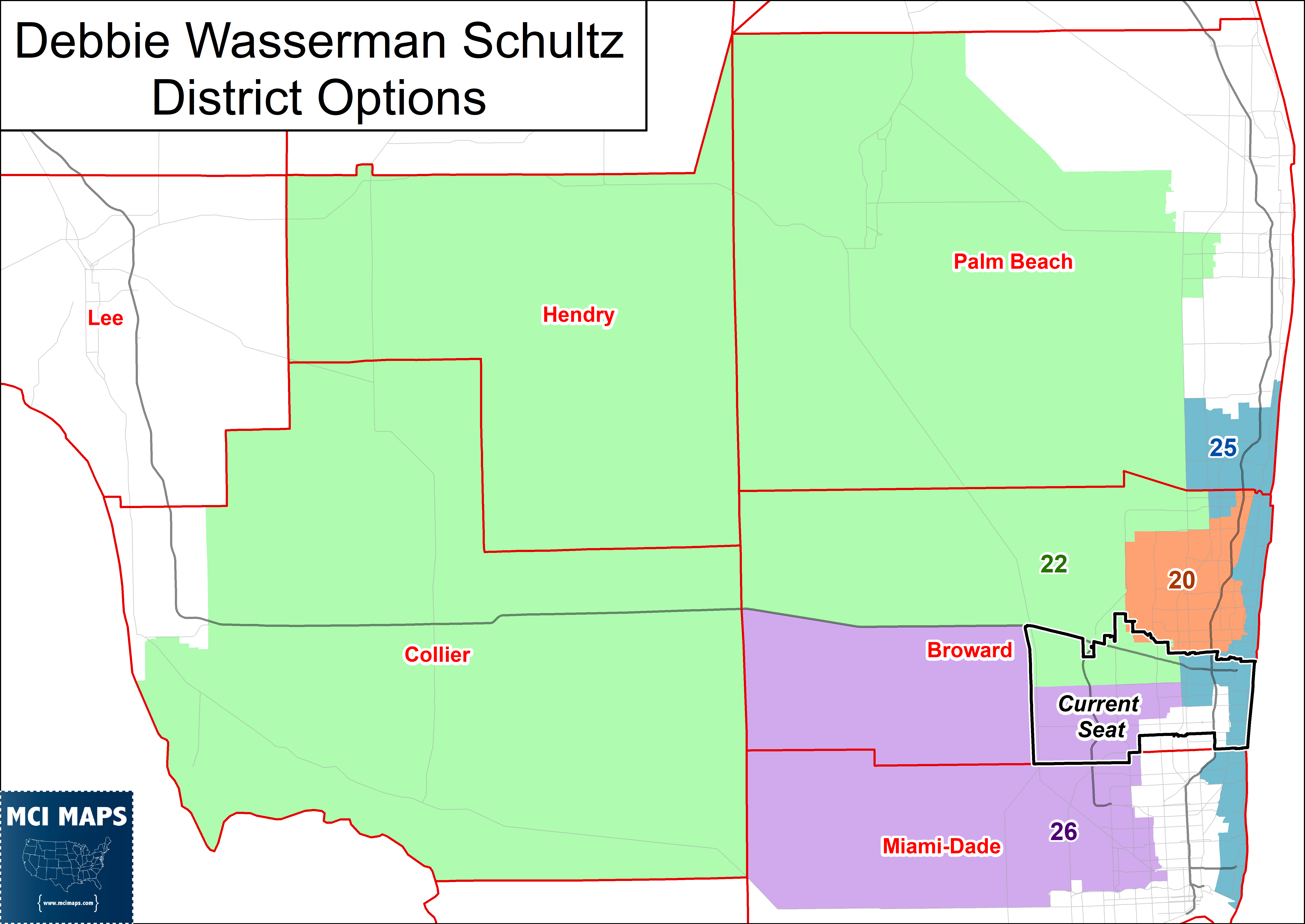
The new 20th only has a very small overlap with the current 25th district; only about 15,000 residents. Schultz indicating she may run in the 20th is stunning considering if she wanted a safe blue seat, she has more overlap with the 24th; which will take in around 150,000 of Schultz’ current constituents. However, Schultz has shown no indication she will run in that seat; which is held by Democrat Frederica Wilson.
Schultz is no doubt partly considering a run for the 20th because the seat as no incumbent. Scandal-plagued Sheila Cherfilus-McCormick, who was likely on the verge of being expelled for financial impropriety, resigned in late April. While McCormick has now also claimed she plans to run for the seat again (she is delusional) - she is not the frontrunner by any means. By all accounts, the 20th is an open seat with a litany of candidates running, and possibly more to file.
Schultz clearly feels this is the best area for her, with a massive financial war chest, to jump into. This would be a mistake. Before delving into why the 20th is not a good idea, lets lay out two other key options - the 22nd or the 26th.
Where Should DWS Run?
Of the three white Democratic Congresspeople for South Florida, DWS is easily in the worst position. Frankel benefitted from the vote-sink in Palm Beach and Moskowitz has a tough but winnable fight in the 25th - a race I will talk about in the future. Schultz, meanwhile, had two major options that both have drawbacks.
An important factor for the Congresswoman is that she has only modest at best crossover support. In the 2024 elections, while Kamala Harris won her district by 5%, Schultz managed only a modest improvement with a 9% win over Weston City Commissioner Chris Eddy.
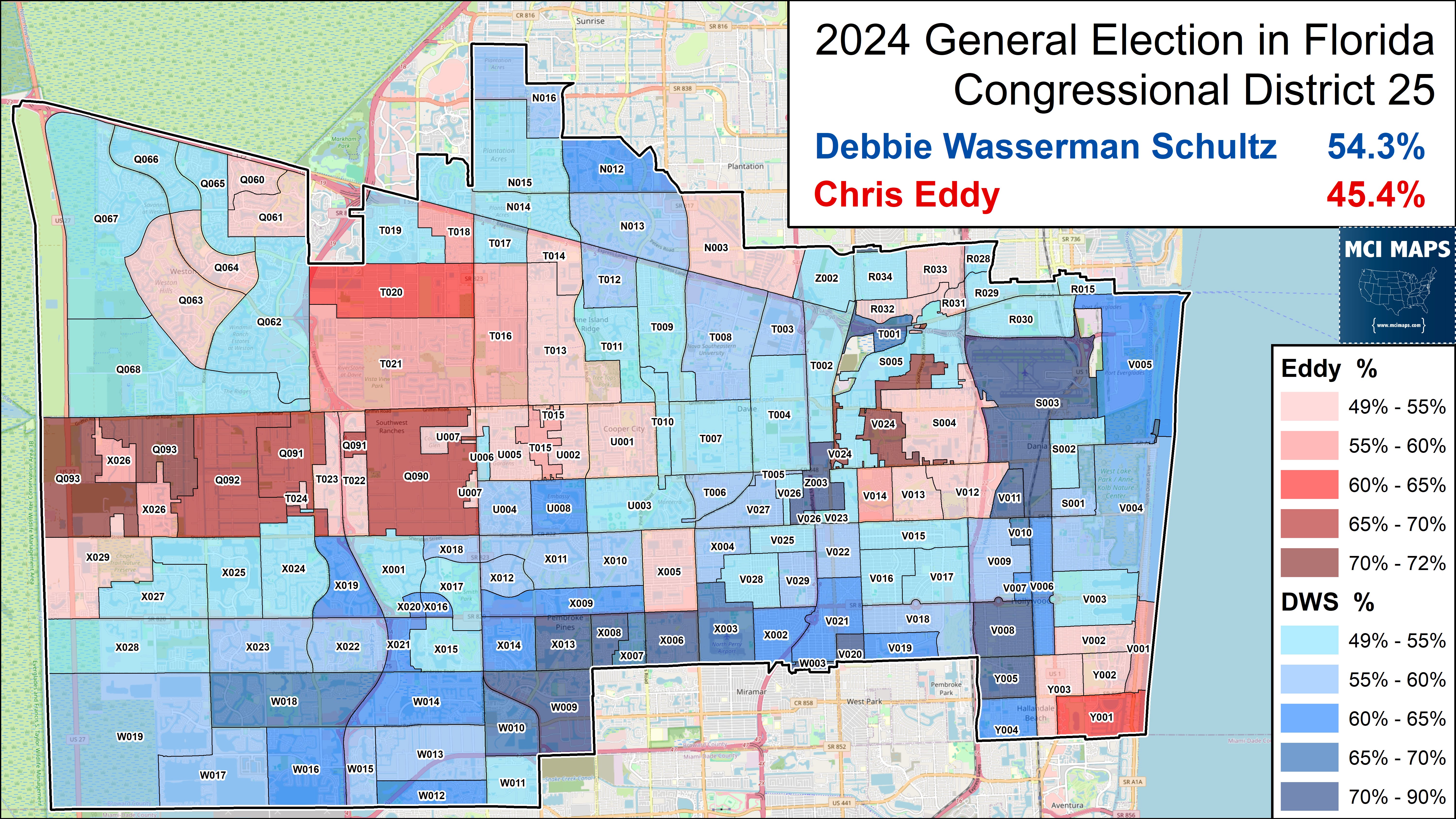
This victory came from over-performances that were strongest in heavily Jewish communities, improvements otherwise were limited. Her under-performance in Weston, her residence, can partly be explained by going up against a local commissioner.
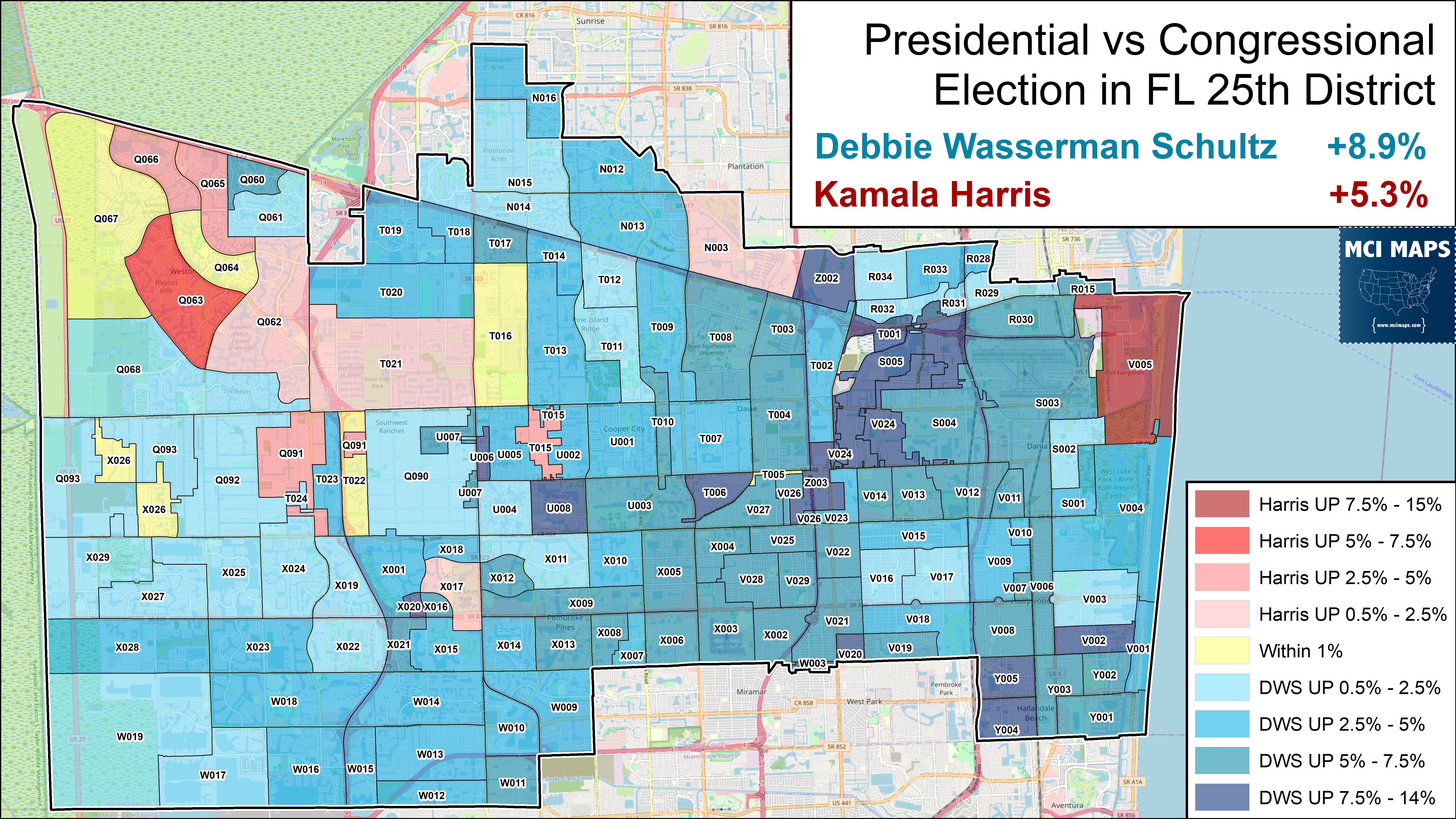
Schultz hence can count on some over-performance but likely needs a blue wave that lifts all candidates to have a chance in any red-leaning seat she runs in.
Some have floated Schultz to run for the 26th Congressional District; the seat that includes Southwest Broward and the Hialeah area of Miami-Dade. This 70% Hispanic district swung heavily to the right in 2024. However, this seat also was very close in 2020 and voted Democratic back in 2016 and 2018.
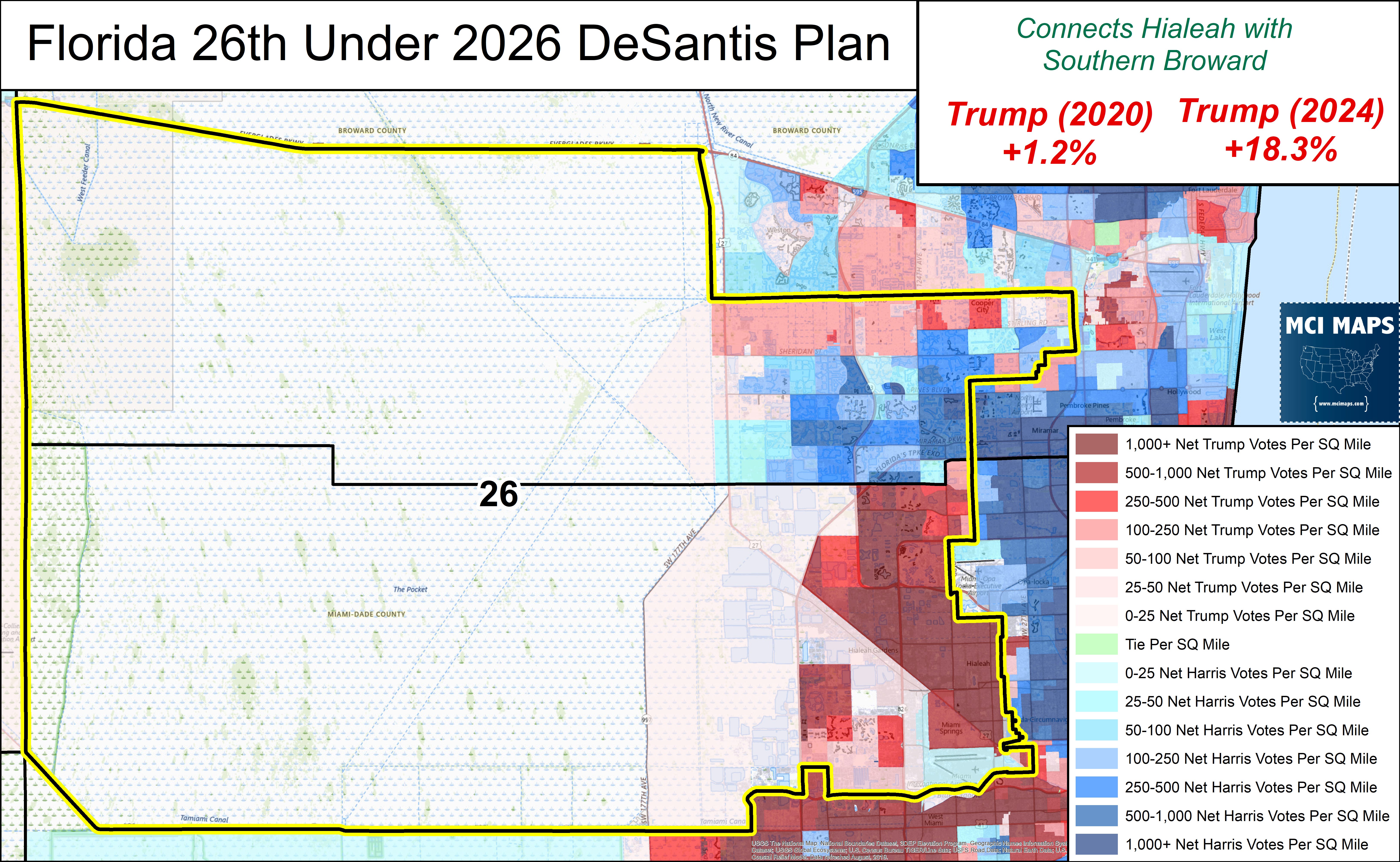
Schultz’s current 25th is actually plurality Hispanic, but this is a far different story. The Broward portion of this seat, the area DWS already represents, is 44% Hispanic; with around 141,000 Hispanic residents. It is made up of many different Hispanic communities, namely from South America, that lean less Republican historically. The Miami-Dade portion, which is heavily Cuban, is 90% Hispanic and includes 418,000 Hispanic residents.
Schultz would be running in a seat with far more new voters than familiar with, and doing so against longtime Congressman Mario Diaz Balart, who by all accounts should be able to outperform with Cuban voters. It is more ideal for Democrats to have a Hispanic candidate in this seat. However, the results in Miami from last year show that a white Democrat can win Hispanic areas. That said, Balart himself would be hard to beat - while the Miami Mayor’s race was an open contest.
The real best option for Schultz, as I personally see it, would be to run in the new 22nd district. The district backed Trump by 10% in 2024 but backed Biden by 3% in 2020.
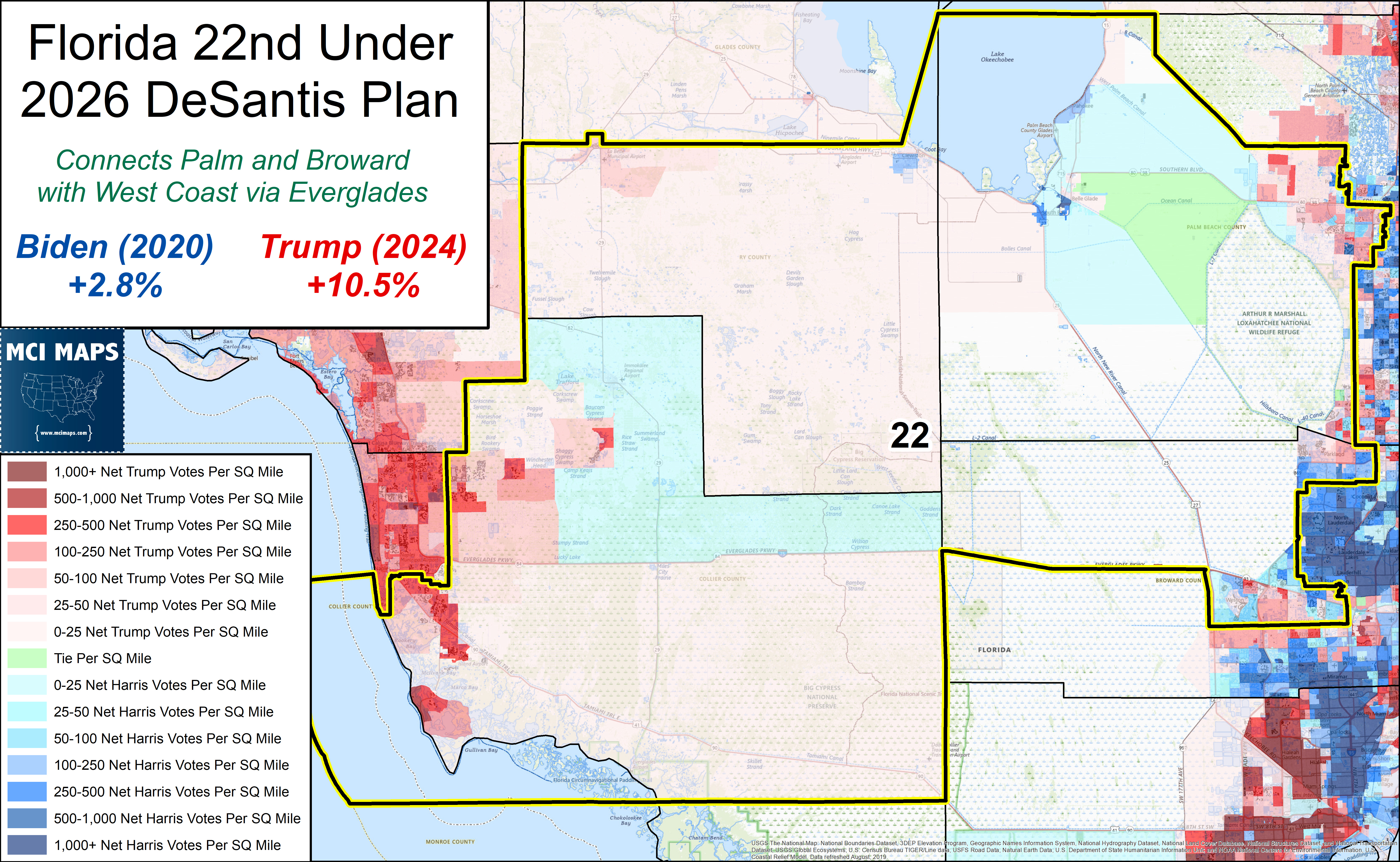
This ridiculous seat links together bits and pieces of Broward and Palm Beach, then goes across the everglades to grab Hendry and Collier county. The district doesn’t include Naples, but includes Marco Island on the far west coast of the state.
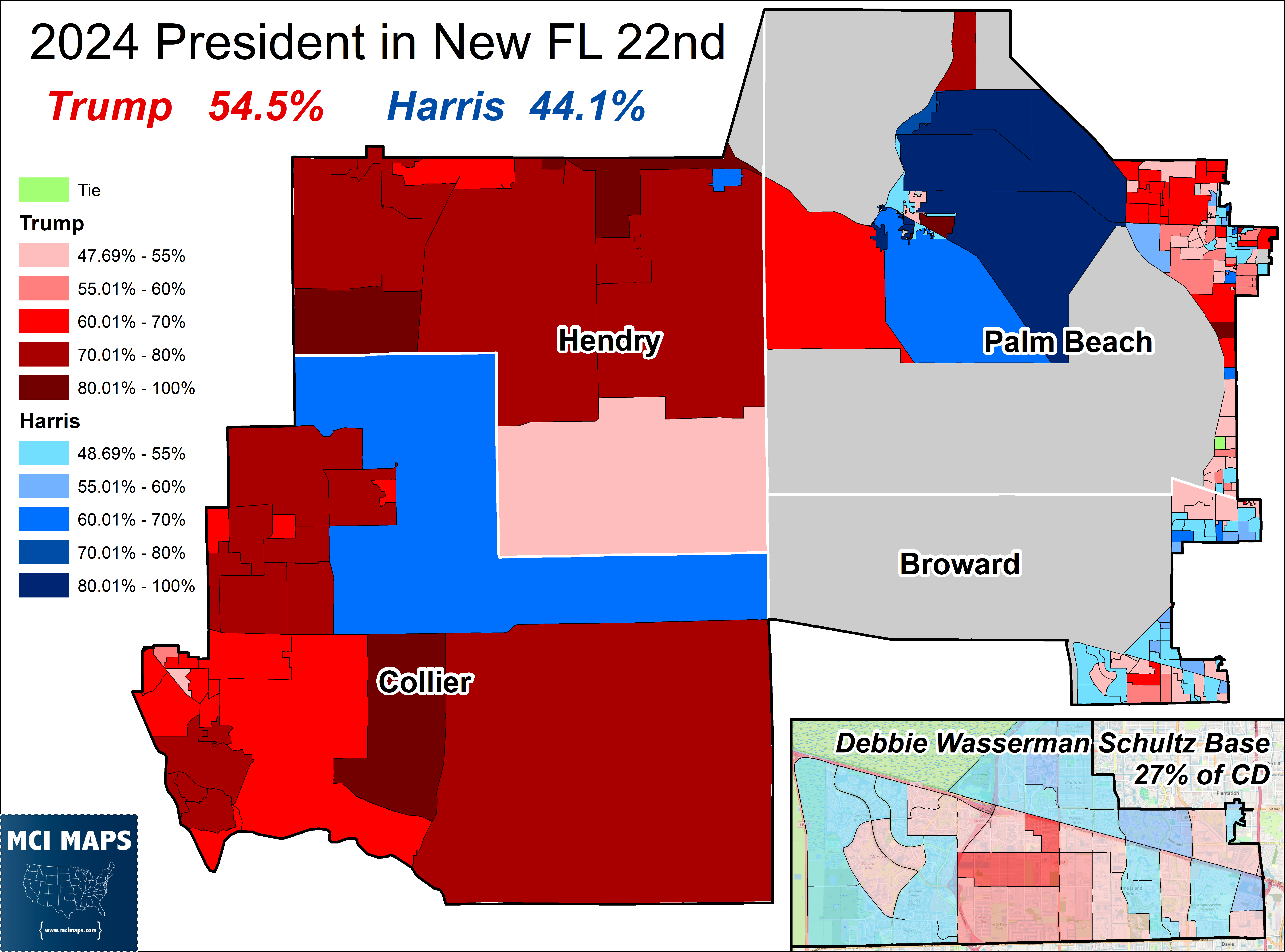
The seat includes Schultz’ longtime base of support - the Weston/Davie/Sunrise region.
Broward as a whole makes up 44% of the population, following by Palm at 27%, Collier at 23%, and Hendry way back at 5%. The Broward and Palm regions have trended further to the right in recent years, but are more traditionally Democratic. This seat includes Jewish communities in Parkland, Coral Springs, and western Palm Beach.
Collier is absolutely meant to be the Republican wall designed to make the seat firmly red. It will be a tough thing for Schultz to overcome, as no doubt she has little love out there. However, the Palm and Broward bases can in theory be swung back to the right to make an upset possible.
Schultz has been indicating, however, that she is not looking to run in the 22nd. Instead, she is seriously considering running in the 20th district. That news has caused a great deal of understandable anger from the Black community. Lets dive specifically into why that is the case and why such a move is a bad idea.
The New 20th District
The Broward-only 20th district is designed to be a Democratic vote-sink for the area. The seat not only grabs most Black voters north of 595, but it grabs many heavily white Democratic communities as well. White Democratic communities like Ft Lauderdale, Oakland Park, Coral Springs, and Wilton Manors are included in the district. The racial makeup of registered voters is plurality Black, with white voters close behind.
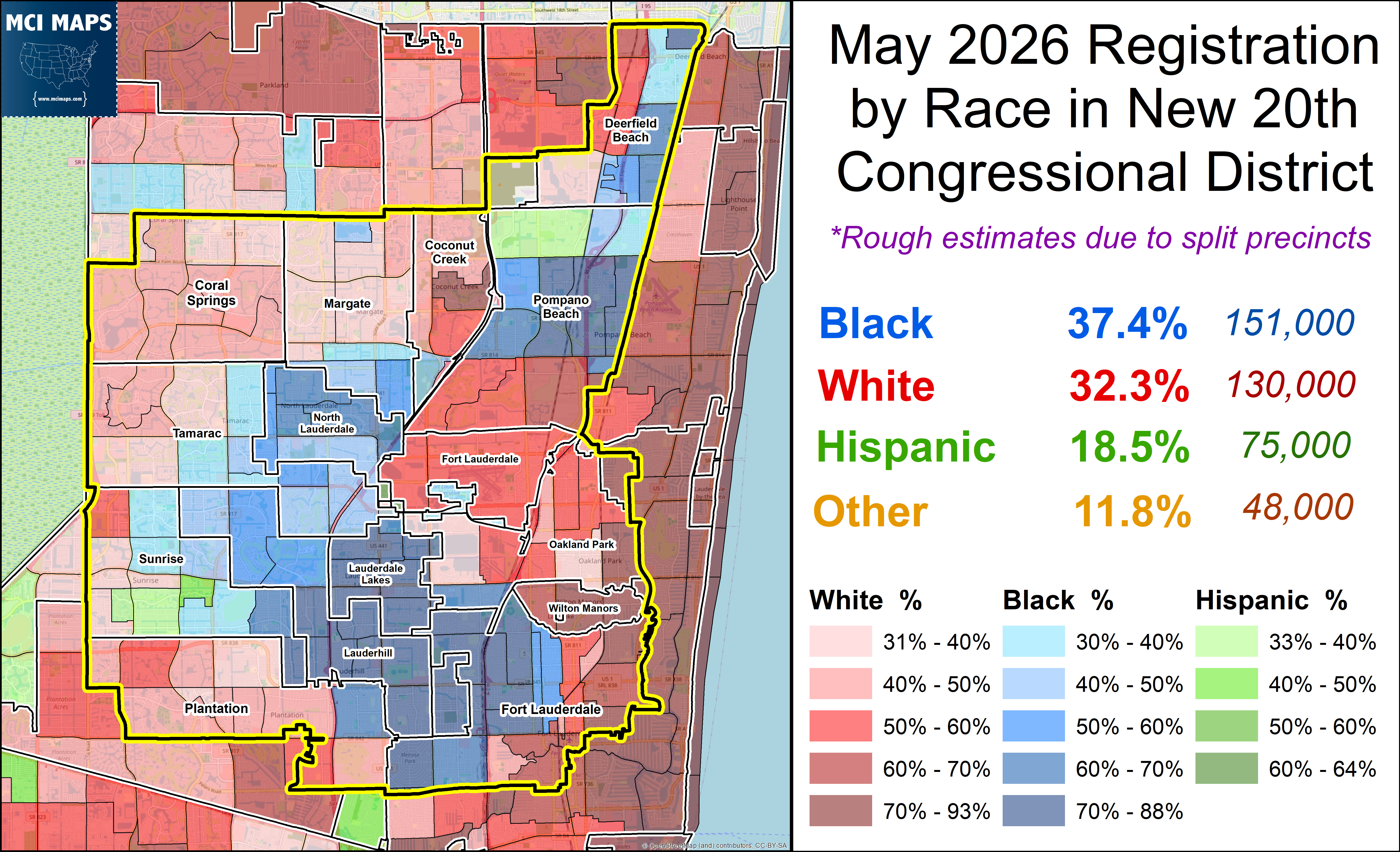
While the seat had a great degree of racial diversity, the key dynamic here is what the Democratic Primary will look like. The district in question backed Kamala Harris by 37% and is never at risk of going Republican. Who emerges from a Democratic Primary is the assured winner in a general.
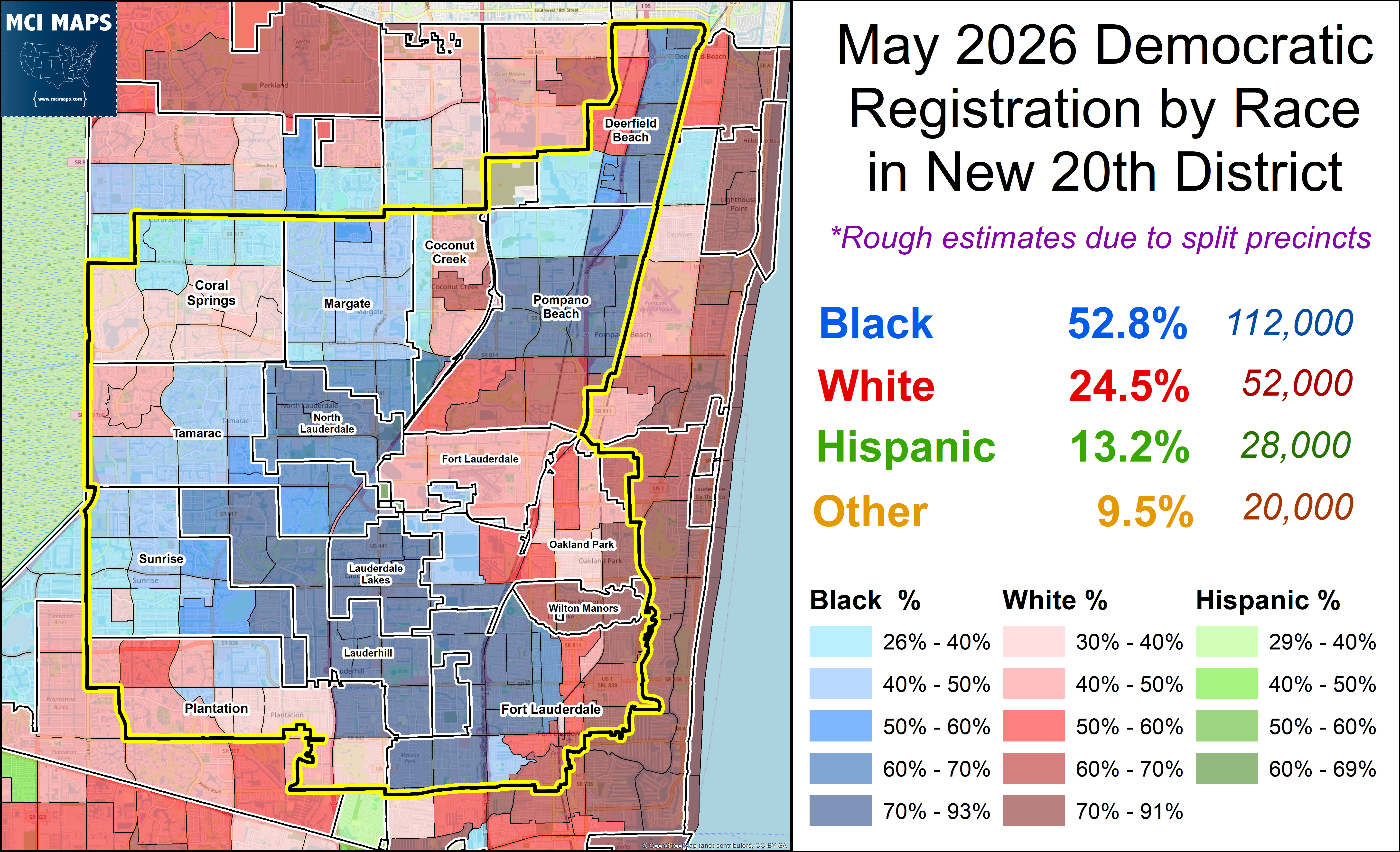
The racial breakdown among registered Democrats is much more favorable to Black voters. Over 50% of the registered Democrats in the district are Black.
Turnout dynamics can affect the actual primary makeup in great deal. Hispanic voters have far weaker turnout in August primaries compared to white and Black democrats. Historically white Democrats outpaced Black Democrats in primary contests. As a result, the 2024 Democratic Primary in the new 20th was a bit closer; with 51% of the vote being Black vs 35% white.
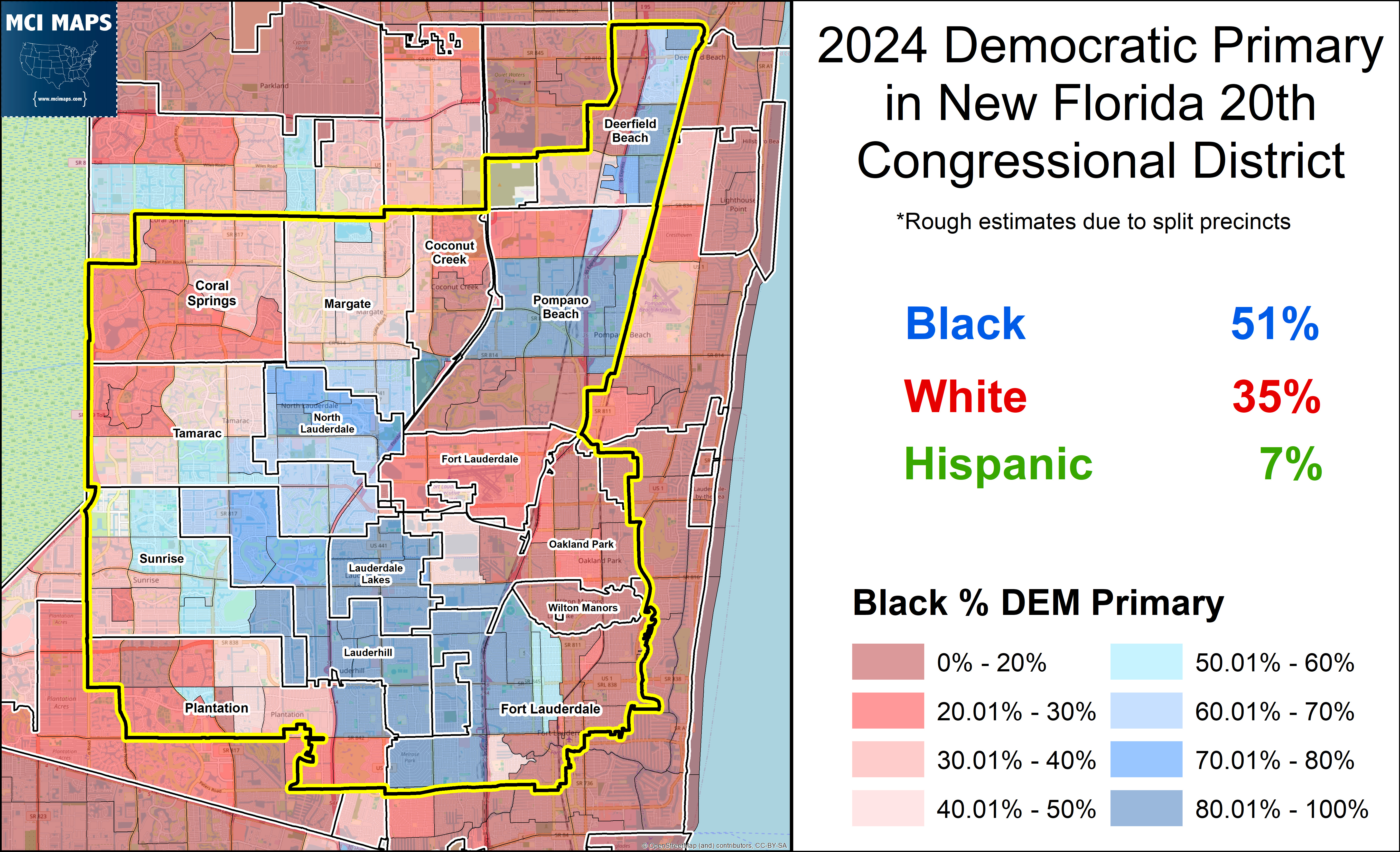
This puts the 20th district in a position of favoring the candidate of choice for the Black community, but it not being an overwhelming minority seat. Originally, the district changes didn’t appear to alter the calculus for most of the candidates running for the seat. While Palm Beach has been cut out, that was always the minority of the district; which has long been dominated by Broward votes. The major candidates right now all hail from Broward
Elijah Manley - A longtime activist and candidate who has support in parts of the Black and LGBT community. Rose to challenge McCormick has her ethics issues got worse (even being sued by her for defamation - which a court rejected)
Dale Holness - A former County Commissioner strongest with the Caribbean community.
Luther Campbell - Best known as Uncle Luke from 2 Live Crew who had long floated the idea of running for office
Sheila Cherfilus-McCormick - She has claimed she is running again, but whether she makes it to actual qualifying remains to be seen.
Most expected the race for the 20th to be a crowded affair among many candidates, especially with McCormick’s resignation. However, plans have been thrown into chaos and anger as the rumbling of a DWS carpetbag to the 20th gains greater traction.
The Problem with DWS in the 20th
When the new Congressional map came out, Debbie Wasserman Schultz made it clear that she planned to run for re-election. In conversations with political leaders, she has argued her long seniority brings value to the region, which is not an incorrect statement. Schultz is a well-known workhorse for her district, which is the main reason she survived her serious 2016 primary challenge amid the DNC leadership debacle. Initially, Schultz did not make it clear where she planned to run, only saying
“ I will be running in a district where I have an opportunity and the privilege to continue to represent my constituents in South Florida.”
This vagueness quickly honed in on the 20th district; with such a move being seen entirely as a reason to ensure she remains in Congress. Schultz has very little geographic crossover with the district in question. I looked at her times in the Florida legislature and into Congress, and she has never represented more than a handful of areas in the new CD20.
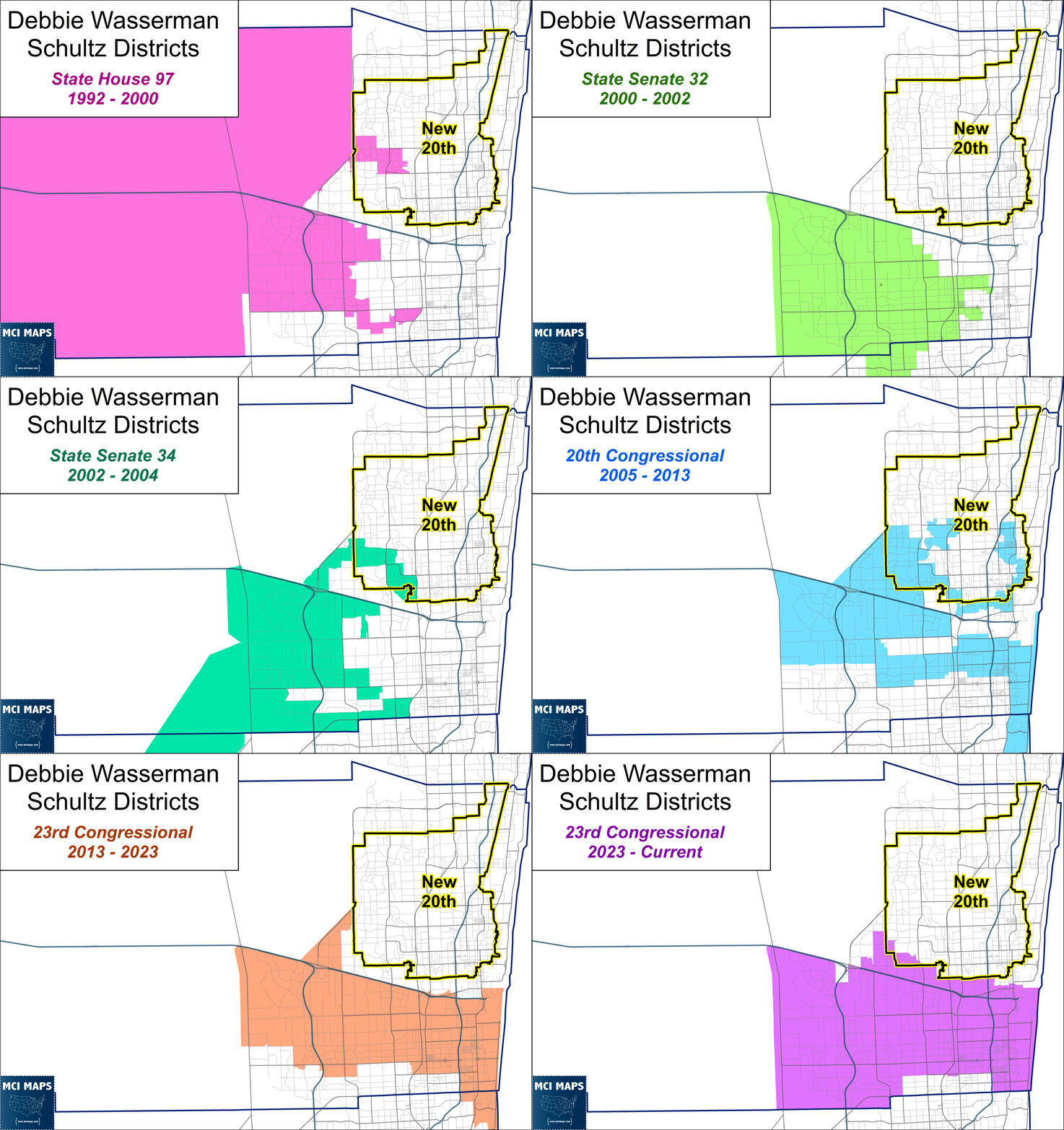
If Schultz were to run in a 1-on-1 race for the new 20th, its very unlikely she would be able to win a primary there. While she has never been a poor performer with Black voters, she has little strong loyalty within the Black community. To most voters in the 20th, especially Black voters, she would be seen as a carpetbagger cynically looking for a safe political haven.
The only way that Schultz can win in the 20th Democratic Primary is with a split Black field. The DWS playbook for victory would no doubt come from aiming to consolidate white voters while the Black majority fractures across candidates. This makes such a move all the more cynical. It is very similar to what occurred in 2022 when former Congressman Alan Grayson tried to win the Florida 10th Congressional district amid a fracture Black field. I wrote about that race here. That race had come at the time when DeSantis had dismantled one Black-performing district and altered the 10th in a way that undermined Orlando’s Black population. The Grayson run was decried by many, including myself, as a profound lack of solidarity with the Black community. Grayson ultimately would not win, with Maxwell Frost going on to become the Congressman for the region.
Showing Solidarity with the Black Community
On this issue of solidarity, I also want to make one things very clear. This is not about the 20th being entitled to a Black representative. This actually has nothing to do with the race of the elected official. Districts drawn to give minority communities a voice, whether through the Voting Rights Act or Fair Districts, are designed to give a racial minority a unified voice and elect THEIR CANDIDATE OF CHOICE to office.
If the Black voters of the 20th said “we like Debbie and we want her to be our voice in Congress” then this an entirely different conversation. However, the reality is a DWS win only comes with a split Black field and being the candidate of choice among white voters. That is where the anger is stemming from.
This was clearly felt in the Press Release from the Broward County Black Caucus, who have taken great exception to Schultz’ maneuvering
“If a non-Black Democratic incumbent can come into a vacant Black-opportunity district, consolidate against a fractured Black field, and win, every other Black-opportunity district in the South that loses its incumbent becomes available to the next displaced non-Black Democrat the same way.”
The press release hit on the fact that the DWS maneuvering comes not in a vacuum, but comes amid a new onslaught against Black representation in America. With the Supreme Court gutting the Voting Rights Act in its Callais decision, making it harder to protect racial minorities from being carved-up in redistricting plans, more southern states are looking to destroy Black districts. Just a few days ago, Tennessee passed a new Congressional map that cracked the Black population of Memphis into THREE DISTRICTS. The majority-Black 9th has been dismantaled, with all remaining districts being heavily white Republican.
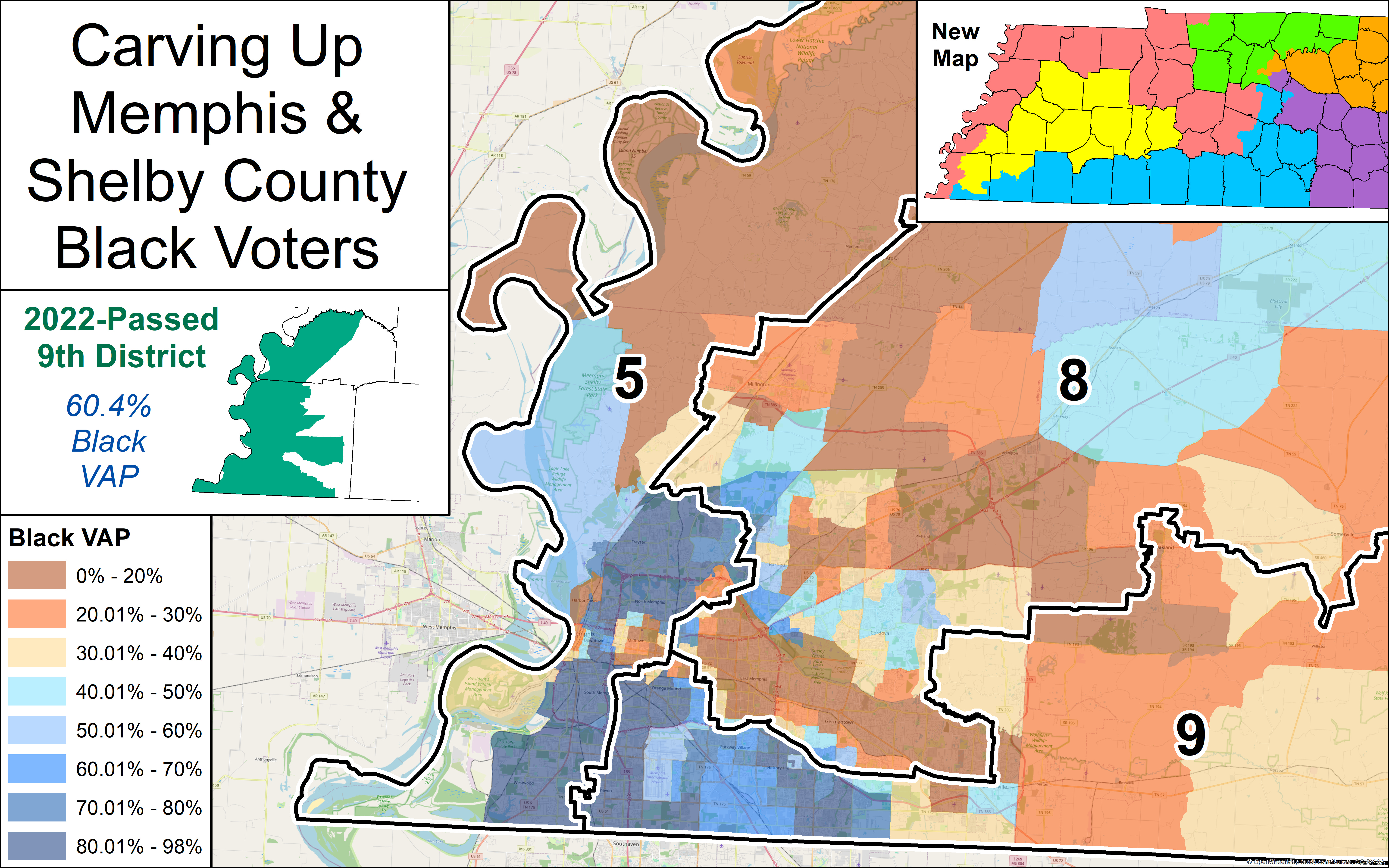
The carving up of the Tennessee 9th is also relatable to this situation because it is represented by a white Democrat - Steven Cohen. The Memphis-based district, which originally elected Harold Ford Sr as Tennessee’s 1st Black Congressman in 1974, has been Represented by Cohen since 2006. However, Cohen has represented this seat as the candidate of choice for the Black community, routinely winning landslide margins across white and Black precincts. Cohen has long had a reputation as a firm Black ally. This photo of him with John Lewis is incidentally one of my absolute favorite images.
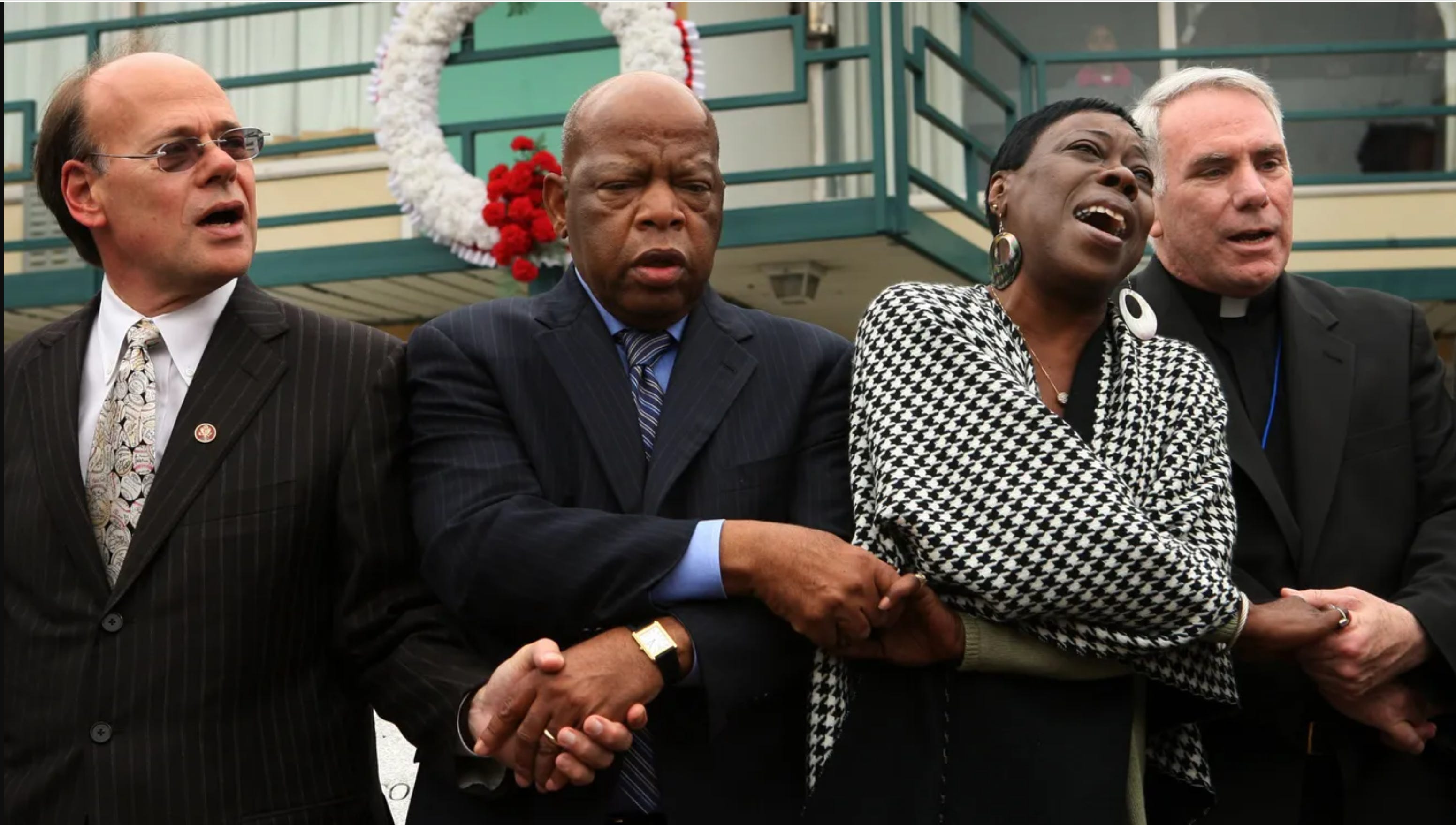
Cohen’s presence is an example how such minority seats are not about the race of the winner, but if a racial minority has the ability to elect a candidate of choice for their community. What has happened in Tennessee will be the subject a future article I am working on about the Callais decision.
This is the national context that absolutely informs the reaction to Schultz considering such a move. Several Black leaders, including local State Senator Rosalind Osgood, have made strong pleas to the Congresswoman to reconsider her plans.
"We don't want it to be her legacy that she remains in Congress by disenfranchising the Black community,"
Osgood also does lay out an important point about the racial makeup of whoever emerges from the district. As I said, the district is not about electing a Black candidate, but rather electing the candidate of choice among Black voters. In theory, the Black community could elect a white man, Asian woman, Hispanic woman, or anyone. However, there is value in representation, in giving young people someone to look up to. As Osgood stated in her talks with the press…..
"We've had it for 34 years. We want little Black boys and little Black girls to see somebody that looks like them so that they can dream and have an idea of a possibility of an opportunity."
The sense of representation, of looking at someone like yourself in a position of power, is powerful and important. There can always been exceptions to this. Congressman Cohen, before he represented the 9th, was at least a State Senator for the area, and someone who has worked firmly to be a voice for the Black community. Schultz, as I have shown, has never represented a large portion of the district she wants to run in. YES she is an ally. However, she isn’t familiar there. She would be carpetbagging in.
And of course, this all comes with the most important fact - Schultz is looking at a district where she NEEDS a fractured Black vote to win. It it just not a sign of proper solidarity to make such a cynical move.
Final Thoughts
Debbie Wasserman Schultz will have a decision to make very soon. I would hope that the pushback she has received regarding her trial balloon about running in the 20th will cause her to rethink her decision. Through all of this, I do want to stress that of course the biggest villains here are DeSantis and the republican lawmakers that passed this horrid gerrymander. DWS is a victim of the map, like so many others.
There is no guarantee Debbie Wasserman Schultz should will be in congress by next year. I hope she is, I really do. A win in the 22nd Congressional district is not impossible even if its tough. If DWS does go down fighting, let it be in such a district. A victory there makes her a hero while a loss makes her a martyr.
To close this article out, lets envision that this redistricting map is the TITANIC.

Debbie should ask herself, using this metaphor, do you really want to be some guy that tried to sneak onto the “women and children first” lifeboats? Or do you want to go down with honor? Take some stock of the words that wealthy businessman Ben Guggenheim stated as he stayed on the ship as it sank.
“I am willing to remain and play the man’s game, if there are not enough boats for the women and children. I won’t die like a beast. Tell my wife I played the game out straight and to the end. No woman will be left on board this ship because Ben Guggenheim was a coward.”
I know you are not a coward Congresswoman. Stand and fight in the 22nd district. Resist the comfortable lifeboats and make plans to survive in the cold water below.
Unfortunately as you mention the closest parallel is Grayson running in Demings seat in 2022- his forcing himself into that race did irrevocable damage within the activist community in Orange County. Grayson persisting with this divisiveness in a later State Senate race only furthered this.
DWS has a reputation as great community activist and ally for all of Broward liberals going back to her days as Peter Deutsch’s LA in the legislature. I think it would be foolish for her to this and squander all that goodwill. This all having been said, as a resident in the new CD-20 it would be VERY DIFFICULT for me not to vote for her if she ran. So that’s the inherent contradiction even with someone like me. I know it’s divisive for her to run in what should be a seat where the minority community gets to choose it representative and I realize if we still had runoffs, no way she’d be nominated here (like when Frankel ran vs Hastings in 1992). Yet I freely admit I’d have a hard time not voting for her if she ran. I am sure I am not the only person facing this internal conflict.