
Issue 284: Ron DeSantis carves up Puerto Rican voters and erases a Hispanic-Majority District
Turning the clock back on decades of Hispanic gains

Last week, Florida Governor Ron DeSantis released his proposed Congressional District map; a plan that would give Donald Trump 24 of the 28 Congressional districts. This map was quickly passed by Florida’s legislature on Wednesday, the 29th of April.
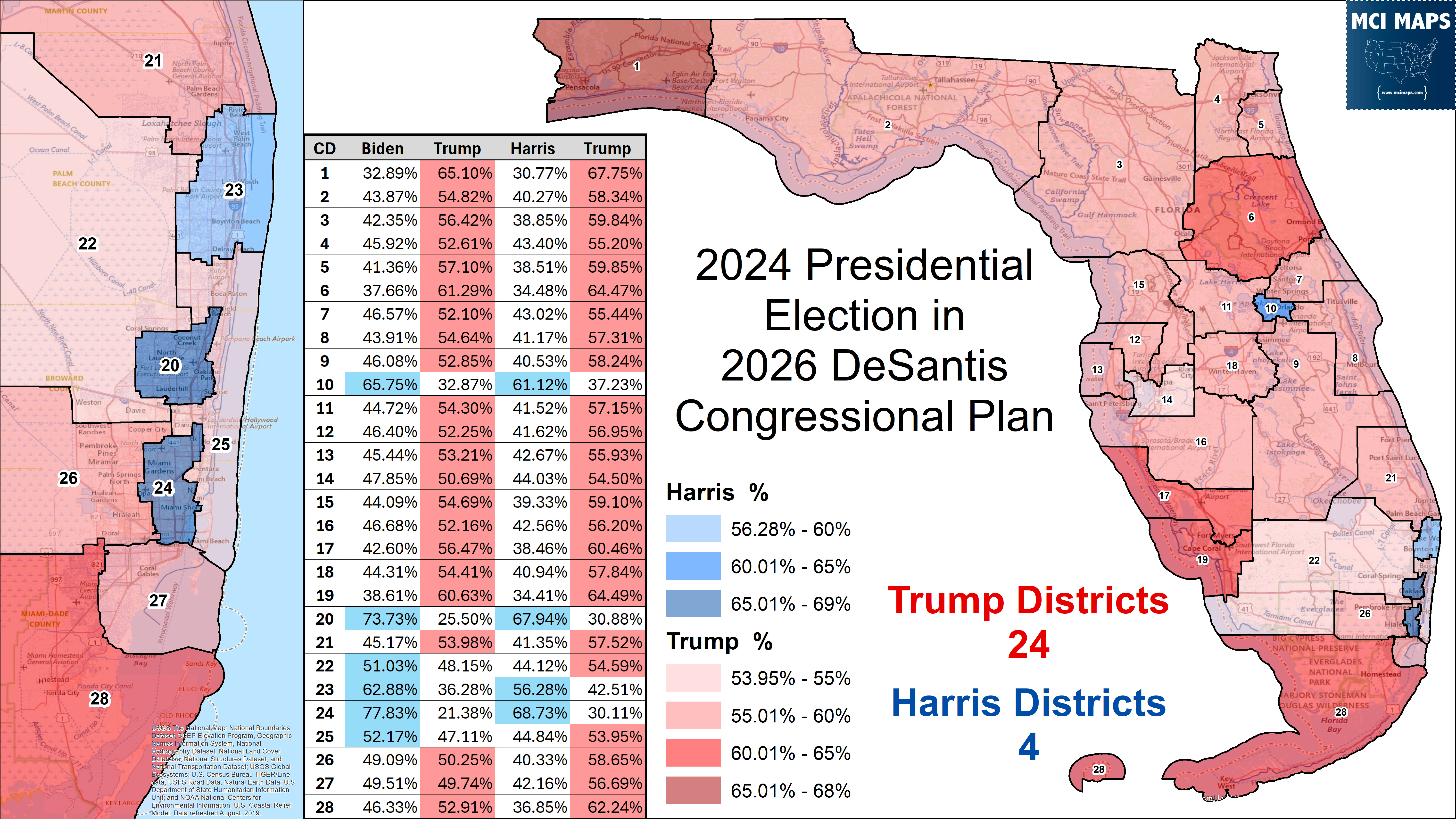
The new map was a further Republican gerrymander over what had already been solidly Republican Congressional plan. The original 2022 map, which DeSantis had forced through the legislature, had already squeezed Democrats into just eight seats. This new map, however, took aim at eliminated half of the remaining Democratic Congresspeople.
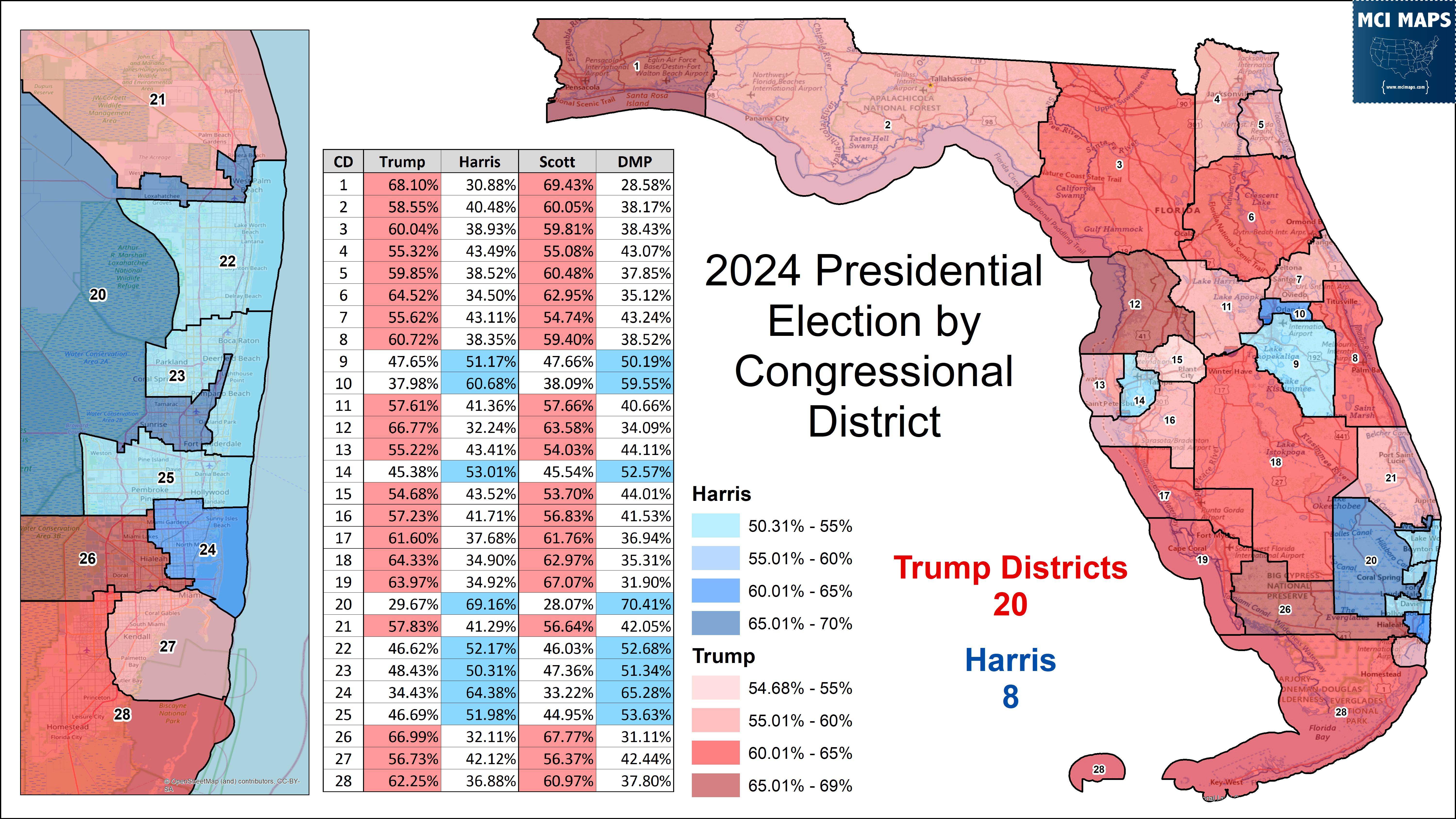
I go into detail on the changes to the Congressional map in my article from last week. Check the link below for more details and district-level maps on the new plan. There I also go into the reasoning behind the new DeSantis plan, which included a claim that Florida’s Fair Districts Amendments (which ban partisan and racial gerrymandering) are no longer enforceable.

Now I have a good deal I want to say about the DeSantis logic for why a remap was needed or warranted. If you read my twitter coverage as debate went on in the legislature, or seen me referenced in any news articles, you will know I regard the DeSantis reasoning for the map with “some skepticism.”

For this article, however, I want to focus in on just one of the affected districts and communities. This article is going to hone in on the cracking of Hispanic voters in Central Florida.
Targeting Darren Soto
One of the four Democratic Congresspeople targeted by the DeSantis map was the Hispanic-majority seat held by Darren Soto. The district, as it currently stands, was based entirely in Osceola County and includes pieces of neighboring Orange and Polk.

Congressman Soto, who is the state’s first Puerto Rican member of Congress, rose in Florida politics as the Orlando metro region saw a massive demographic shift. The last few decades have seen the Hispanic population, with a solid plurality being Puerto Ricans from either the tri-cities area or the Island of Puerto Rico itself, make the region their home.
Soto was initially elected in 2016 in what was then a seat with a large Hispanic population, but was not a majority. However, the 2022 census showed that the population had expanded so much that the new 9th could easily be drawn as a 50% Hispanic district. While traditionally the Puerto Rican community has been heavily Democratic, recent elections have shown the community become much more of a swing voting block; something I documented right after the 2024 Elections.

The district itself swung heavily to the right in that election, going from Biden by 17% in 2020 to Harris by 4%. Soto, however, won re-election by a much stronger 12%. The results reflected the community being a new swing constitutency, and one that could split its tickets based on candidates and issues.
Republicans could have tried to continue the right-ward shift with Hispanics in Florida, perhaps eventually winning the 9th Congressional district. Instead, however, the new Congressional map decided to reshape the district into a firmly white Republican seat. It did this by carving up the Hispanic community of the region between 5 Congressional districts.
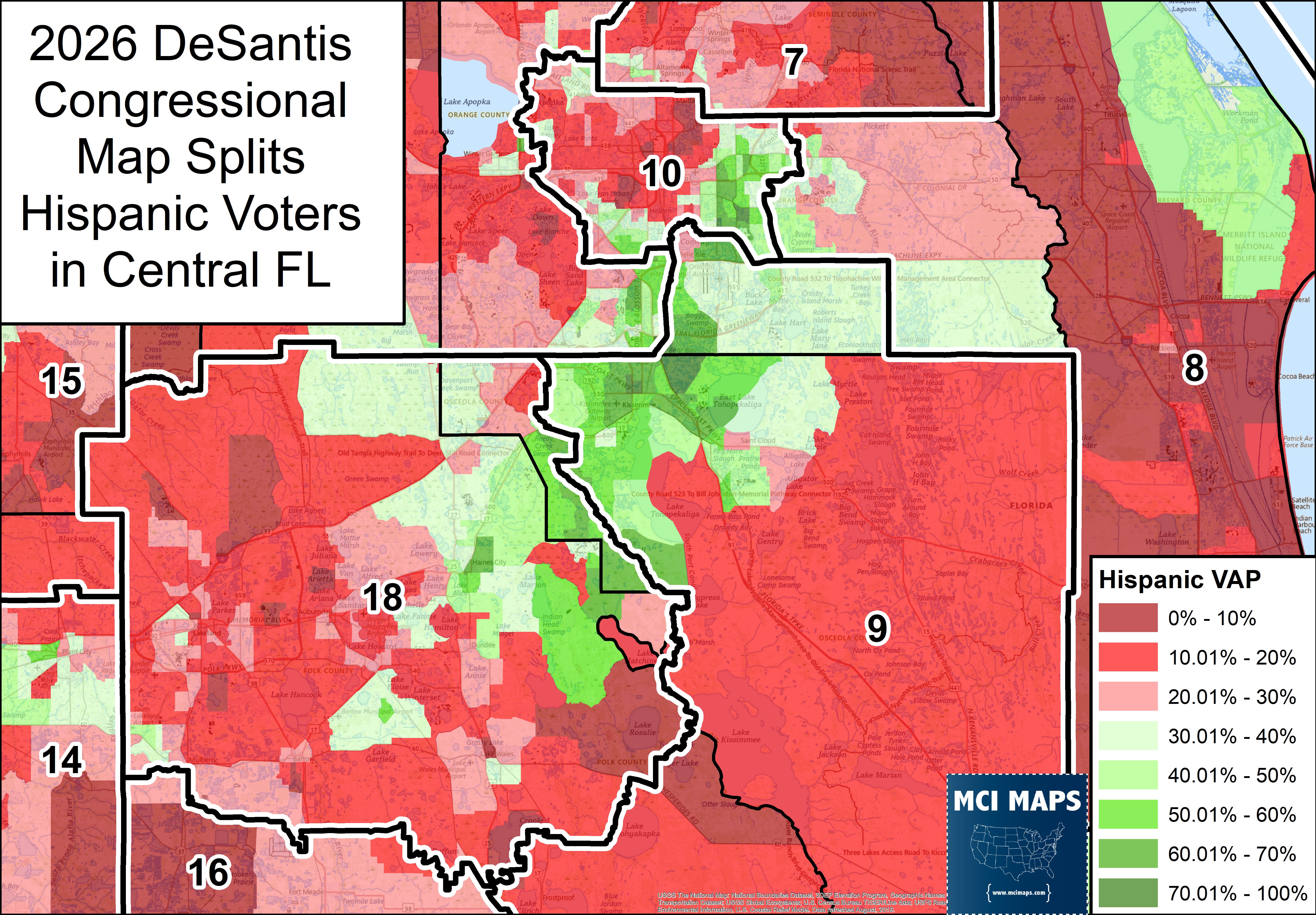
I discussed this more in my initial reaction article last week, but one claim from DeSantis was that the proposed map was “race neutral.” Myself and many others have called bullshit on this claim. The lines dividing the Hispanic community, which includes dividing part of Osceola County itself, are clearly deliberate - designed to weaken the unified voice of the Puerto Rican constituency.
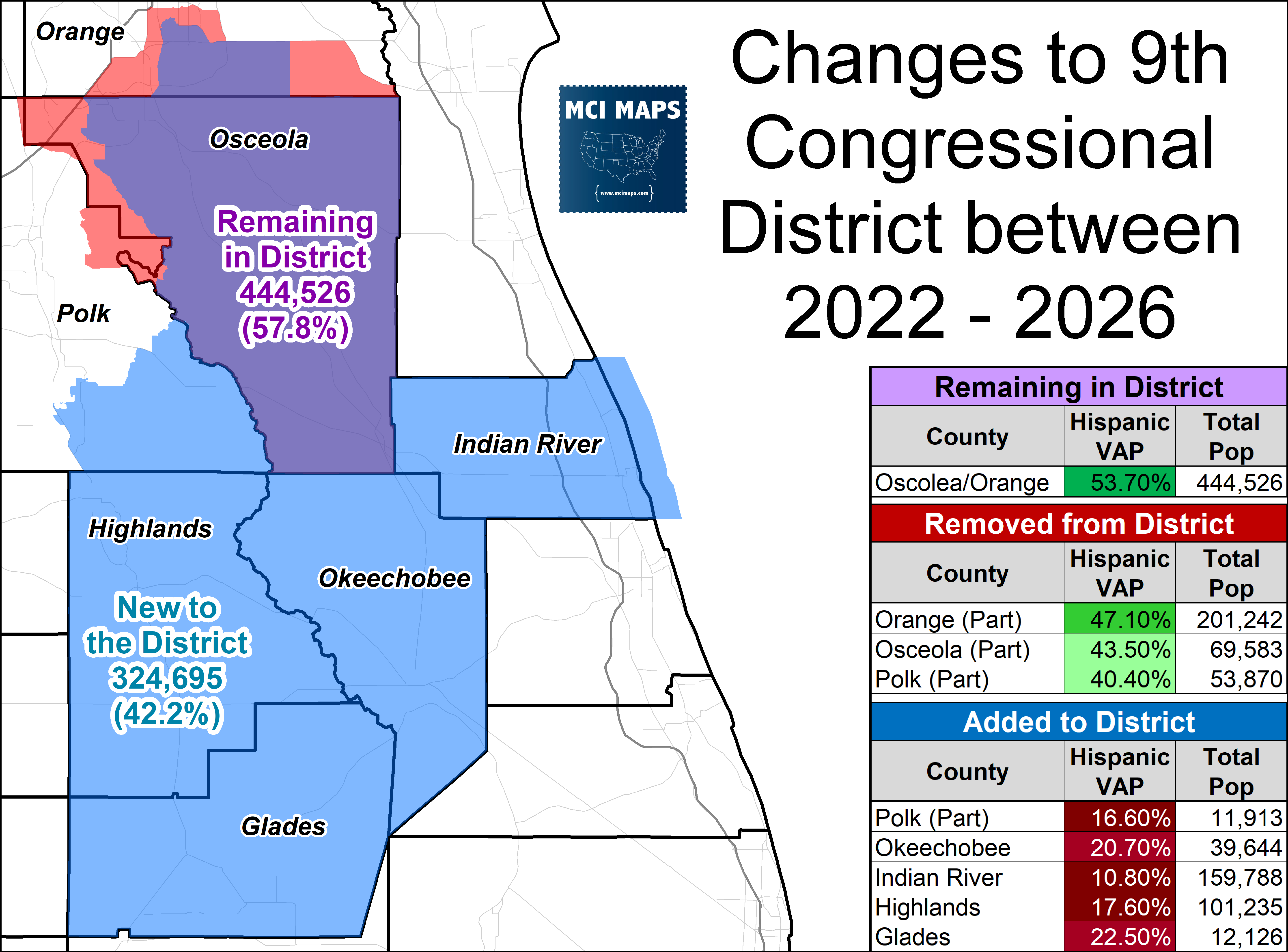
As a result of this plan, the new 9th District, which you can see below, stretches all the way down to rural Glades county. The district is no longer majority-Hispanic and easily backed Donald Trump in the last election.
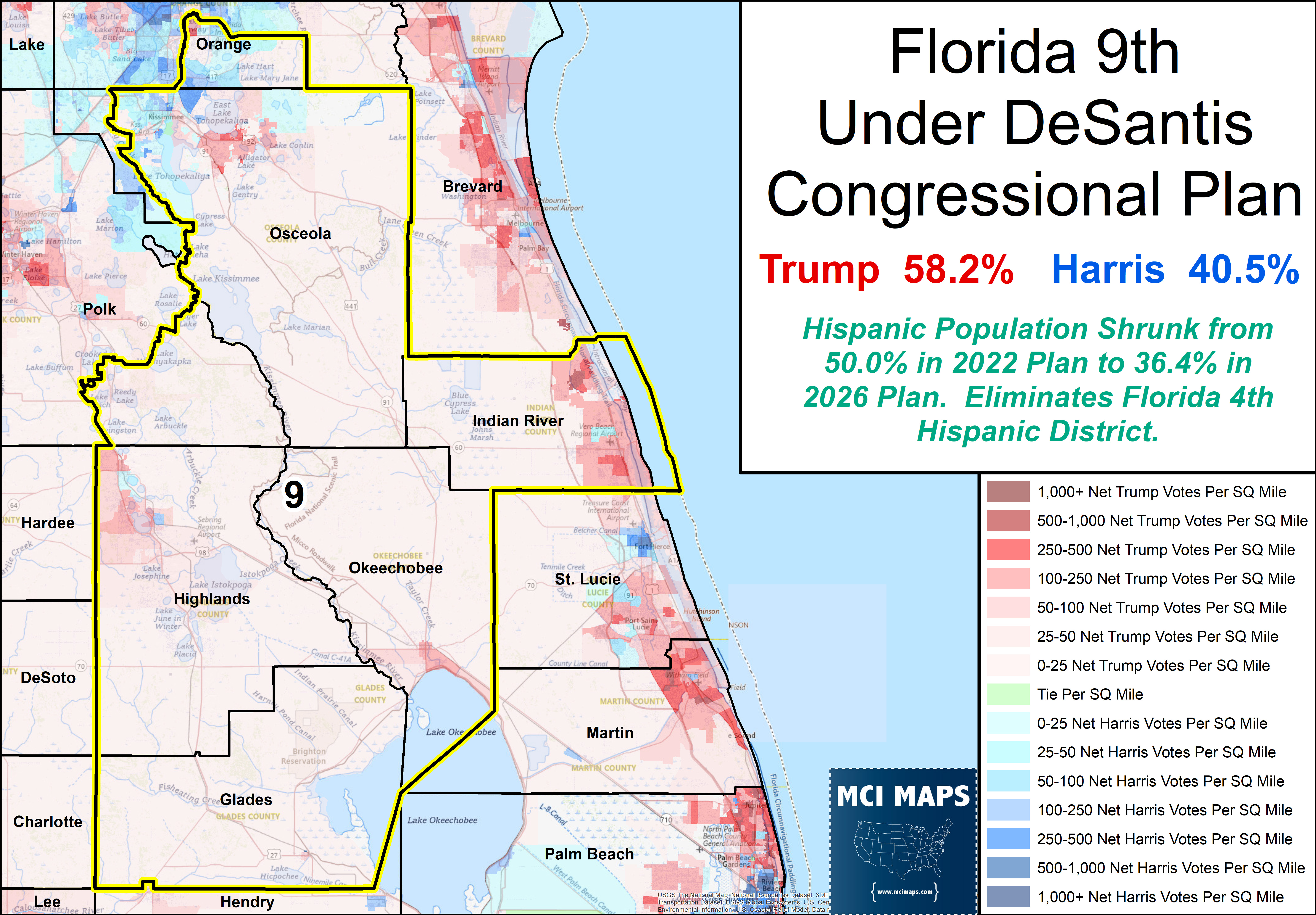
The new 9th only retains 58% of its original population. The changes are very deliberate in how they target Hispanic communities. As the graphic below shows, the areas removed from the district (in red) had large Hispanic populations. The communities added in (blue) were overwhelmingly white.
As a result of this new layout, Florida has gone from having four majority-Hispanic districts to just three. Following the destruction of Black-performing districts in the 2022 redistricting process, this latest move is another effort by DeSantis to weaken the political voice of racial minorities in Florida.
There is no way to assume this new district layout is anything but an attack on Hispanic voters. In his reasoning for a redraw, DeSantis insisted districts needed to look more compact. Ask yourself, what is more compact? The new district or the old?
DeSantis also said that updated lines were needed to account for population growth in the state. Well no group has driven population growth more than Hispanics. Today Hispanics make up 26% of the population. Since 2000, Florida Hispanics have grown in population by 112%. Non-Hispanics, meanwhile, have only grown by 19%. If it was not for the Hispanic community, Florida wouldn’t even have as many Congressional districts as it does.
Despite this reality, we now suddenly have fewer Hispanic-majority Congressional districts; with the Orlando Hispanic community scattered to the wind. This map, if it is allowed to go forward, would make the first reversal in Hispanic political power in modern Florida.
I want to put this possible change into history context. Lets look back at the rise of Hispanic political power in Florida, with a specific focus on Central Florida.
Florida Hispanic Political Growth
As mentioned, Florida’s Hispanic population is hovering around 26%. These residents are concentrated heavily in the southern half of the state. While the Miami-Dade region is the classic area everyone thinks of when they think of Hispanic residents, there has been growing Hispanic presence in both the Tampa and Orlando region. This map below shows the concentration of registered Hispanics by voter precinct.
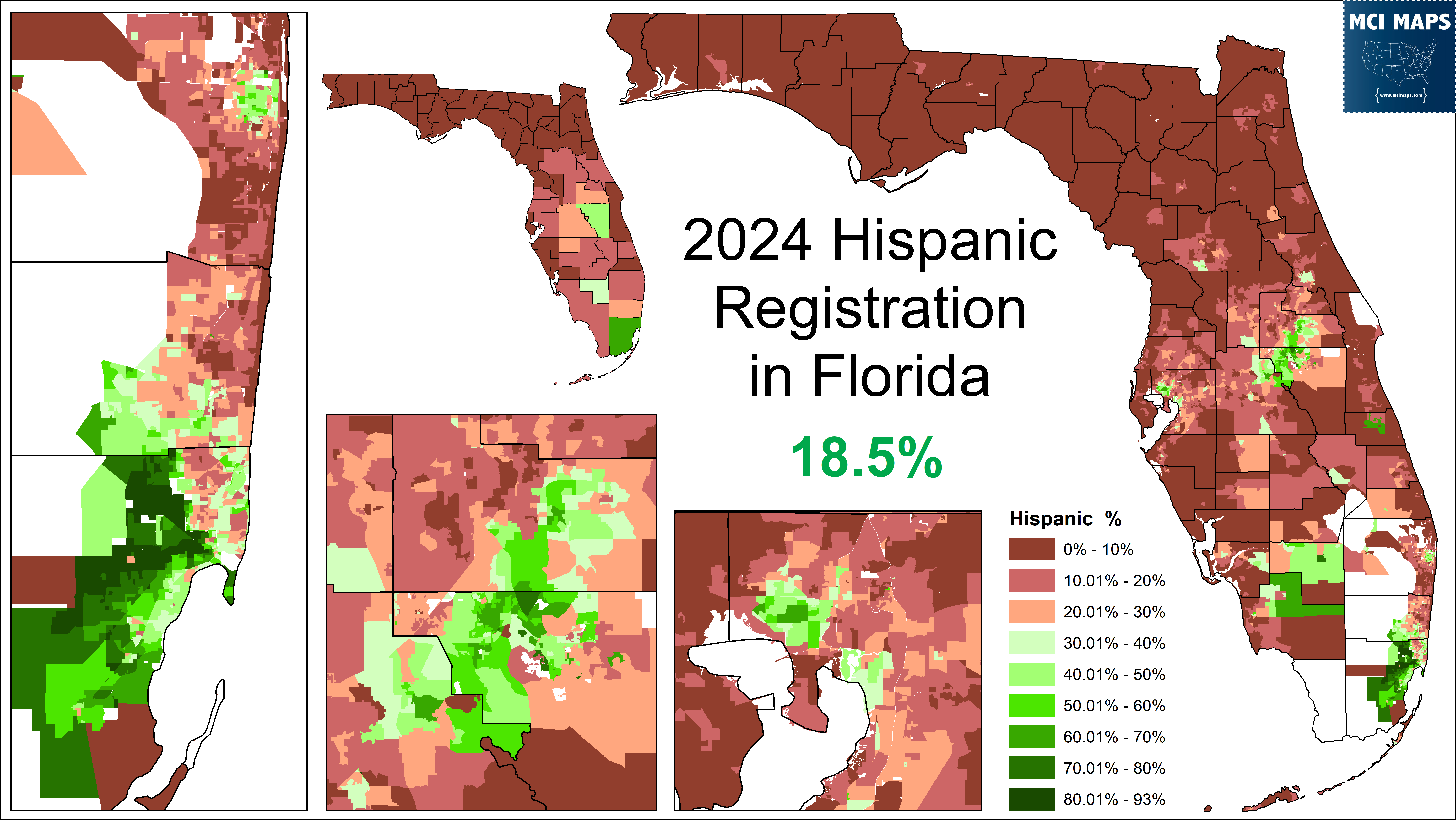
Consistent Hispanic growth had meant that after every census, and hence when the redistricting process begins, Florida has seen an expansion of Hispanic districts. What initially started in the Miami area has seen expanded districts in Orlando, Tampa, and West Palm Beach.
The Hispanic population is also very diverse. Traditionally Hispanics in Florida are thought of as Cuban. This makes sense, as Cuban migration was the big story of Florida politics from the 1960s through the 1990s. I discussed this history in my article on Miami as a refugee haven. However, as this nationality map below shows, Florida also has a large number of Mexican, Puerto Rican, and South American Hispanic residents.
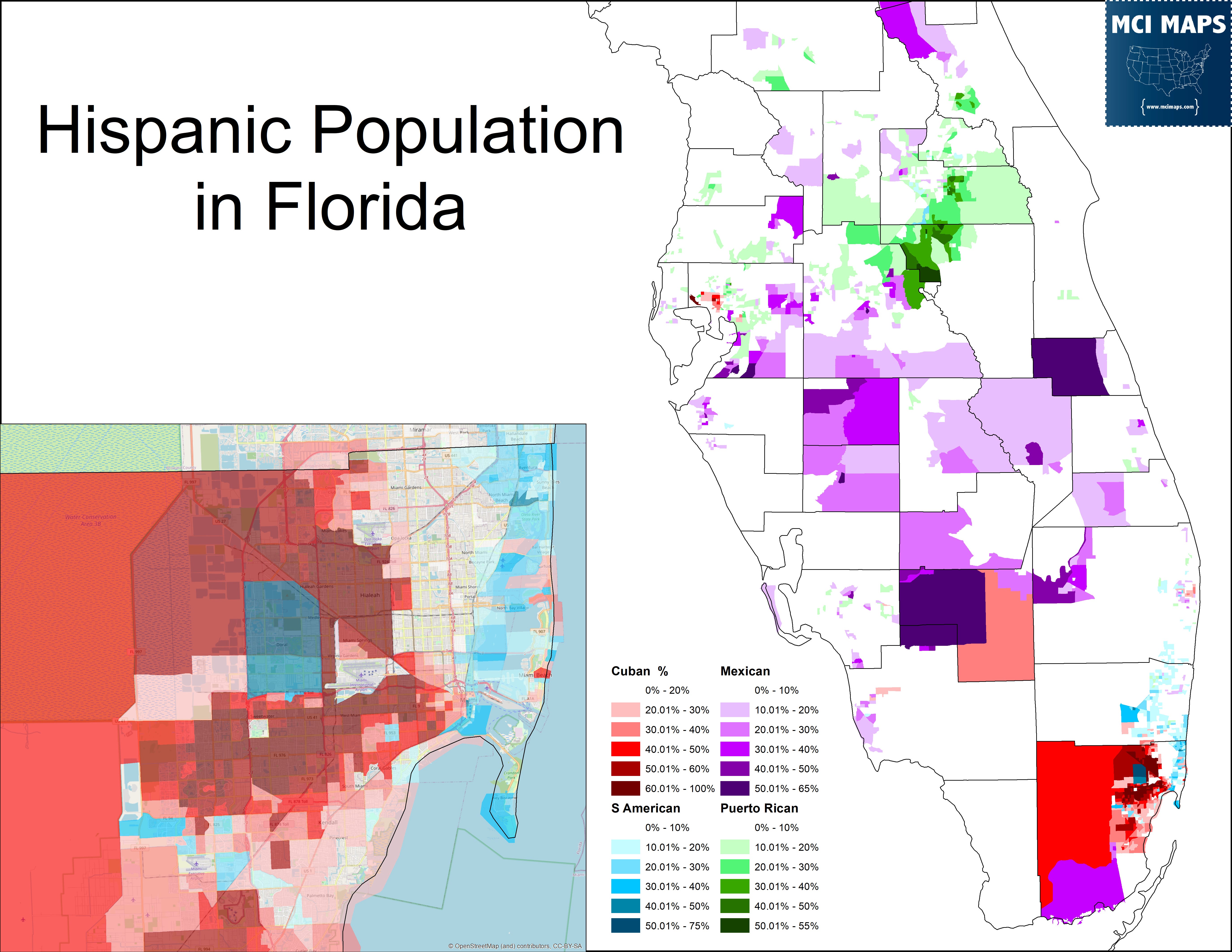
While today Florida’s Hispanic community is much more diverse, the story of Hispanics before the 1990s was much more a story of Cuban and South American migration. This migration transformed Miami-Dade County, which went from a solidly white county to majority Hispanic by 1995.

With these changes came increased political power. Florida’s first Hispanic districts were based in Miami-Dade. It was in the 1980 redistricting process that the region got its first set of majority-Hispanic State Senate and State House lines; which I documented here.
It was then in the 1990s that Florida got its first majority-Hispanic Congressional districts. With Voting Rights Act mandates in place, Florida lawmakers were obligated to draw at least two Hispanic seats. However, after the legislature could not agree on a plan, a court was forced to draw them. That whole saga can be seen here. This was followed up in 2002, where Hispanic growth allowed Florida to get a third Hispanic Congressional district; which I documented here. Historically these districts have been firmly Republican; with Democrats winning them only in a few instances; namely in 2012 and 2018.
As the population growth in the Miami metro region began to slow, the region retained the same number of seats. The new DeSantis map keeps the status quo, with little change made to the 28th and 27th districts. The new 26th has moved into Broward county; but all three remain over 70% Hispanic.
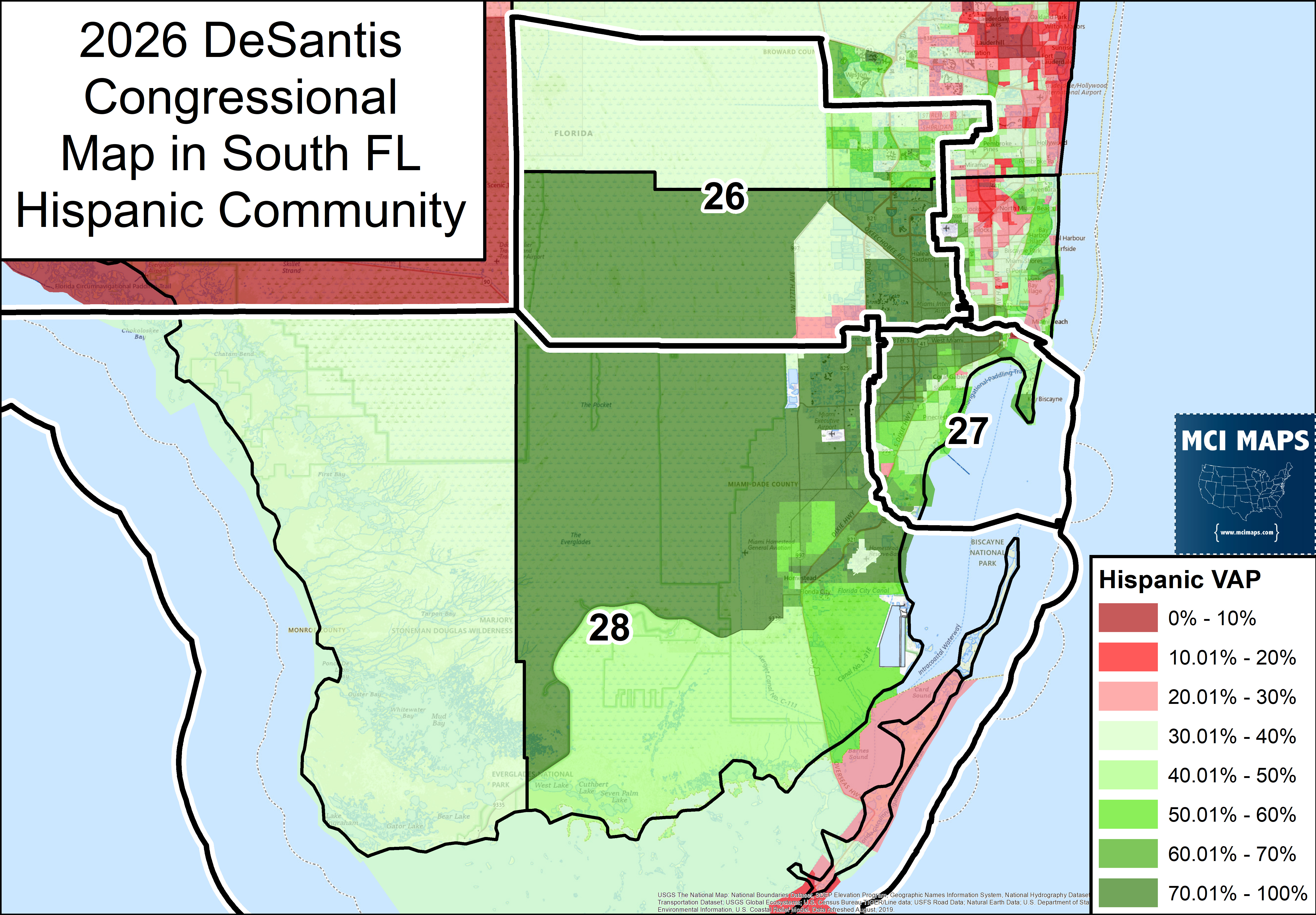
The story of Hispanic political power in Miami-Dade is a well documented event; but it is very much the story of politics in the late 1990s and early 2000s. The 21st century has seen a new site of major Hispanic growth - the famous I-4 Corridor.
Hispanic Growth in the I-4 Corridor
If you have followed Florida politics for a great deal of time, especially in the pre-Trump era, you would often here about Florida’s I-4 Corridor. This referred to a batch of 7 counties, stretching from St Pete to Daytona Beach, connected by Interstate 4. The area was the ultimate swing region of the state; highly predictive of statewide elections in the early 2000s.
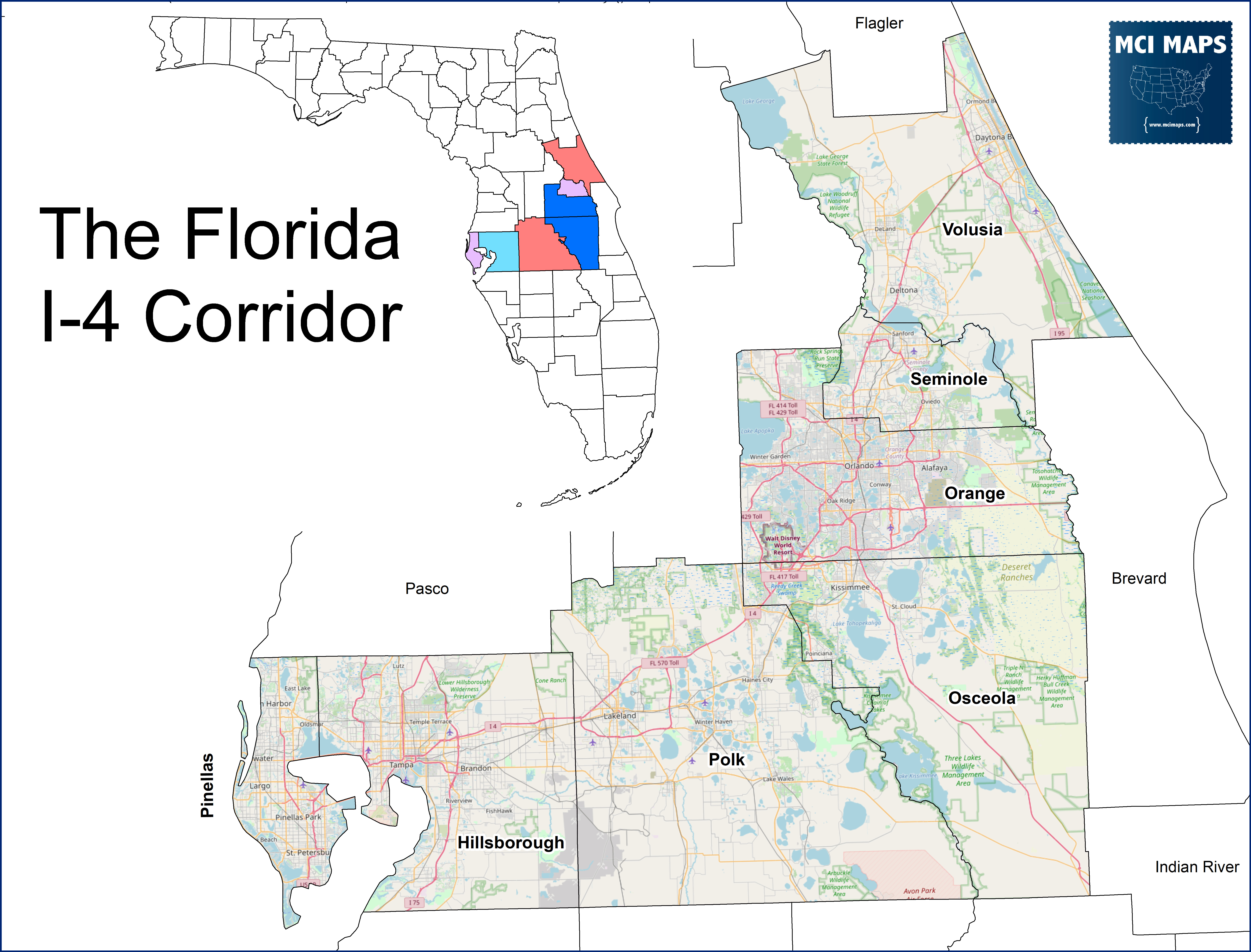
In late 2020, just before that year’s Presidential election, I wrote about the history of the I-4 corridor as a swing region. In my article, I discussed how demographic shifts were occurring in the corridor; namely the growth of Hispanic voters in the region; especially in the areas between Tampa and Orlando. This growth has been heavily driven by Puerto Rican residents. Many of them have come from the island itself, but the original drive came from people in the NYC region; who came to Florida for cheaper costs of living and a warmer climate. The 1990s to 2000s saw the initial surge and began to cement the area as the “place to go” for Puerto Ricans looking to move.
This growth is really stunning when you plot it out over time. Below I mapped out the Hispanic Voting Age Population by census tract from 2000 to 2020.
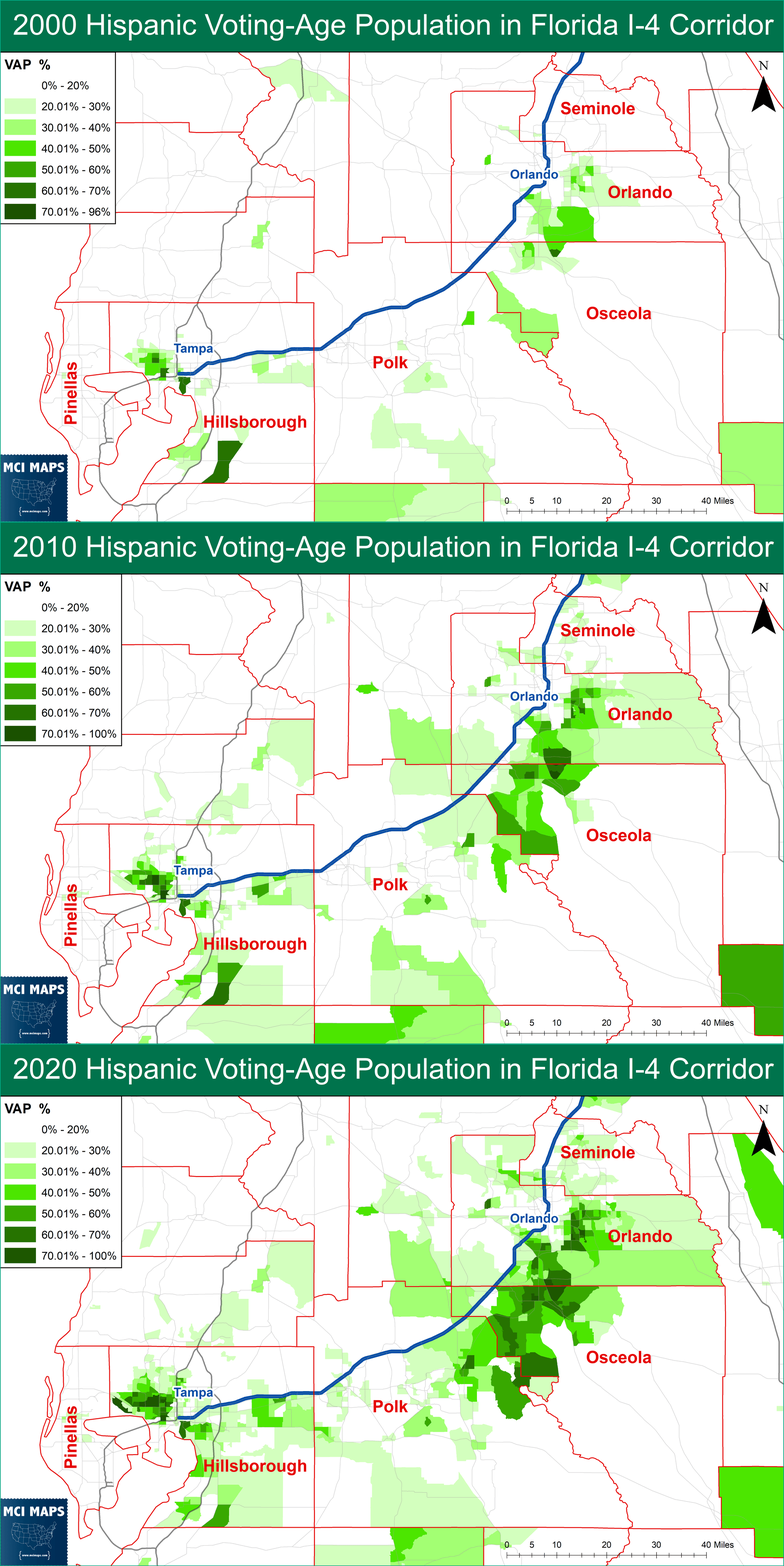
Hispanic growth has been massive in the Kissimmee region; which sits on the border of Orange and Osceola counties. Growth is also very strong in the Polk County region; namely in the Haines City area.
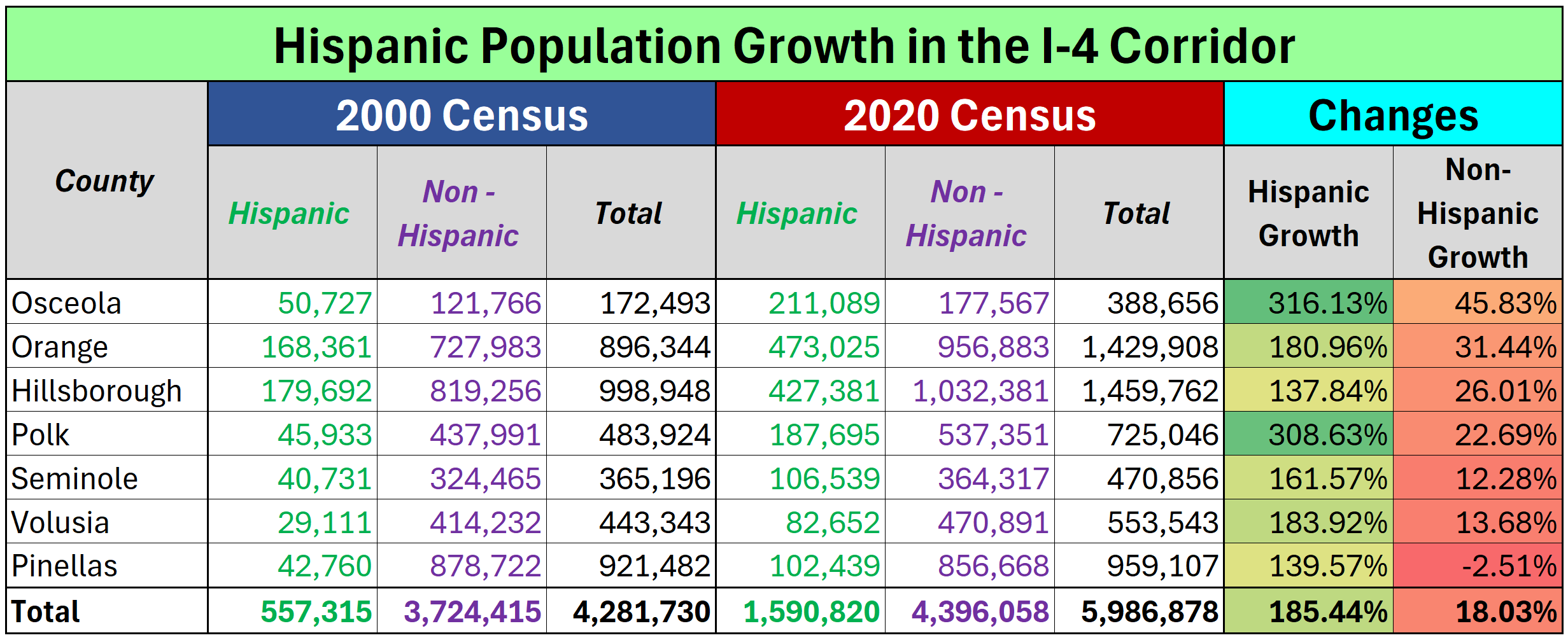
This Hispanic growth has driven the population boom in the I-4 area. From 2000 to 2020, the non-Hispanic population has only grown by 600,000. The Hispanic population, meanwhile, has grown by 1,000,000 residents JUST in these counties.
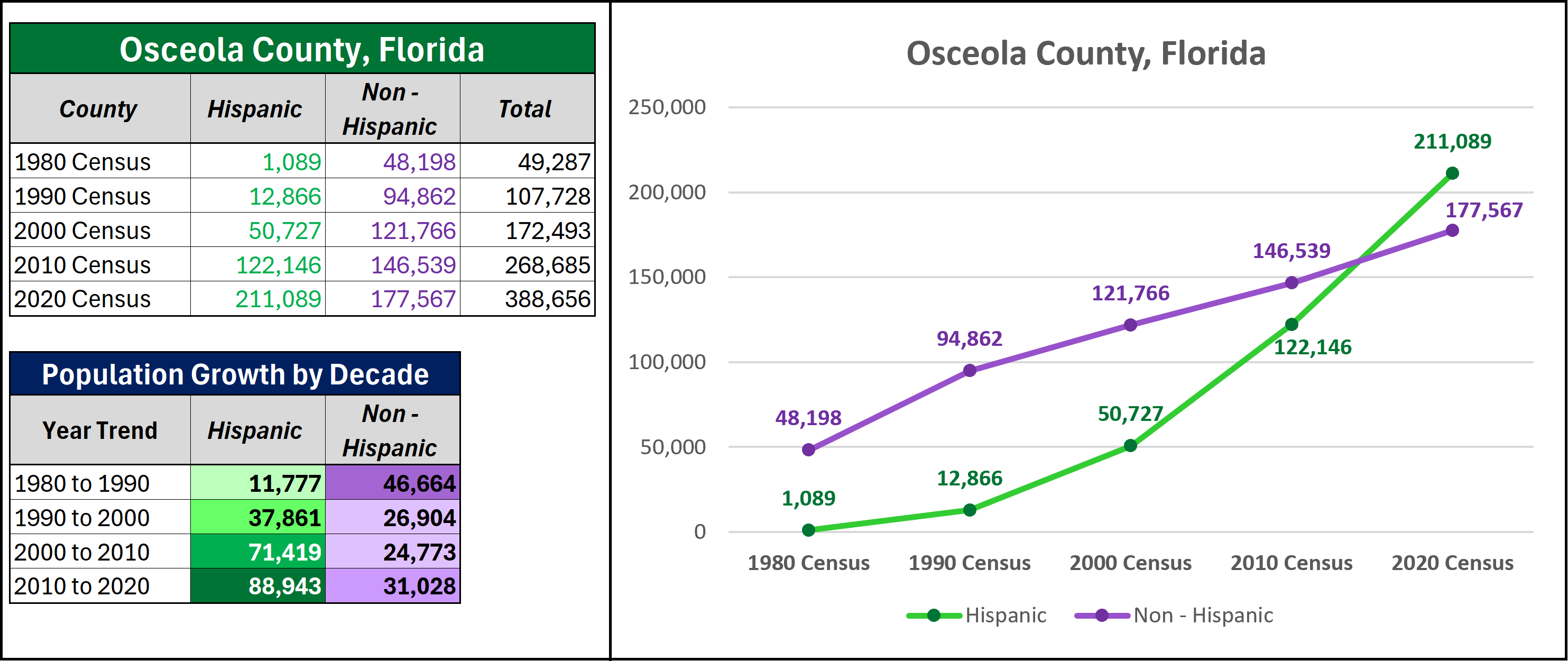
No county has been more transformed by the influx of Hispanic residents than Osceola County. Once a rural county that was heavily white, it is officially majority-Hispanic as of the 2020 census. The population shift in Osceola from 1980 to 2020 can be seen below.
With these demographic shifts have of course come shifts in voting behavior. Since Puerto Rico is a US Territory, anyone moving to the I-4 region from the island is already a citizen and is eligible to vote. This means that the central Florida region has a much smaller gap between Hispanic % of the population and Hispanic % of voters.
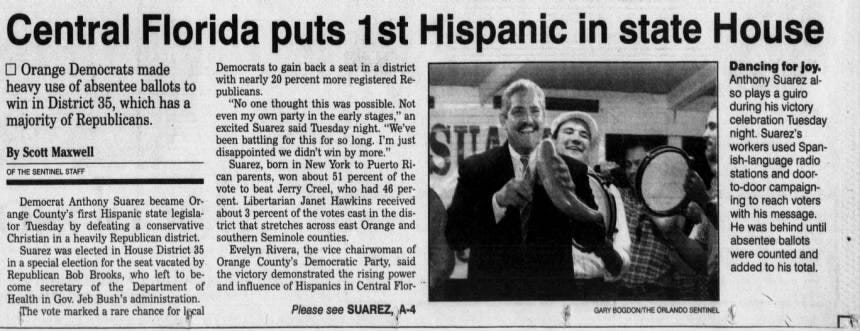
The growing power of Hispanic voters first made itself felt in a 1999 special election for State House District 35. In this low turnout race, Democrat Anthony Suarez pulled off an upset win thanks to strong turnout among the growing Hispanic population. Suarez became the first Hispanic lawmaker for Central Florida.
It was in the 2002 round of redistricting that lawmakers began to look at drawing the lines to reflect Hispanic growth. In that year’s redistricting cycle, the first time that Republicans had control of the process, a new State House seat was drawn to unite many of the Hispanic voters in the south Orange and North Osceola area. This was the new HD49.
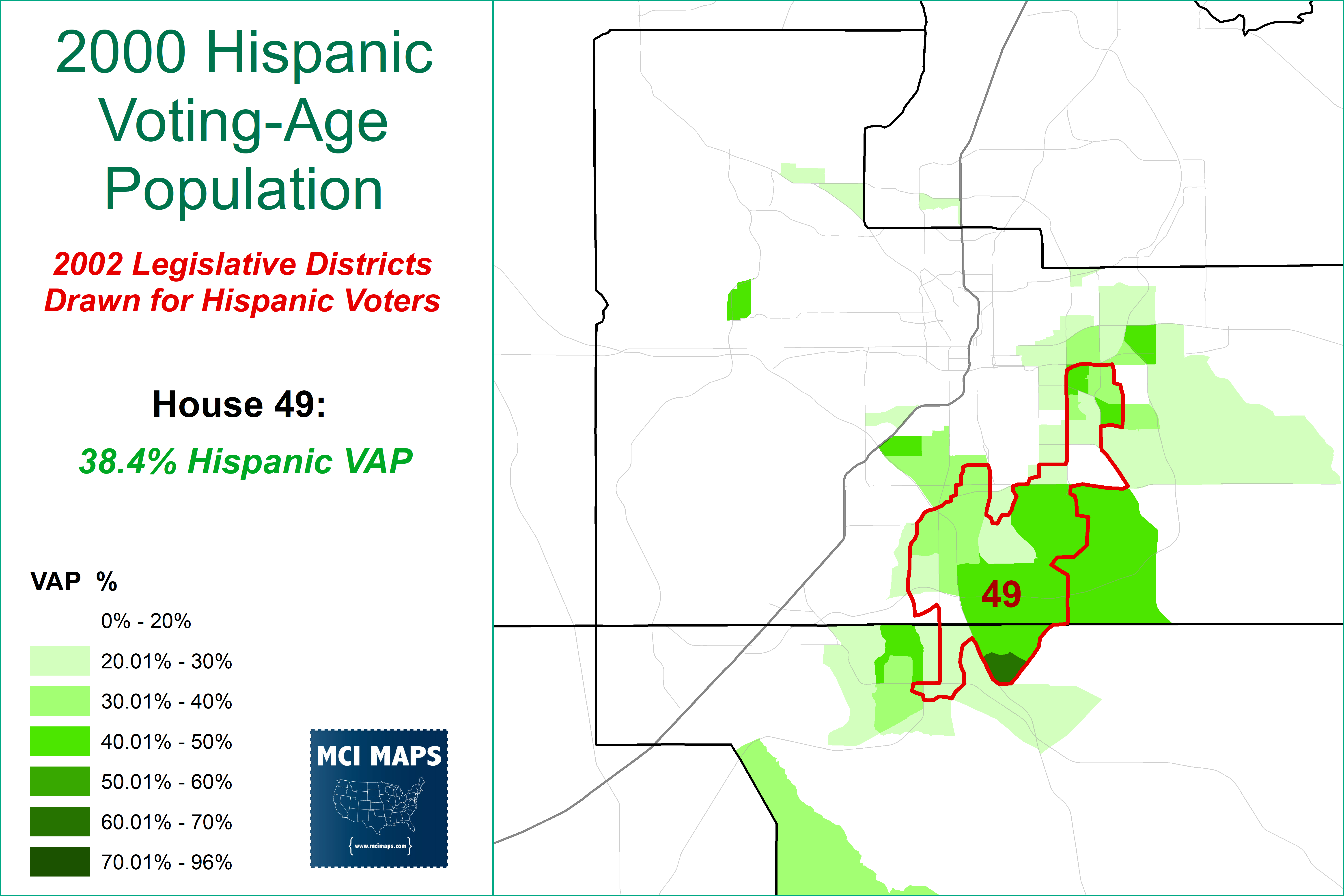
This seat quickly became the site of a major battle between two Hispanic candidates; Democrat Jose Fernandez and Republican John Quinones. While both were Hispanic, Quinones was Puerto Rican himself and ran under the argument that as a member of the majority party, he’d be able to get more for the community. While the district overall leaned Democratic, Quinones would win the race. He’d then serve in the legislature until 2007, when he would run for and win a seat on the Osceola County Commission. This came as Osceola moved to single-member districts (and away from county-wide voting) amid the Hispanic population influx and drew a Hispanic-majority commission seat. House District 49 was won in a special election by non other than Darren Soto.
By the time the 2012 redistricting process came around, the Hispanic population in Central Florida had rapidly expanded. By this point it was easy to draw TWO state house seats that would be over 50% Hispanic. In addition, a Congressional and State House seat were easily drawn to have large Hispanic populations.
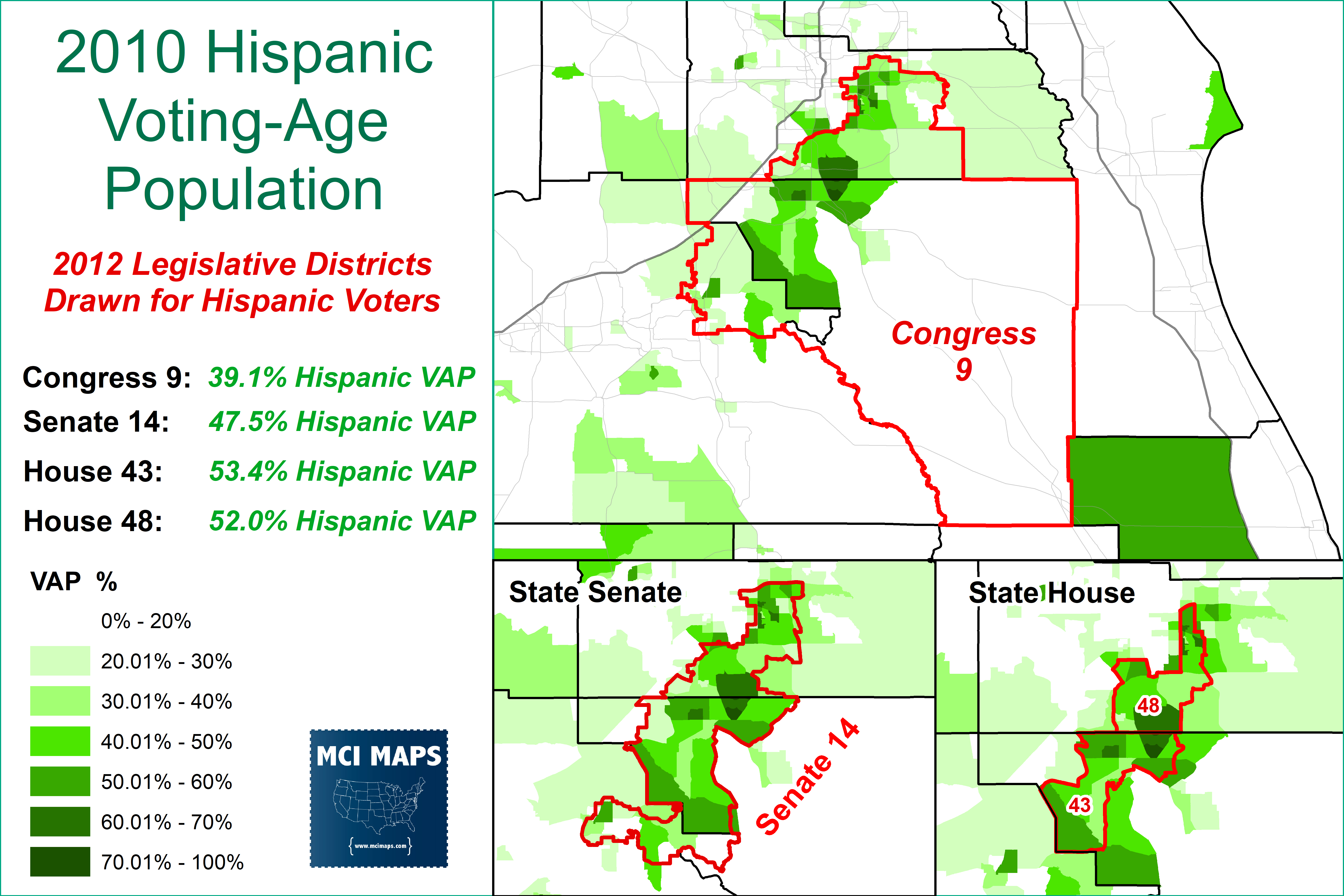
With the creation of the newly-Hispanic plurality Senate 14, Darren Soto ran for an easy won the seat. Both house districts elected Hispanic Democrats; as by this point the Puerto Rican population was firmly Democratic.
The newly drawn 9th district was 43% white and 39% Hispanic. Compared with the 2010 census figures, the growth among Hispanic residents is clear.

The Congressional district was initially held by Alan Grayson. However, when Grayson decided to run for US Senate in 2016, a major three-way democratic primary took place. This also came as the Congressional districts were being redrawn amid a court order. The whole saga is documented in this previous article of mine. Long story short, Darren Soto won the Democratic primary in the newly-drawn 9th Congressional District.
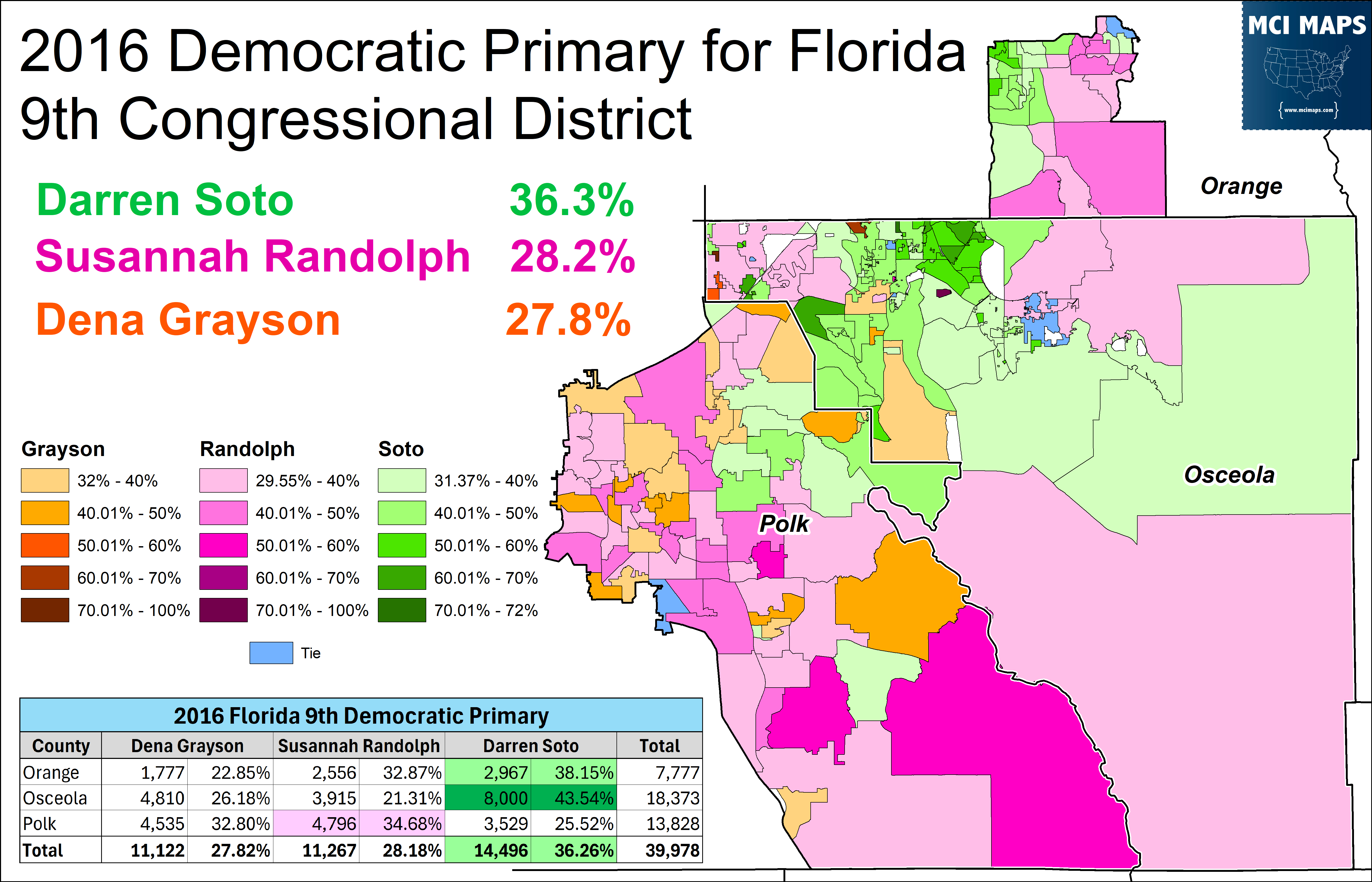
With this primary win and follow up general election win, Darren Soto became Florida’s first Puerto Rican member of Congress. His state senate seat, meanwhile, was won by Victor Torres; who likewise as Puerto Rican descent. Soto would face off with Alan Grayson in a 2018 Democratic Primary, but easily prevail.
When the 2020 Census figures came out, they again confirmed massive Hispanic growth in the region. With the new figures, the number of Hispanic seats at all levels of government expanded. The 9th Congressional district was easily drawn as a Hispanic-majority seat. The number of Hispanic majority or plurality state legislative seats also greatly expanded.
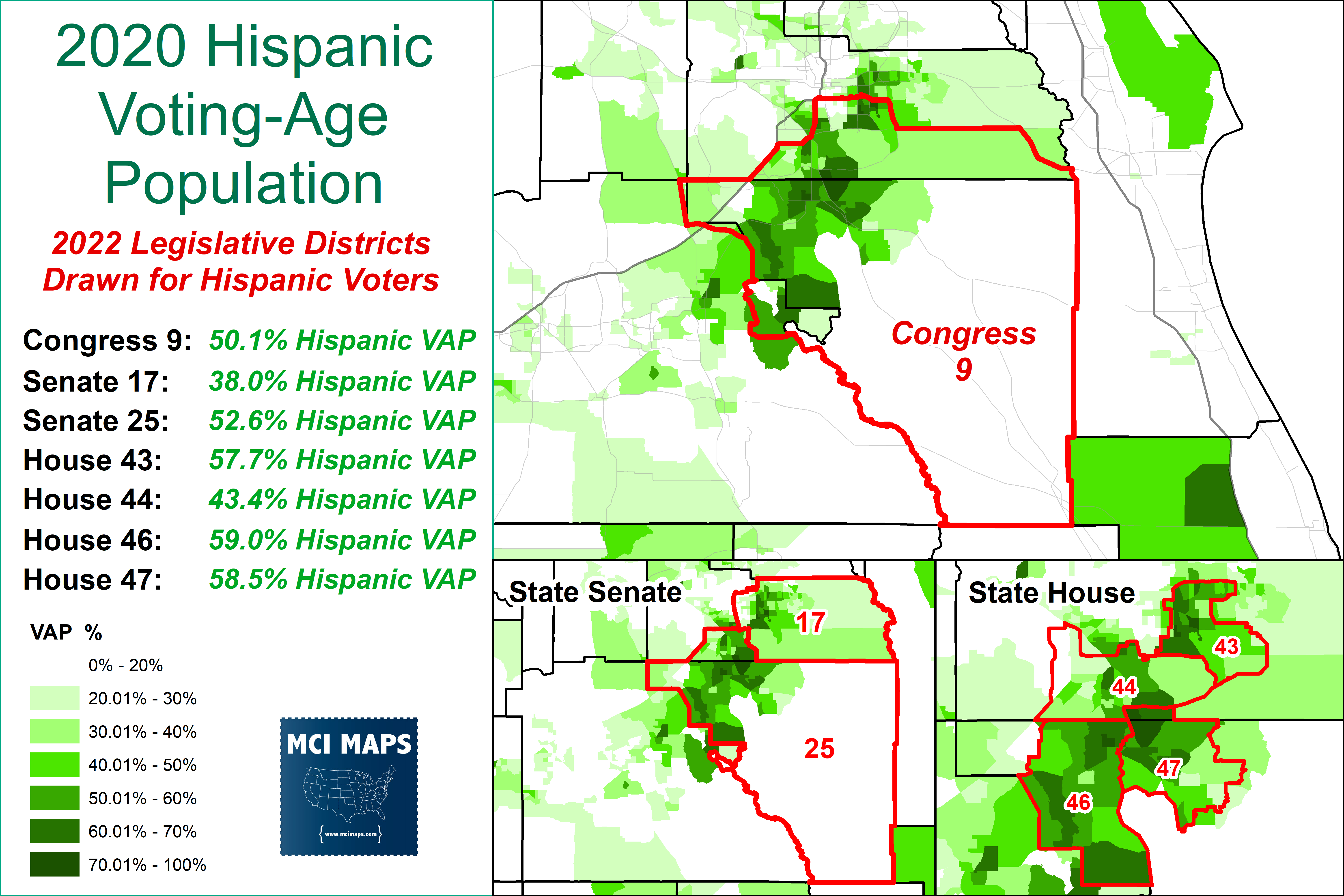
You will notice that it was easy to draw the 9th as a compact seat. While the right-wing constantly frame minority-access seats as always being bizarre-shaped districts, the 9th was incredibly compact. It included all of Osceola County, portions of Orange, and portions of Polk. With Hispanic voters heavily concentrated in a corridor, it is easy to draw a seat that includes a large chunk of that population while also adhering to county and city boundaries.
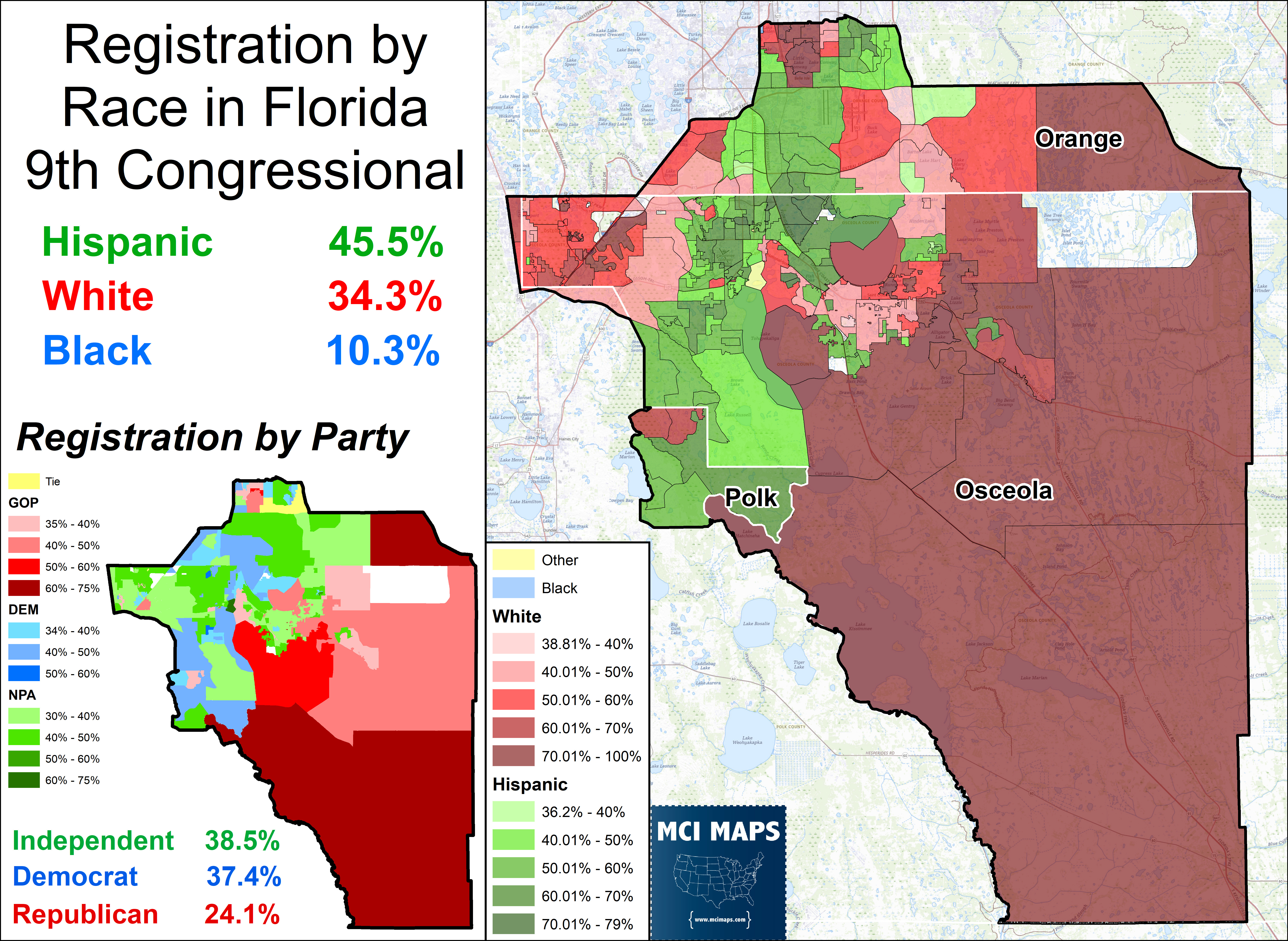
The power of the Hispanic vote in this region has only continued to grow. Not even discussed here is the growth of Hispanic representation at city and county levels; but the figures there are just as notable. The story of Hispanic political power growth in Central Florida is playing out the same way it did decades ago in the Miami region. Only time will tell how these figures continue to evolve.
Until now, the story of Central Florida redistricting was a steady increase in Hispanic representation. What the new Congressional map does, however, is roll political influence for Hispanics BACKWARDS for the first time.
I think there is a very specific reason this happening now.
The Hispanic Backlash to Trump
As I referenced earlier, one of the first articles I wrote after the 2024 Election was how Puerto Rican voters in Florida had swung further to right. Driven largely by concerns over the cost of living and inflation, Puerto Rican voters split their tickets across central Florida; voting Republican or Democratic depending on the race. Republicans in the region felt a boon to their chances in the area. Republicans had held on to the Hispanic-majority 47th House seat and almost secured an upset win in the majority-Hispanic 25th district. While Congressman Soto had much easier held on, there was a clear swing to the right in his seat. Many Florida Republicans believed they were on the cusp of converting Puerto Rican voters into a Republican constituency like Cubans broadly have been.
This hope from the GOP, however, was quickly dashed by elections over the last year. Hispanic voters, whether Cuban or Puerto Rican, have shown they will respond to events and are not a lock for either party. With Trump’s administration engaging in its inhumane attacks on immigrants AND Hispanic US citizens (who get accosted by ICE agents for the crime of looking brown) - electoral reckoning has come for the GOP at the ballot box.
Across the country, special elections and regular elections have shown major Hispanic swings back to Democrats. This was seen in special legislative races in Texas as well as the New Jersey Governor election. It has also clearly been the case in Florida, with the first major election result being the Democratic flip of the Miami Mayoral Election. That race saw Democrat Eileen Higgins secure a landslide win in a city where the vote was 60% Hispanic; with about half of that Cuban.
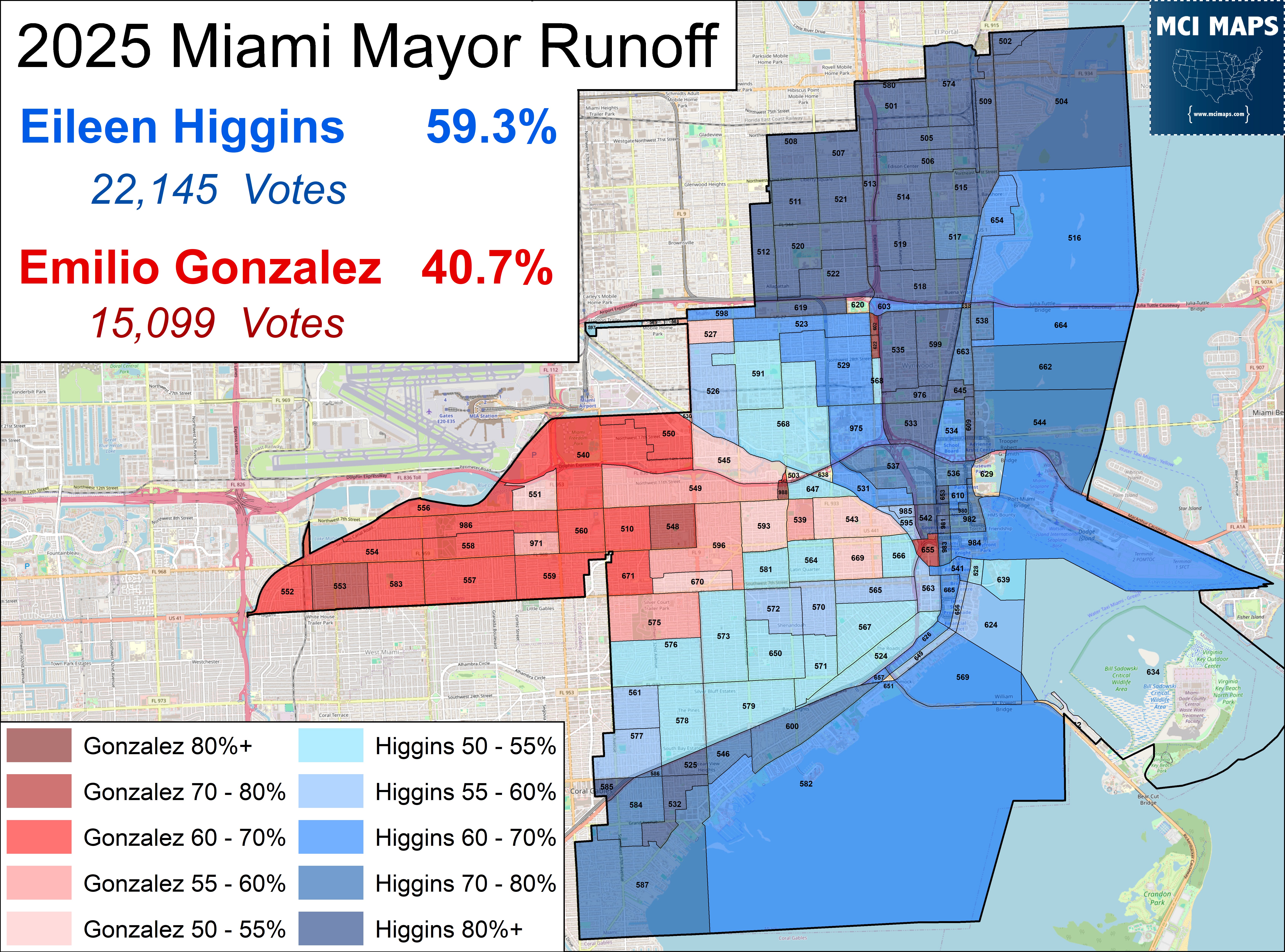
I documented the race and results in detail, and you can see my final report for detailed looks at the race. The long story short is that Higgins won by winning non-Cuban Hispanics and significantly narrowing the Republican lead with Cubans. ICE tactics and Trump’s failure to address cost of living issues were cited as major issues in the race.
This trend continued in March, when Democrats won two special elections for Trump-voting State Legislative districts. I wrote about these victories here; but the key item to gleam from the elections was how Hispanic voters swung in the races.
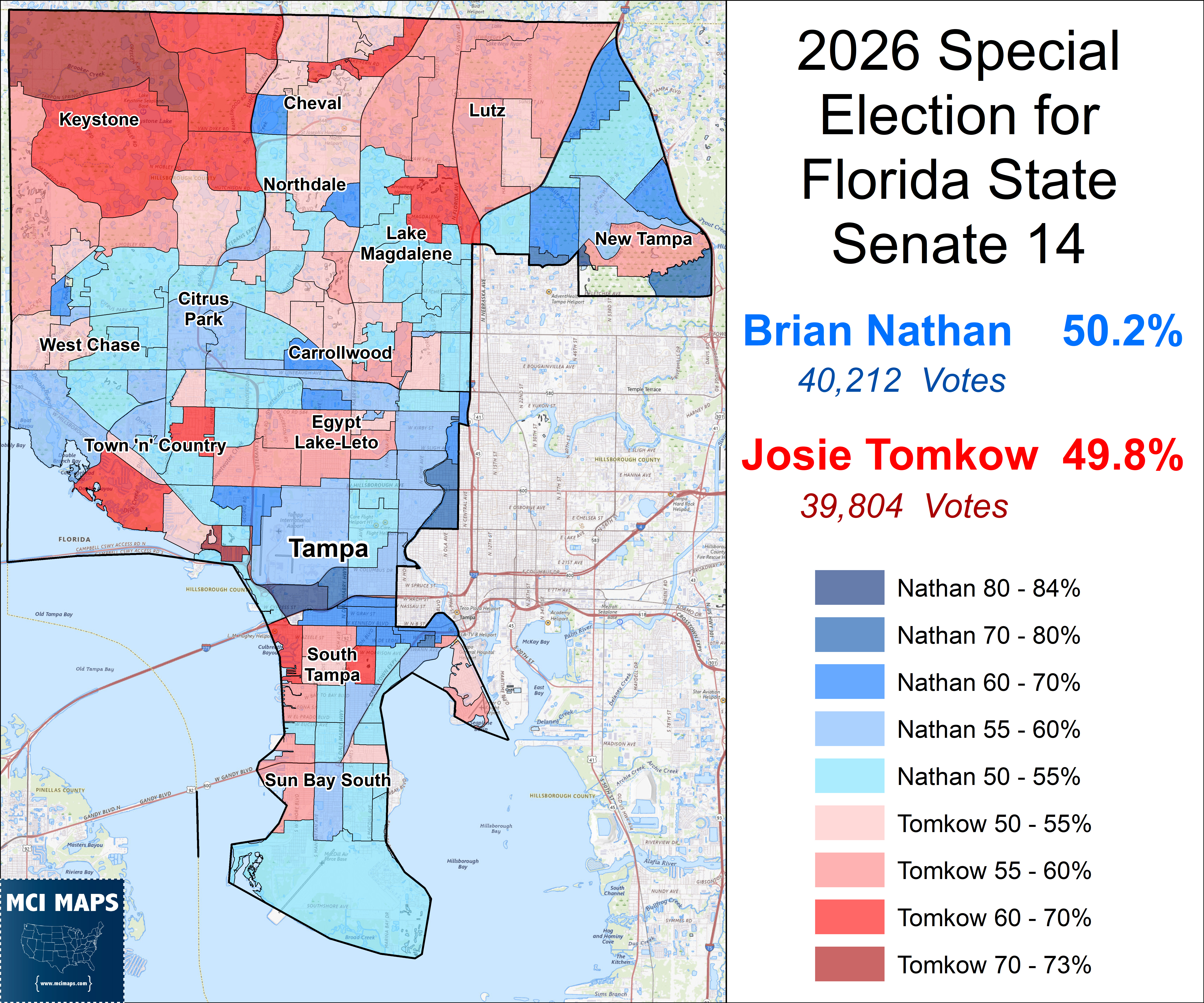
In the race for State Senate 14, which includes Tampa’s Hispanic population; which is more heavily Cuban than Puerto Rican, Democrat Brian Nathan far outperformed Kamala Harris. The most heavily Hispanic precincts swung from Trump +12% to Nathan +1% in the race. Considering how close the result was, this secured Nathan the victory.
The other major Hispanic swing did not even come in a district Democrats were targeting. While the second Democratic flip came in the largely-white House 87 seat located in Palm Beach, a third legislative race was up that same night. House 51, a seat covering northern Polk County, had a much quieter special election.
In that race, Democrat Edwin Perez ran a grassroots campaign against Republican-funded Hilary Holley. This Trump +14% seat saw a swing to the left, backing Holley by 8%. However, the precincts on the east end of the district; areas that are much more heavily Puerto Rican, saw swings well over 20 points.
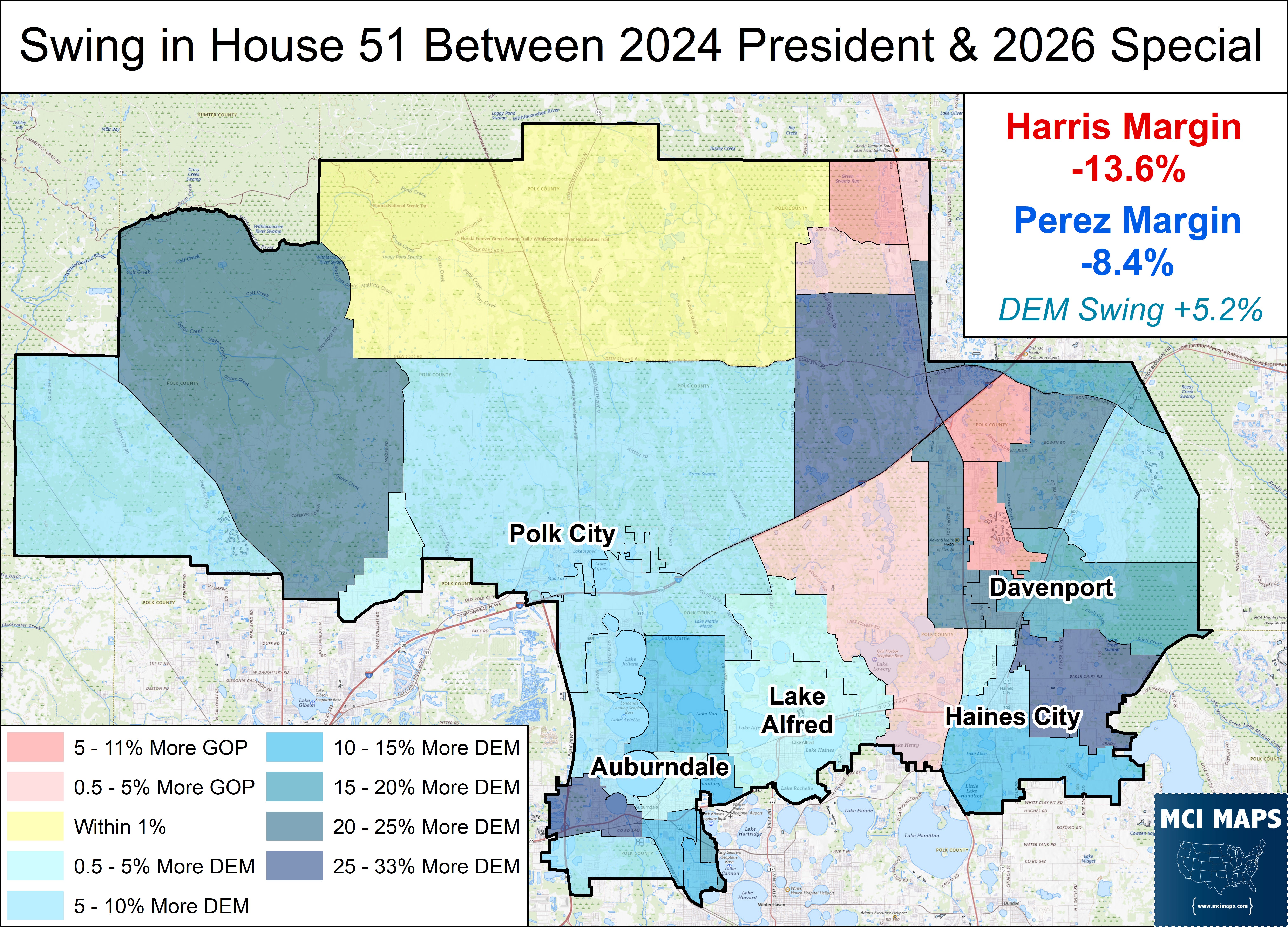
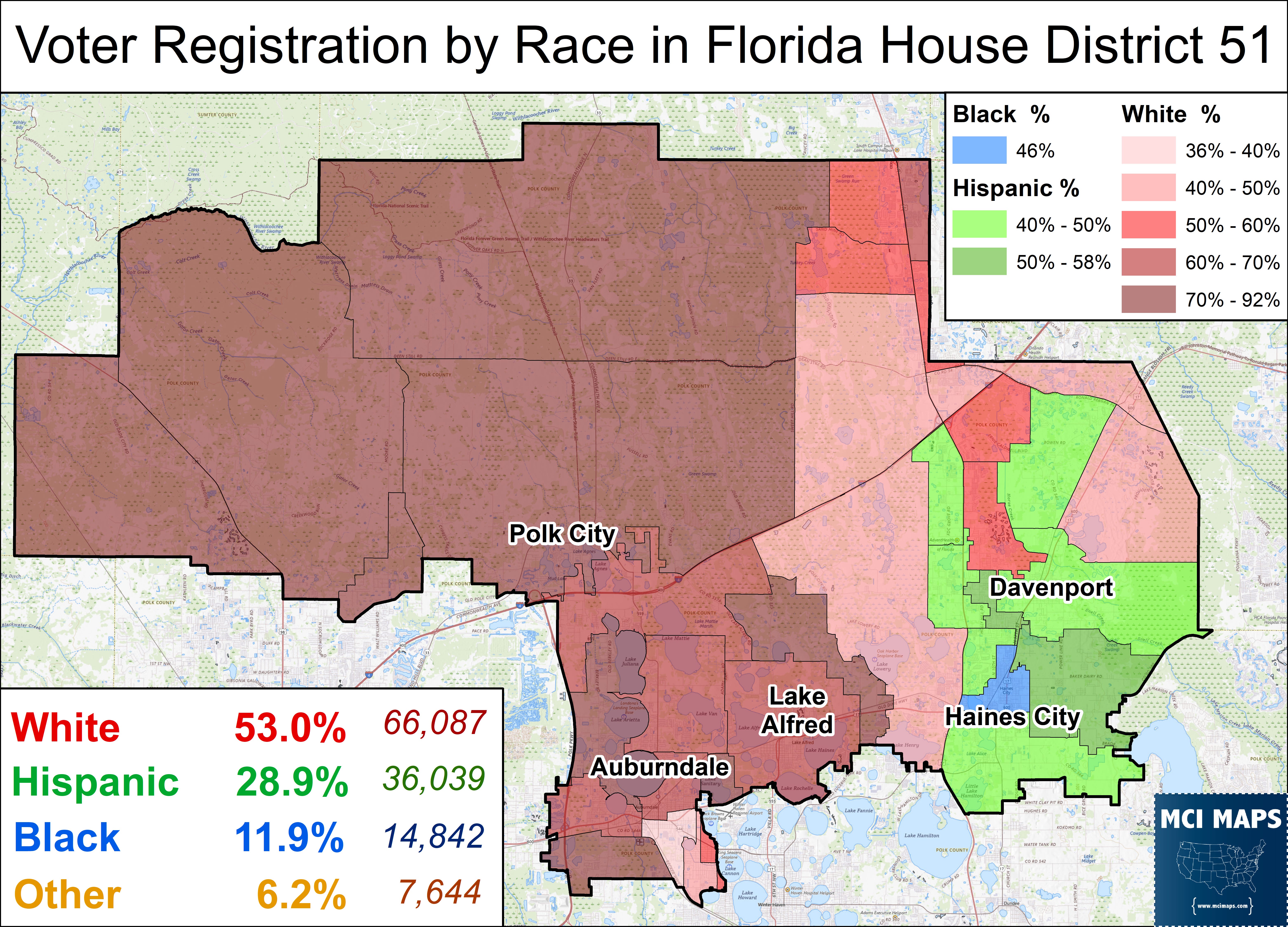
The combined Hispanic precincts saw their vote go from Harris +1% in the 2024 election to Perez +19% in the special election. Massive Democratic gains. Check out my post-election analysis article for far more detail on both of these races.
With the recent election results in Florida, it is clear that Republicans are not optimistic in their ability to win back over Hispanic voters. That also isn’t just limited to the Orlando region either. If we look at the changes to Congressional lines in Tampa, the new lines (left side) split the Hispanic community by Tampa directly in half. They were united in the 14th district in the 2022 map (right).
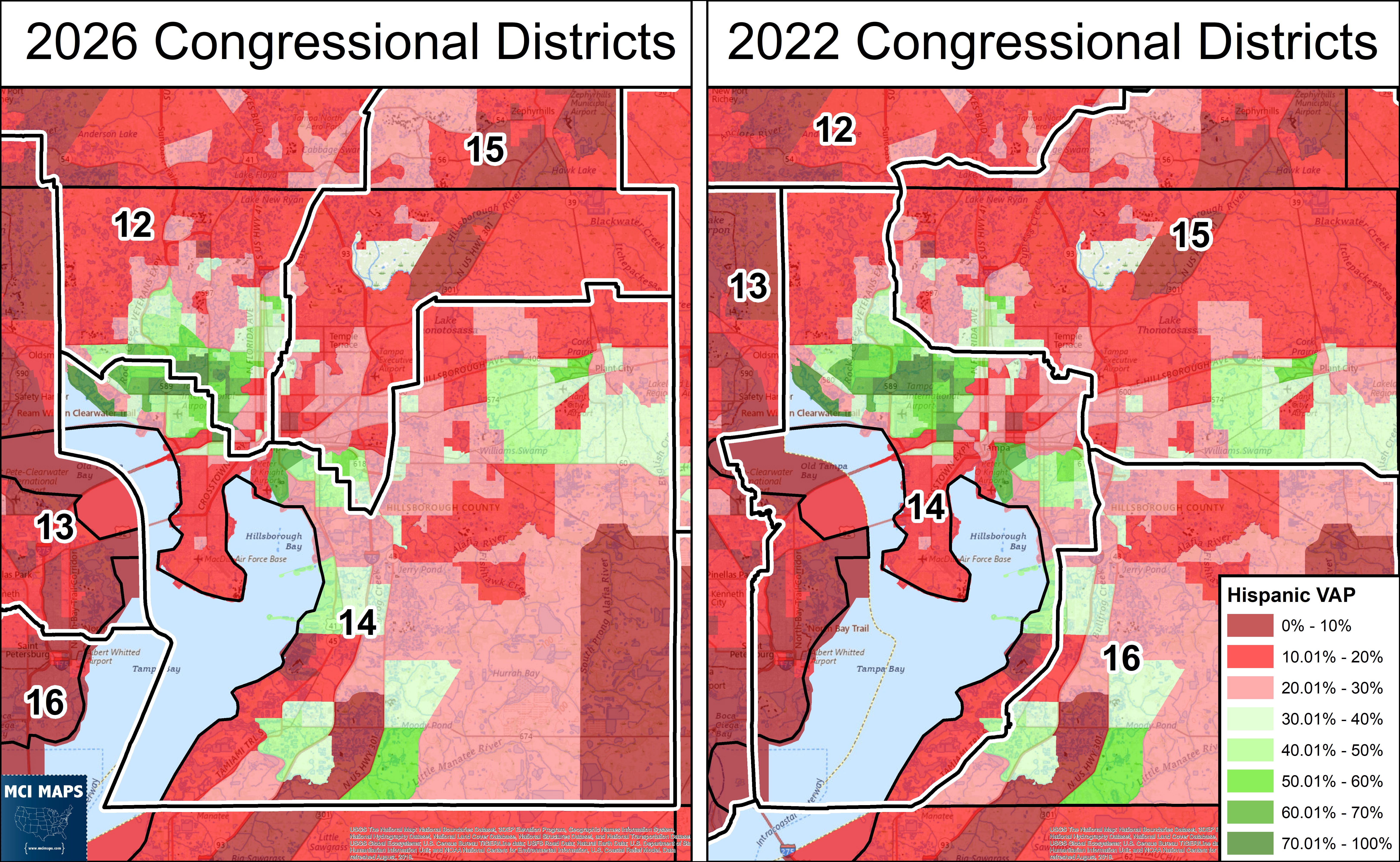
This change, which I document in more detail in my article from last week, was designed to make Democrat Kathy Castor’s 14th district much redder. With the recent special elections showing that very block swinging to the left, they suddenly find themselves sliced in half.
Final Thoughts
The new Congressional map has no shortage of issues, and I will be writing about even more in the coming weeks. This was the first topic I wanted to discuss, however, because it is not just an issue of political gerrymandering, but racist gerrymandering. The line changes in Orlando specifically seek to minimize the influence of a community that is the single biggest source of growth in the region. The Hispanic influx in Orlando had made the area a new economic hub that far outpaces Disney World and brought an entirely new and diverse culture to the region.
With their new map, Republicans have sough to reverse the political influence of these voters. A compact racial minority has seen itself cracked and hence its influence with any individual district diminished or erased. It marks the first time in Florida history that the number of Hispanic Congressional Districts has declined.
Hispanic voters in Central Florida have shown themselves to have an independent spirit and not beholden to any party. That was not good enough for Ron DeSantis and the Republicans in the legislature. When Hispanic voters began to swing back to the left, the only choice in the mind of people like Ron was to diminish their united voice.
I’d expect nothing else from our George Wallace fanboy of a Governor and the lemming lawmakers of this state. We can only wait and pray that perhaps the Florida courts have some sense of decency when the inevitable lawsuit over these lines reaches their desk.
Excellent. I testified for the DOJ in the Osceola case that resulted in the districting of the County Commission. It's fascinating to see what was predictable in 2006 come to pass, and very dispiriting, but not surprising, to see DeSantis destroy it.
I appreciate your maps very much. I used a couple of them in my testimony in Common Cause v. Florida SOS.
Fantastic stuff as always Matt! The best analysis out there and I wish this article itself could be submitted to the court. It would say everything that needs to be said.
DeSantis you could argue is even more fanatical than George Wallace on race because once back as Governor in 1971, Wallace despite the racism he used to regain the government leadership in the Democratic primary of the previous year did not go to these lengths to stop minorities from voting. He did not go to these lengths to stop the teaching of actual real history in the state universities. He did not have an administration that implied any minority that had a job had gotten it due to something that was less than meritorious.
I turned into an author about history the last several years just because of DeSantis, because I felt so much of our state’s history suddenly being misrepresented deliberately that I had to do what I could to correct the record. Your historical work on this Substack do the same thing. They correct the record, they tell the real story.