
Issue #294: How will Florida's Democratic Primaries for Governor and Senator go?
Why progressives struggle in Florida

In just under two weeks, on August 18th, Florida will be holding its primary elections. The primary will cover hundreds of races across the state, all the way from US Senate and down to county commission. I am working on a MASSIVE primary preview series that will look at every partisan primary from statewide, congress, and state legislature; as well as select local contests of note. These previews often top in at 10,000+ words; and you can read my previous entries in the archives. Today, however, I want to give special attention to the statewide Democratic primaries for US Senate and Governor.
These contests have not generated nearly the same attention and money as other primaries in other states. A major factor is that the Democratic primary winners will be underdogs heading into November; leading to outside groups not spending time in the state to prop up specific candidates. However, both primaries still important dynamics that will say something about how Florida’s Democratic electorate is leaning. Both primaries have moderate vs progressive dynamics; especially the US Senate primary. The Florida Governor’s race is largely a contest between former Congressman David Jolly and State Representative Dotie Joseph. The US Senate primary is between veteran Alex Vindman and State Representative Angie Nixon.
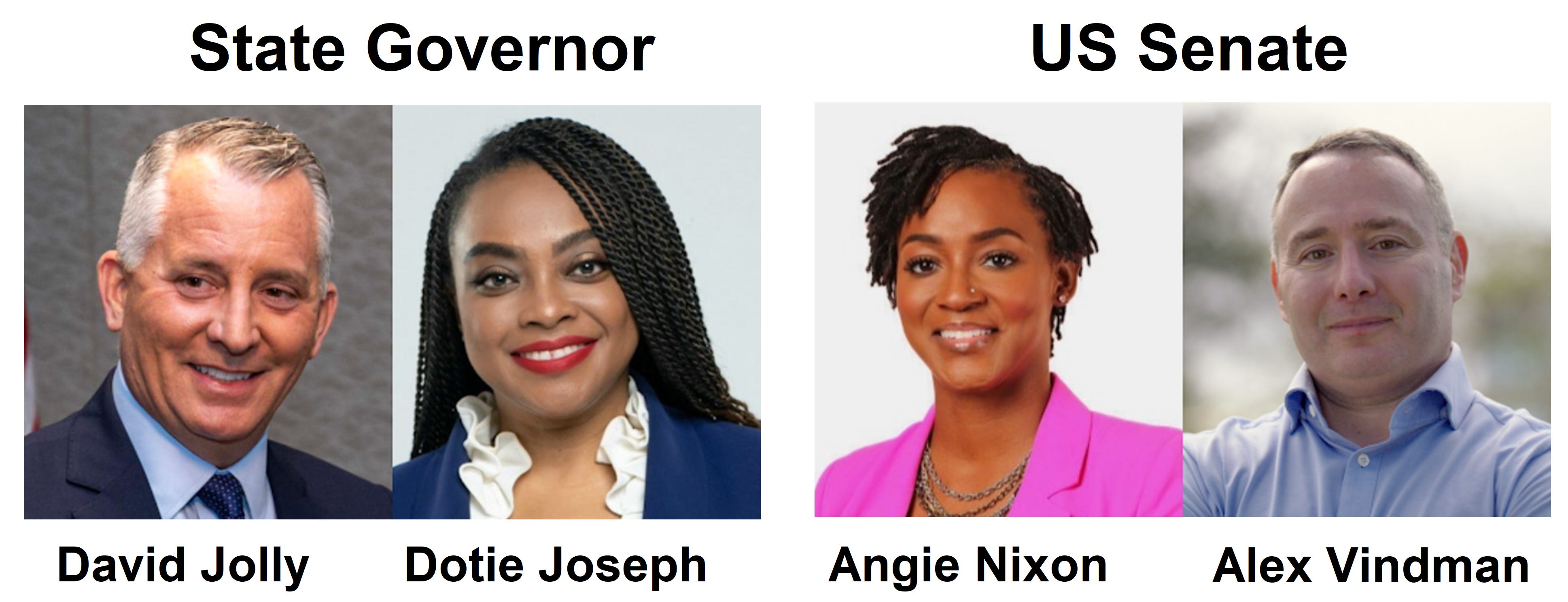
This article is first going to look at both races and the candidates involved. Then I am going to look at the history of Democratic Primaries in Florida and why they have historically been rough for a progressive campaign; and then look at if things could be different this time for either race.
The Democratic Primary for Governor
Democrats have a total of six candidates running for the Governor nomination this year. However, the race is really between two candidates: former Congressman David Jolly and current State House member Dotie Joseph.
That race does offer a ideological divide in the primary. Jolly is a former moderate/technocrat Republican who left the party in the Trump era. Joseph has been a reliable Democratic/liberal vote in the state house. The primary for Governor was initially a battle between Jolly and Orange County Mayor Jerry Demings, who was the county’s first Black Sheriff and Black Mayor. Demings, however, stepped aside from the race when he was diagnosed with prostate cancer in June. It was after this withdraw that saw Joseph file to run in the Governor’s contest.
I have already written quiet a bit about Jolly in a article from June, which you can see below. Jolly has already selected former Congresswoman Gwen Graham as his running mate for office. The ticket is clearly designed to be a moderate/bipartisan slate, aiming to win crossover Republican votes; something needed in a state where the current Republican registration lead is over 1.6 million voters.

I go deep into Jolly’s backstory in that article, so I will not repeat myself here, but will note some key points. Jolly became Congressman for Pinellas County as a moderate Republican in 2014 after longtime Congressman Bill Young passed away. While in Congress, Jolly had a modestly conservative/moderate voting record. Notable defections from the GOP came with his support for gun control, same-sex marriage rights, and supporting bans on oil drilling off the Florida coast. While initially elected an an anti-Obamacare push, Jolly would make headlines in 2017 for compliments to some parts of the law; namely the benefit of its protections when you face unemployment. Jolly has tilted more to the left with time, going from initially being pro-life to now supporting abortion rights.
In 2016, Jolly refused to endorse Donald Trump and remained critical of the President. Jolly left the Republican Party in 2018, declaring it was best if Democrats won those midterms. After floating an independent or Democratic bid for a few years, Jolly formally joined the Democratic Party last year and announced he would run for Governor. The primary between himself and Jerry Demings never got nasty before Demings stepped out of the contest. A May poll had Jolly leading Demings 42% to 27%, with many still undecided. Jolly was notable for spending a good deal of 2025 and 2026 working to win over skeptical Democratic activists, and his genuine nature helped him build trust.
When Demings left the race, Dotie Joseph jumped in. Originally born in Haiti, Dotie Joseph is a Yale-educated attorney that came into electoral politics in 2018. That year, Joseph rallied Democratic support to defeat incumbent Democrat Roy Hardemon in the primary for the Miami-area House District 108. Hardemon was a controversial incumbent with a string of personal scandals and who angered teachers groups with his support for charter schools. Joseph heavily outraised Hardemon and won the race easily.
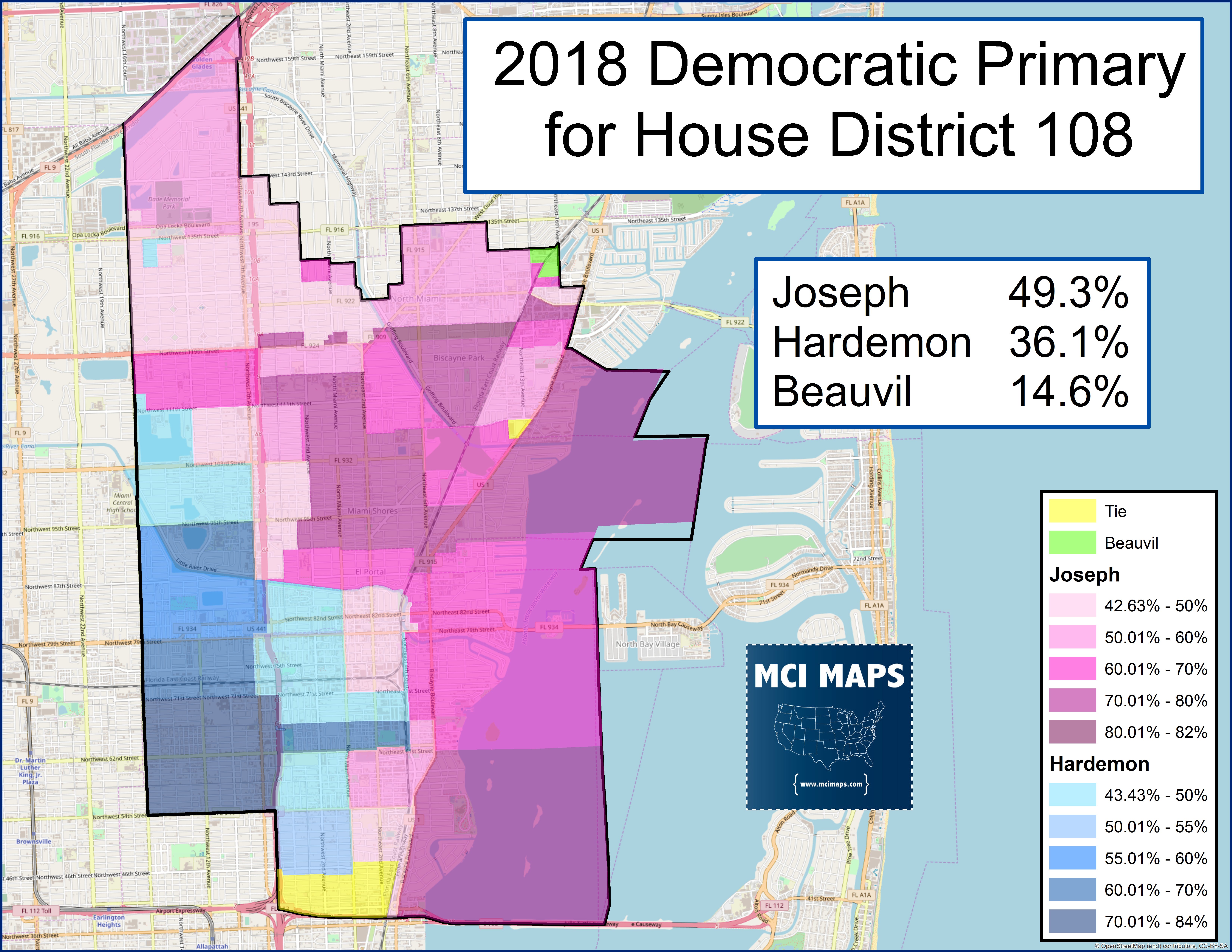
Once Joseph was in the House, she secured easy re-elections going forward. There was no initial rumbling that she was considering a Governor bid, so her entry took many by surprise. Joseph told the Florida Press core that she spoke with Mayor Demings before entering the contest; saying she felt Democrats needed an alternative choice.
“I want to give voters an option to vote for someone with a solid record of fighting only for them, not whomever can fill their campaign coffers. Now, that’s not a shot at Jolly, for sure. I’m just saying that, like many Floridians, I am tired of the culture wars here and into being pulled into foreign wars abroad. And when we have so much to focus on here at home, I want to focus on us. Our real need to make Florida affordable for all.”
Joseph has needled Jolly on his Republican past, but has not “attacked” Jolly in any hyper-partisan way.
“He seems like a nice guy; unfortunately, with all of the special sessions we’ve had in the Legislature, I have not had the opportunity to personally meet with him. What I can see is his record while he was serving as a Republican congressman, which has been pretty much the opposite on the key issues that are important to me, and what I believe is the opposite to many Floridians. So that’s how I got in the race.”
Joseph is a very strong policy wonk and her run is not just a protest against Jolly. Joseph’s comments reflect a modest unease that some Florida democrats have about Jolly, but also reflect there is little ANGER at Jolly. The race has remained cordial. Joseph’s biggest problem is her late entry and hence lack of money and name ID. In the few weeks she has been running, she has raised $77,000; Jolly, meanwhile, has raised $5,800,000 and spent $3,000,000; and that is just from the official campaign account.
A rapid fire poll that came out once Joseph entered continued to have Jolly at 42% with Joseph back at 6%. This poll actually showed a third candidate, teacher Dayna Marie Foster with 11%. Coming from Change Research, the poll has no cross-tabs or name-ID numbers, so I cannot say much more about that. Foster, based out of Dt Lauderdale, has raised just $30,000; but has generated attention online as another possible alternative to Jolly. The three other candidates have not generated as much attention or money, though you can read about them here.
By the time of the primary, Dotie Joseph should be better known, and not securing at least second place would surprise me. Joseph being based in the Miami media market and her short campaign will boost her numbers, especially with Black voters. The poll does, however, reflect the problem for Joseph in getting in so late.
The late entry of Joseph has left Jolly as the presumed nominee, though he remains focused on securing the primary. Jolly has been heavily credited with working to convince Democrats to give him a chance, something that has led to less hesitancy in backing his nomination. In the last week, Jolly secured the endorsement of Orlando’s progressive Congressman Maxwell Frost.
While the race for Governor has remained largely cordial, things have become much more heated in the primary for US Senate.
The Democratic Primary for US Senate
While the Governor primary has a total of six candidates running; the race for Senate is entirely a two candidate affair. For much of the year, retired lieutenant colonel Alex Vindman has been the primary front-runner. A former Director for European Affairs for the National Security Council, Vindman made national headlines as the whistle-blower in 2019 over Trump threatening to without aid to Ukraine unless President Volodymyr Zelenskyy found dirt on Hunter Biden. The scandal sparked Trump’s first impeachment by the US House. Vindman eventually left his post, citing retaliation for his whistle-blower status. He announced his campaign for US Senate in January of 2026 and currently resides in Broward County.
Before Vindman entered the contest, the primary for US Senate was between former Brevard School Board member Jennifer Jenkins and State Representative Angie Nixon, who had filed just days before Vindman. Jenkins was a progressive school board member that clashed with people like Randy Fine, the blowhard Congressman from Congressional District 6. In order to oust Jenkins, Republicans gerrymandered the school board districts. A Jenkins vs Nixon primary initially seemed like a choice of two progressives. However, once Vindman jumped in, Jenkins withdrew from the contest and is now running for Congressional District 8.
Nixon entering the primary with Vindman has set up a very distinct choice in the Senate race. Nixon has long been a outspoken progressive who cared little for “civility politics.” She originally came to the State House in 2020, when she absolutely demolished incumbent Representative Kim Daniels in a Jacksonville State House Seat. Daniels, who I have called the worst Democrat in Florida, was a conservative and frankly crazy voice in the legislature, and Nixon, who received major help from Democratic officials, decimated her in the primary.
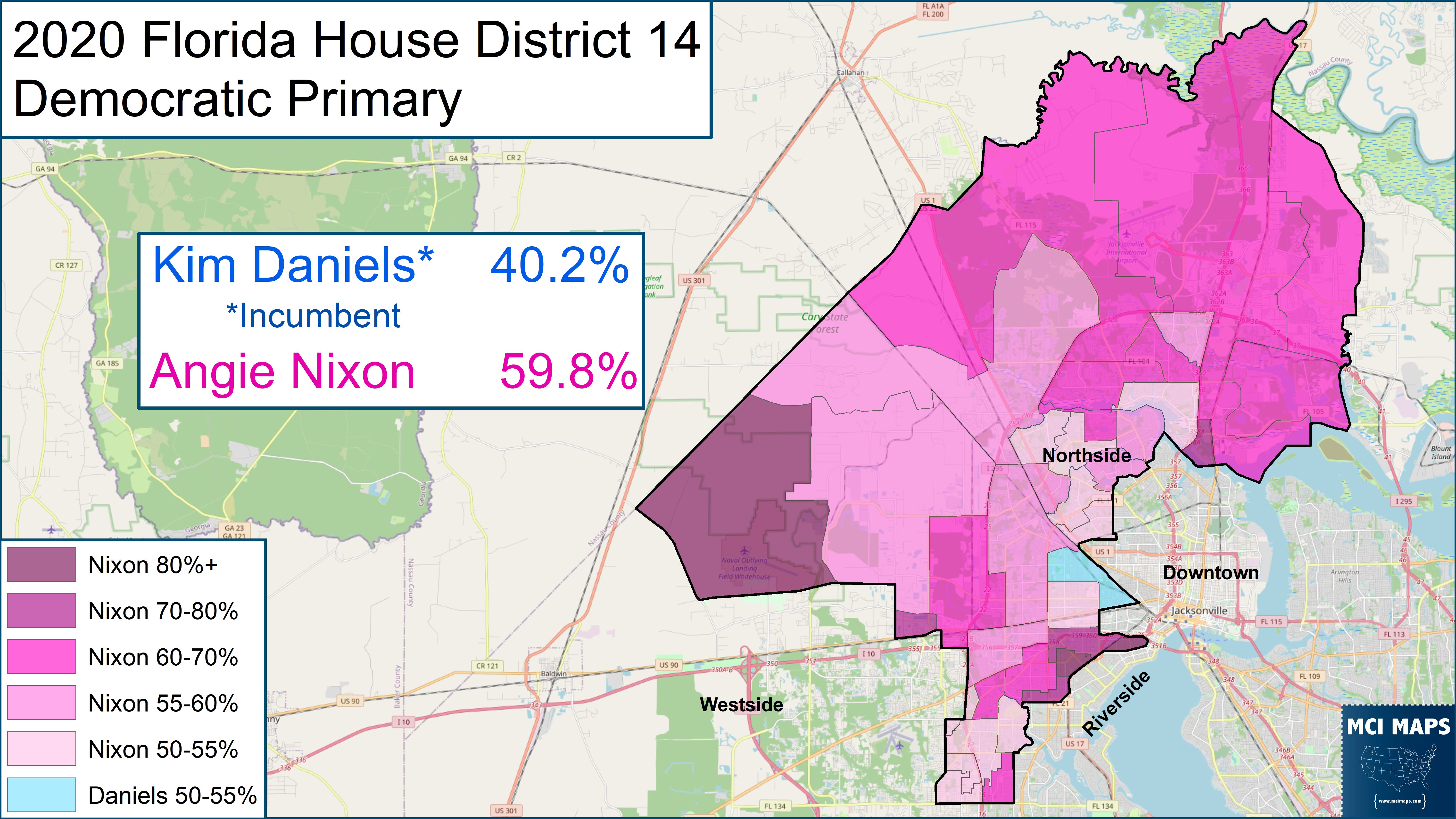
During her six years in the legislature, Nixon has been a loud and passionate voice. This has at many times clashed with the collegial (and fake) atmosphere of the legislature. In 2022, as DeSantis rammed through a racist Congressional map, Nixon led a sit in on the House floor.

These protests were followed up in 2026, as another racist gerrymander was passed. As the House voted on another Congressional map, Nixon took the floor of the house with a bullhorn; decrying the process. Following this, she led a sit-in at the Governor’s office; which led to her being arrested and charged with trespassing. I find all of this awesome, btw. Don’t think for a moment this is something I’m saying that is meant to be “critical.”
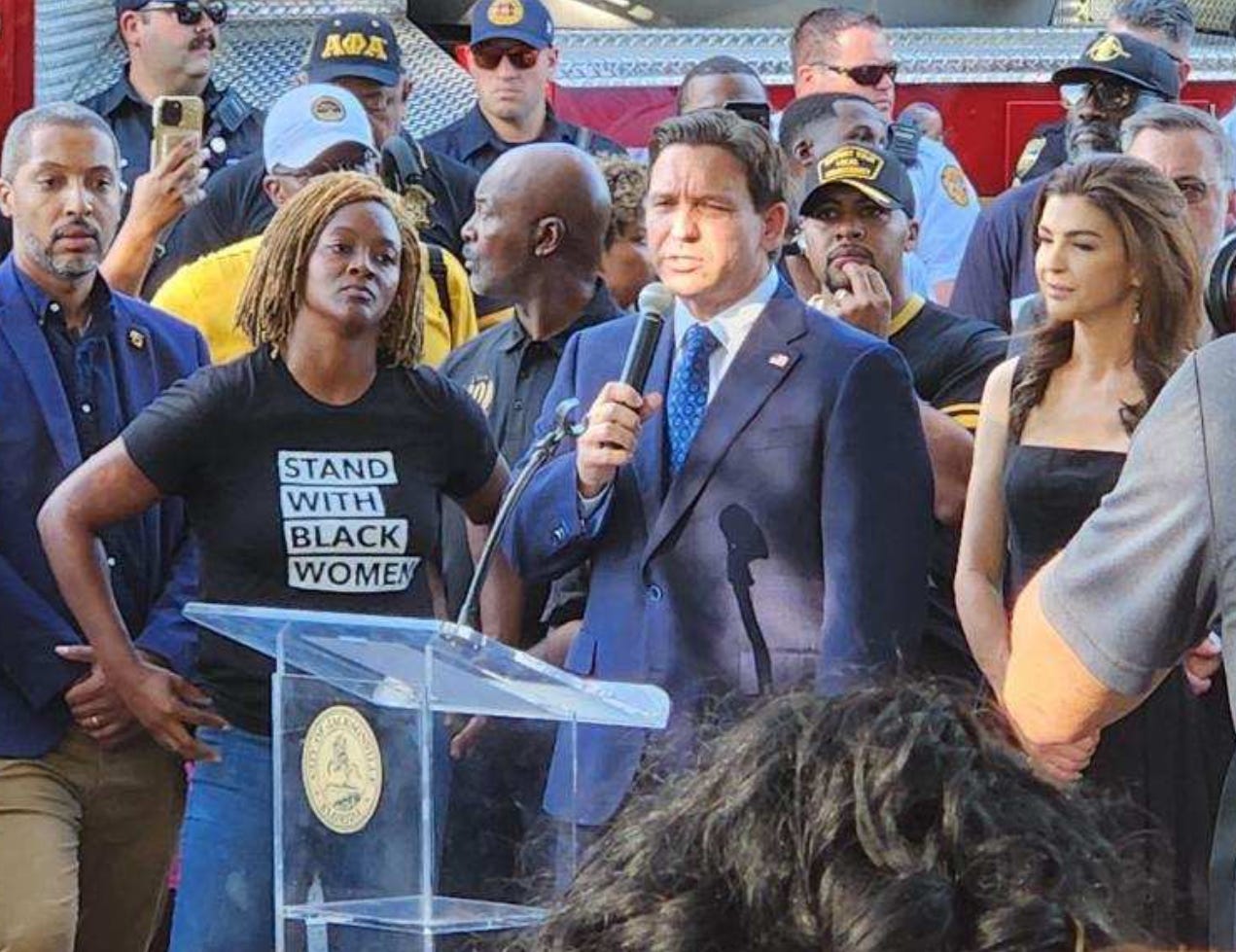
Nixon and Governor DeSantis have nothing but contempt for each-other. This was no better seen in a 2023 photo. That year, after a domestic terrorist killed three black residents in Jacksonville in a racially-motivated attack, DeSantis crashed the press conference arranged by Black leaders – you know – because he totally cared. The photo of Nixon, clearly annoyed, glaring at DeSantis, made national headlines.
While of course Republicans fume over Nixon’s refusal to play niceties, many Democrats also don’t prefer her style. In 2024, Nixon faced a primary challenge from former Jacksonville City Commissioner Brenda Priestly Jackson. The race centered on Jackson’c claim that Nixon’s style meant little money or focus comes to the district; and that working with the Republican majority is best for the area. However, Nixon has articulated her position on this well, saying she “cannot play respectability politics with people who not only do not like you but don’t want your communities to exist.” Nixon’s position won out, with her taking over 80% of the vote in the primary.
While Nixon has her supporters, she has struggled against Vindman in terms of money. While Nixon has raised $600,000, Vindman has brought in $19,000,000! While his fundraising is no doubt impressive, Vindman has also treated his campaign as if he is the presumptive Democratic nominee, a move that has annoyed many Democrats.
Nixon has gone after Vindman for what many agree is a very cautious and quiet campaign; with little chance for impromptu conversations. The aloofness of Vindman toward regular democratic activists, the folks who often go knocking on doors and phone banking, has generated increasing agitation.
“Floridians don’t want the establishment in Washington, D.C., deciding who their Democratic nominee and U.S. senator is going to be. I’m someone who’s willing to debate. He’s not. I’m someone who doesn’t have to be briefed on the issues Floridians are facing because I’ve been fighting the attacks alongside them for nearly two decades.”
As reports, and videos, have emerged of Vindman struggling to address the democratic activists contention has grown. Nixon pushed Vindman for a debate, but Vindman has ruled it out and maintains he is focused on the general, not the primary.
The presumptive nature of Vindman has contrasted heavily versus David Jolly, who spent much of the last year working to win over trust among grassroots Democratic voters. The affect of this effort is perfectly seen in the fact that progressive Congressman Maxwell Frost endorsed Jolly. However, in the Senate race, Frost, along with State Representative Anna Eskamani and State Senate LaVone Bracy Davis, have endorsed Nixon over Vindman.
The race has taken a nasty and personal turn in the last week. While Nixon has dug at Vindman for ducking her and the grassroots, I have not seen anything out of line. However, Rachel Vindman, Alex’s wife, sparked massive anger when she attacked Nixon. The now-deleted post below, covered more here, called Nixon a shitty human, said her crowd sizes were small, and went after her attire.
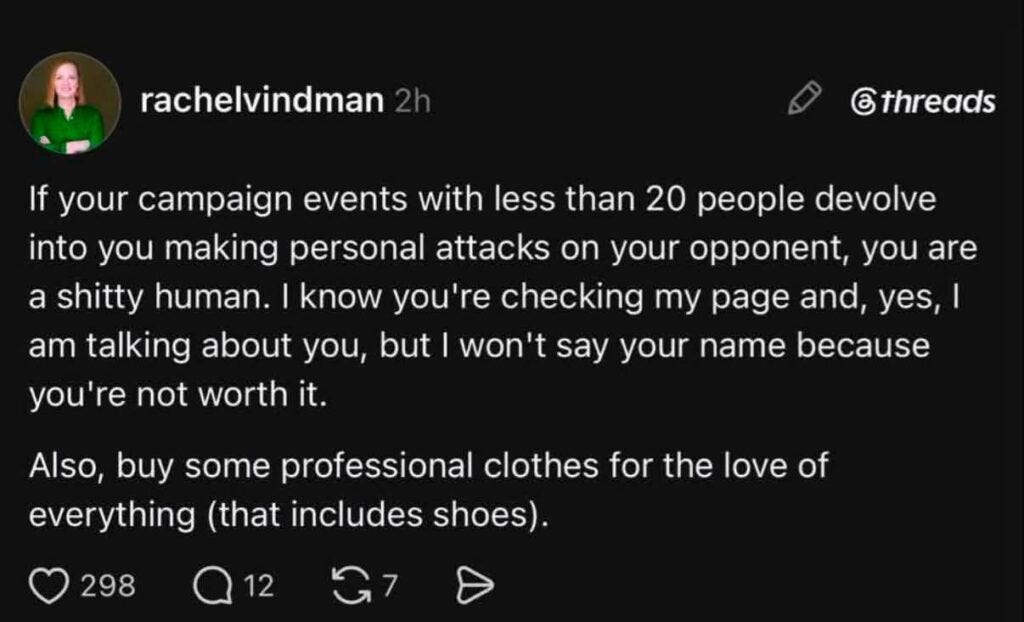
This attack, way out of line by any definition, was not only sexist, but sparked MASSIVE anger in the African-American community. The attack, whether deliberate or not, offers reminders of how Black people are judged on appearances. Multiple democratic lawmakers decried the attack. Nixon, for her part, without mentioning names, posted a pair of heels and asked “are these ok?”
The attack from Rachel only confirmed a belief many democrats had; that the Vindman campaign is arrogant and feels entitled to the nomination. The resentment to that is likely to only fuel a move toward Nixon.
The question is, can Nixon surge past Vindman? Lets now look at what a Democratic Primary makeup will look like to answer that.
The Democratic Primary Makeup
The final pre-primary registration report for Florida has just over 4,000,000 democrats. The democratic block has grown increasingly diverse; with the biggest growth coming from Hispanics.
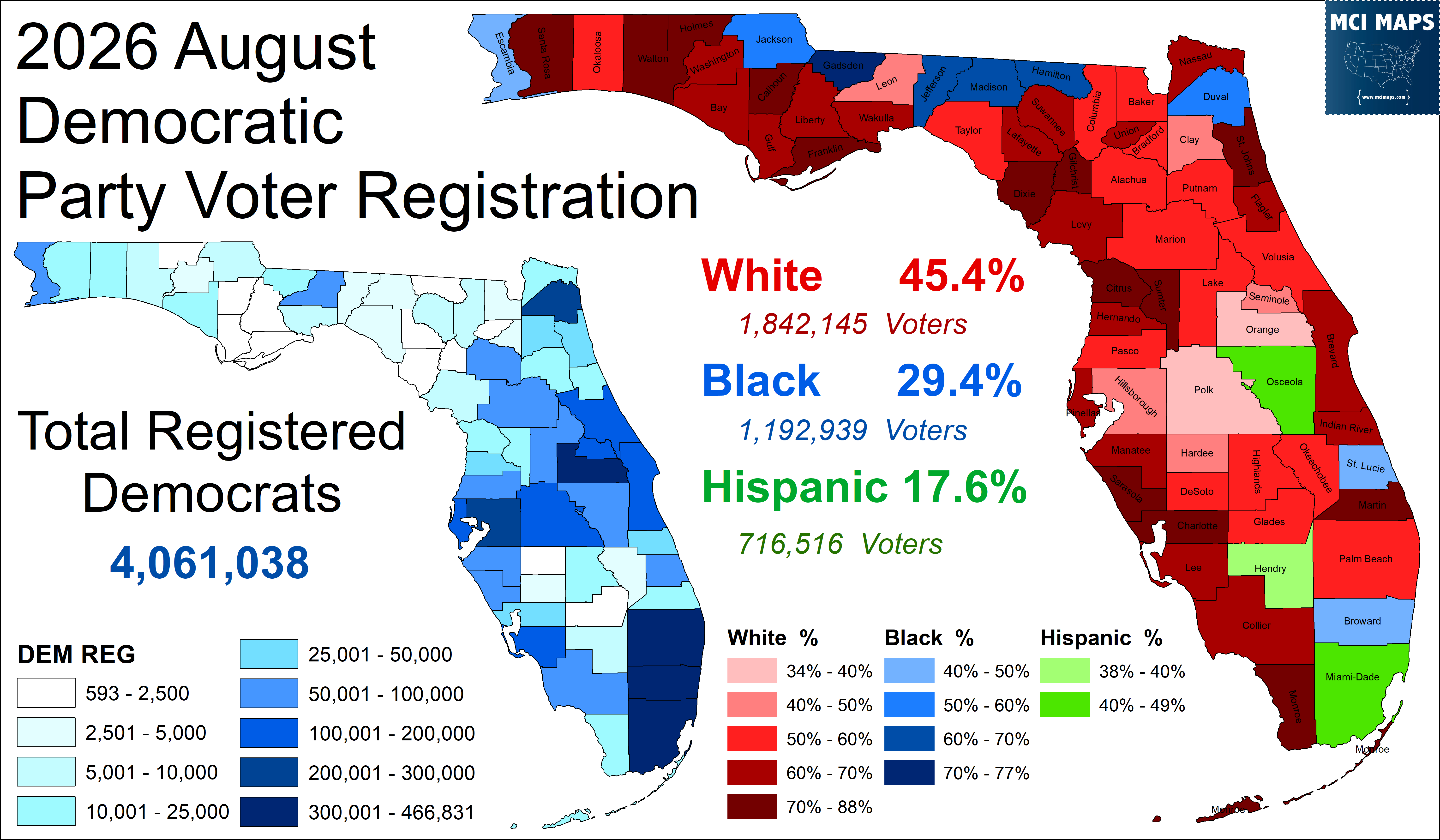
The Democratic voting block is heavily concentrated in urban centers; with Southeast Florida holding possible 1/3 of the entire primary vote; turnout depending. A more detailed look at Democratic racial registration can be see below; broke down by state house district.
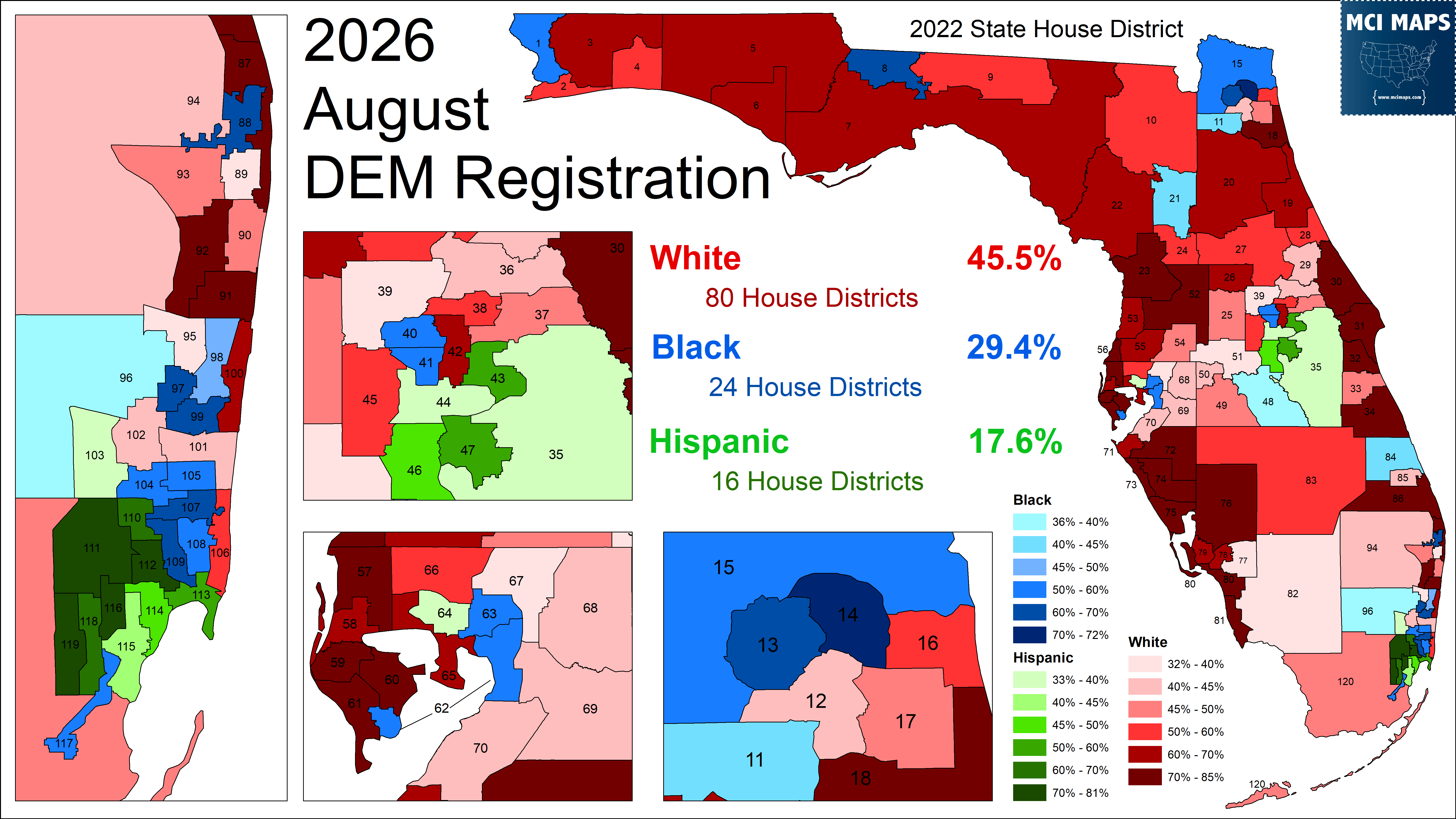
Now of course now all of these democrats will cast ballots. In fact, at best 1/3 of them will. The last decade of August Democratic Primary turnout is below.
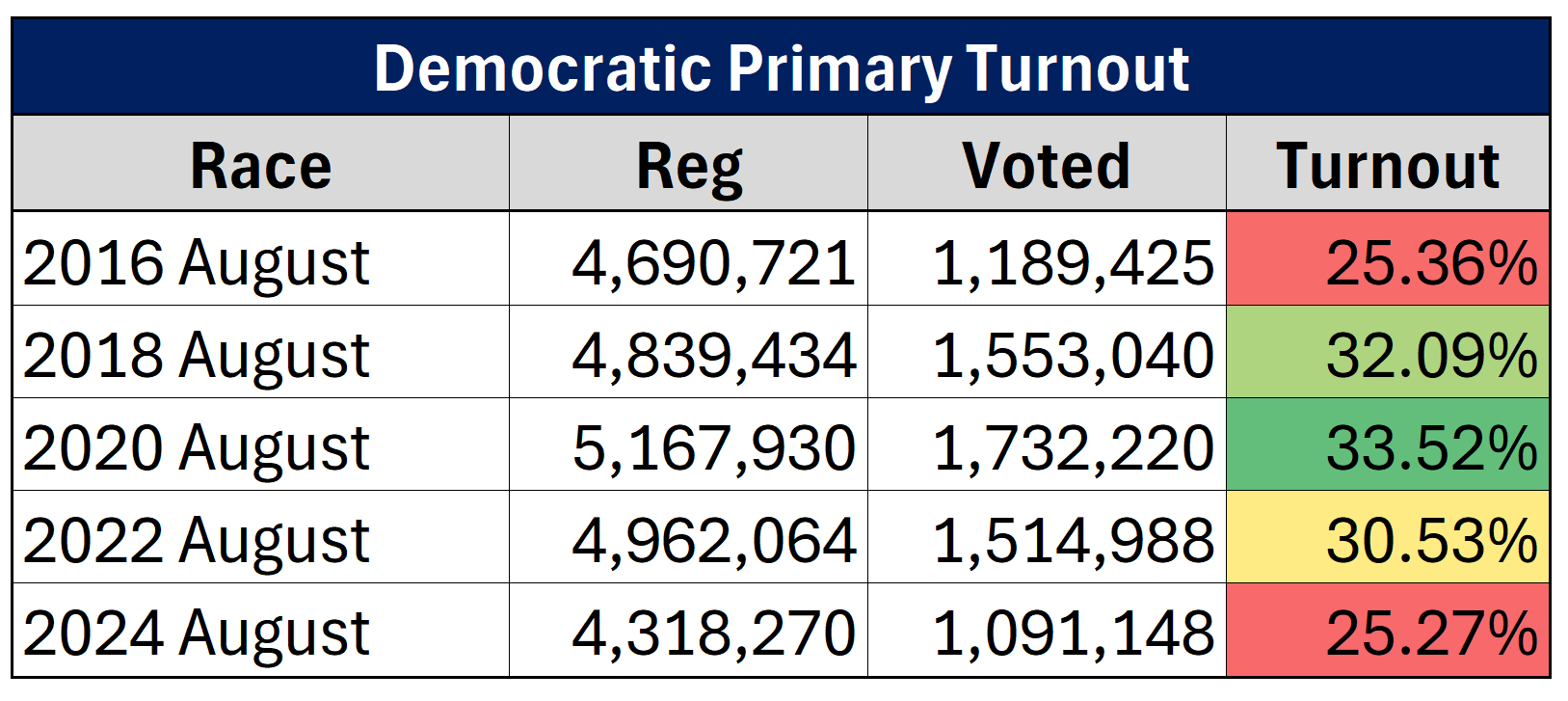
Turnout in Florida Democratic primaries had ranged from 25% to 35%. The 2020 high point is actually remarkable considering no statewide primaries were happening. This figure is heavily attributed to the COVID pandemic and the spike in vote-by-mail. The 2018 primary, which saw Andrew Gillum emerge as the nominee, was the previous record holder with 32%.
Primary turnouts always skew more toward older and white voters; something that has shaped the more moderate voting pattern in those primaries. Even in 2018, which saw Gillum make a major grassroots push to shape the electorate, white turnout still far exceeded Black or Hispanic turnout.
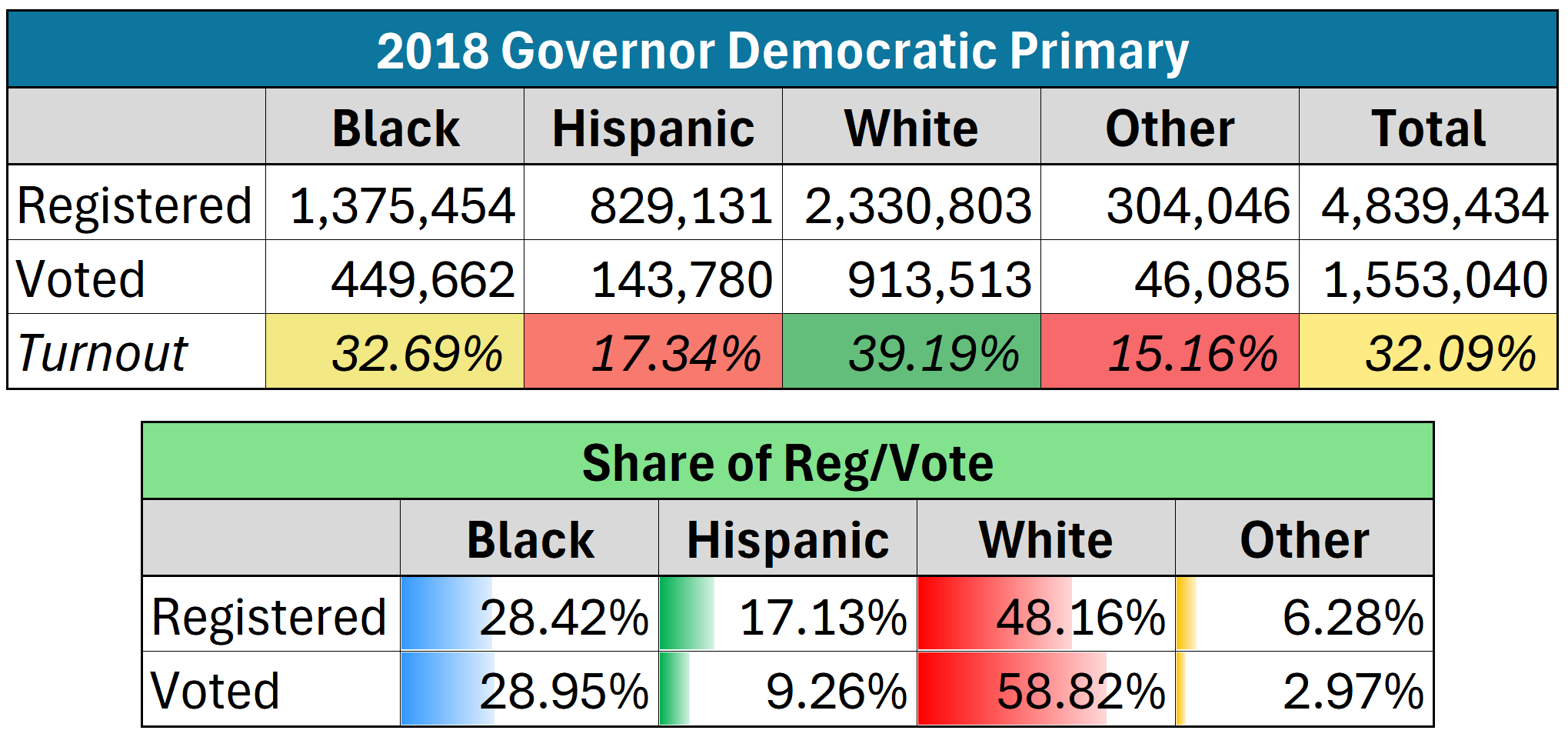
As a result, we can presume the final vote cast will be far whiter, and likely older, than the current registration. Of course, many white Democrats in Florida are more liberal leaning; especially in places like Orange, Broward, or Leon. However, progressive candidates have still notably struggled in Florida primaries. The quested then is, could an Angie Nixon overcome this? Well lets dive more into Florida’s primaries to get a deeper understanding of why moderates do so well.
Florida’s Moderate Democratic Primaries
I have written about statewide primaries in Florida more times than I can honestly count. One constant outcome across these races has been that the moderate candidates perform well; while progressive challengers struggle to get past a strong plurality of the vote. The size and cost of a primary in Florida is one major factor, but the biggest story really comes down to the demographics of the electorate.
The Democratic primary electorate has several demographic details going for it that have historically limited progressive insurgents.
Older white retirees are still a major voting block in these primaries. Historically this community was heavily Jewish liberals form NYC, but that is transitioning to midwestern retirees and longtime residents aging into retirement.
White suburbanites that stretch from the Tampa Bay, Orlando, and Broward County. This white suburban share has grown as Trump drove suburbanites to the Democratic primary. While not adverse to progressive challengers, they are just as comfortable with moderates in the name of electoral strategy.
African-American and Caribbean-Black voters. Historically these voters have long skewed more moderate socially and are perfectly comfortable with establishment candidates.
These key groups all are willing and ready to back moderates and make compromise decisions. Even liberal communities that are well known as pockets of left-wing ideology are easily willing to gravitate to a candidate like a Charlie Crist or David Jolly if they see that as the best path to victory. The base of hardcore leftists willing to buck party leadership is small; with college students and lefty communities scattered around the state.
A good example of this can be seen in the 2020 Presidential Primary between Sanders and Biden. Sanders won the college student vote easily. In Gainesville, very much a college town, this was enough to secure the city for Sanders. Tallahassee, however, is much larger and the Sanders edge did not extend far past the campus regions.
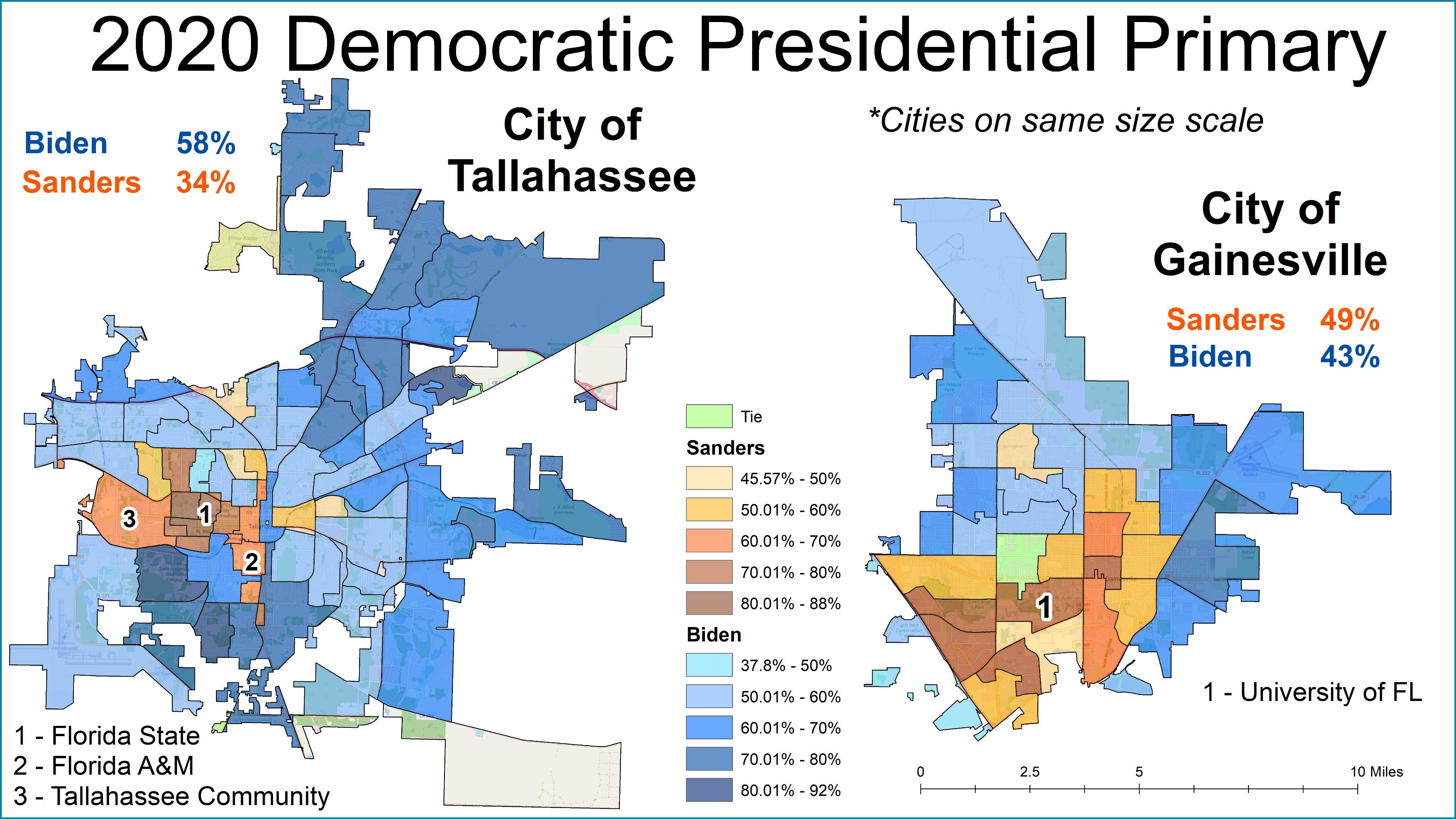
The Tallahassee voting block does hold large progressive populations, and many of the light-blue precincts are the types that vote solidly left-wing in city politics. However, these same voters, many educated suburbanites, viewed Biden as electable and voted with their “head not their heart” - as one might say.
On the 2020 topic, Florida’s moderate primary image is probably best seen in the Presidential Primaries. I actually covered every Florida Presidential Primary in this two part series that I wrote last year. You can see Part 1 and Part 2 in the respective links. To me, however, the perfect example in the 2016 Primary; which saw Hillary Clinton best Bernie Sanders 2-1 in the March contest. This came just one week after Sanders shocked Clinton in the Michigan primary.
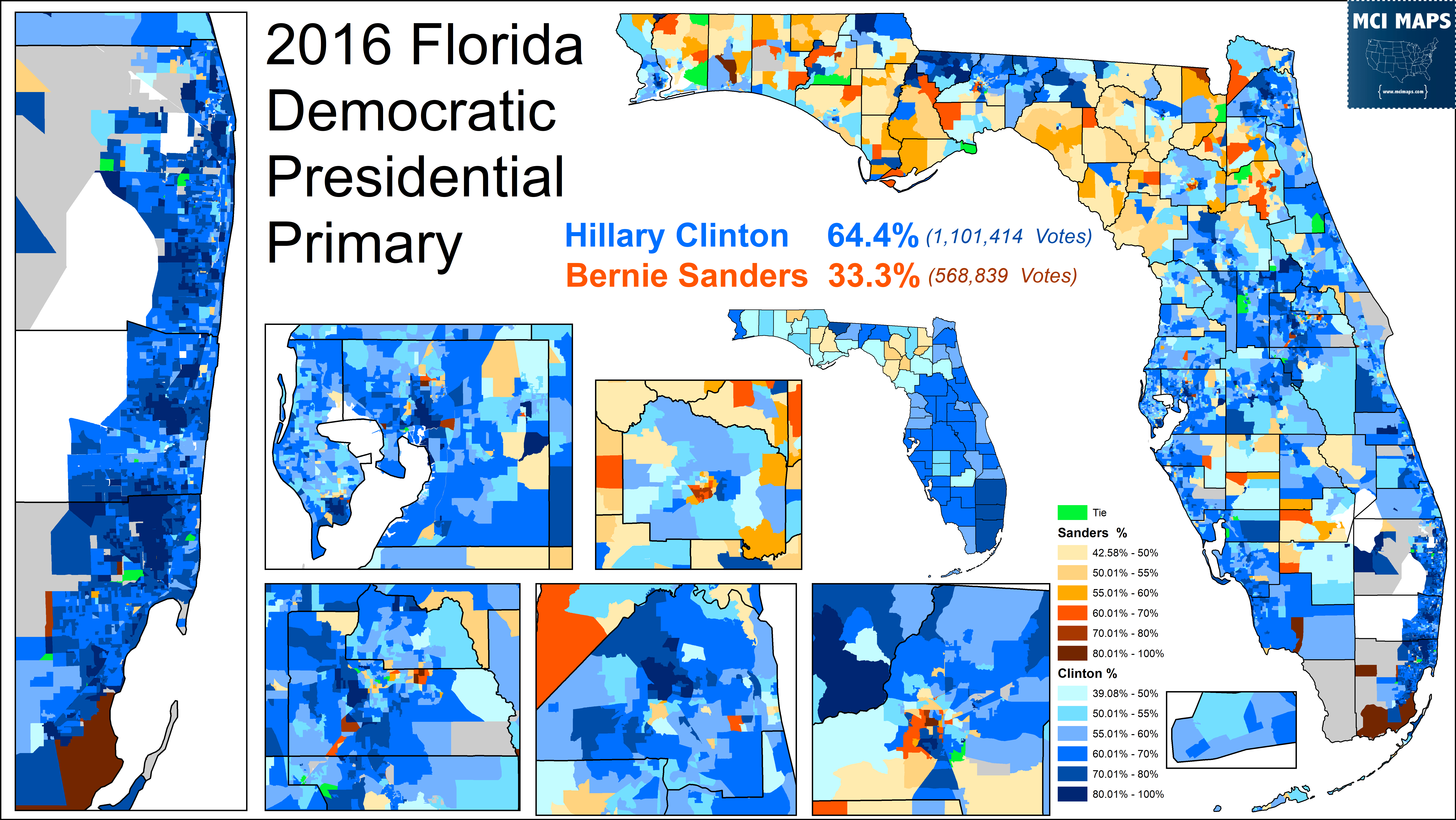
I cover the race more in the linked articles above, but the key base of Sanders support was some college students and a large batch of rural white Democrats in the Florida panhandle. Sanders’ loss in Florida was overlooked as other states generated attention. In the Florida race, Sanders lost Black, Hispanic, older, and white suburban voters. All these people stuck with Hillary Clinton.
Sanders, like other candidates before and after him, won rural white Democrats as a protest vote. These rural voters are very conservative and often vote Republican in state and federal races. I have written about them extensively; and you can read more here. That rural white protest vote is fading, however, as those Democrats pass away and the generation coming up behind them are registered Republican. The registration trends, and collapse of the rural conservative white Democratic rule, can be see more here.
To further delve into the nature of Democratic Primaries in Florida, I figured it would be best to look at the last few Democratic Gubernatorial Primaries. Each year gives some insight into the mind of Democratic voters in Florida.
The 2014 Governor Primary
No doubt the primary contest that shows Florida Democrats willing to go with moderate/bipartisan choices in 2014. That year, former Republican Governor Charlie Crist ran as a Democrat to take on Rick Scott. Crist, while starting off as a traditional conservative State Senator, was considered a fairly moderate Republican by the time he became Governor in 2006. Crist was a less conservative Governor than his predecessor, Jeb Bush, and had taken several steps that effectively pushed him out of the party by 2010. Key issue for Crist among Republicans were
Several of Crist’s Supreme Court appointees would wind up being liberal
Crist pushed environmentalist plans to buy Everglades land from US Sugar
Crist restored voting rights to thousands of people with felony convictions through a streamlined process
Crist expanded early voting in 2008, something that infuriated the McCain campaign
Crist embraced the Obama Stimulus plan, widely seen as his last straw with Republicans
By 2009 and 2010, Crist had alienated many Republicans with his more moderate and bipartisan approach. His US Senate bid fell apart when former State House Speaker Marco Rubio surged past him in primary polls, leading to him making a last-ditch NPA bid that fell short. Crist moved toward Democrats as 2010 came to an end, speaking at the 2012 Democratic Convention.
In the 2014 Democratic Primary, Crist was able to consolidate a great deal of institutional support to become the nominee for the party. Grumbling against him as a “former Republican” did exist with progressive activists, but that grumbling remained very much online and never really materialized into broad voting sentiment. Crist faced off against Democratic State Senate leader Nan Rich, who hailed from Broward County and was a firm liberal. Rick however, never generated real groundswells of support and struggled to raise money. Crist was well liked with white retirees, Hispanics, and Black Democrats.
The night before the vote, I predicted that Rich would not win any of the known liberal communities, but would do best with those rural protest voters. Despite the rural Democrats being much more conservative, and likely Crist voters in 2006, they’d regard Crist as a traitor to right-wing issues and would vote for “whoever this Nan Rich lady is?” That prediction came to pass. Rich only did well as a rural protest vote.
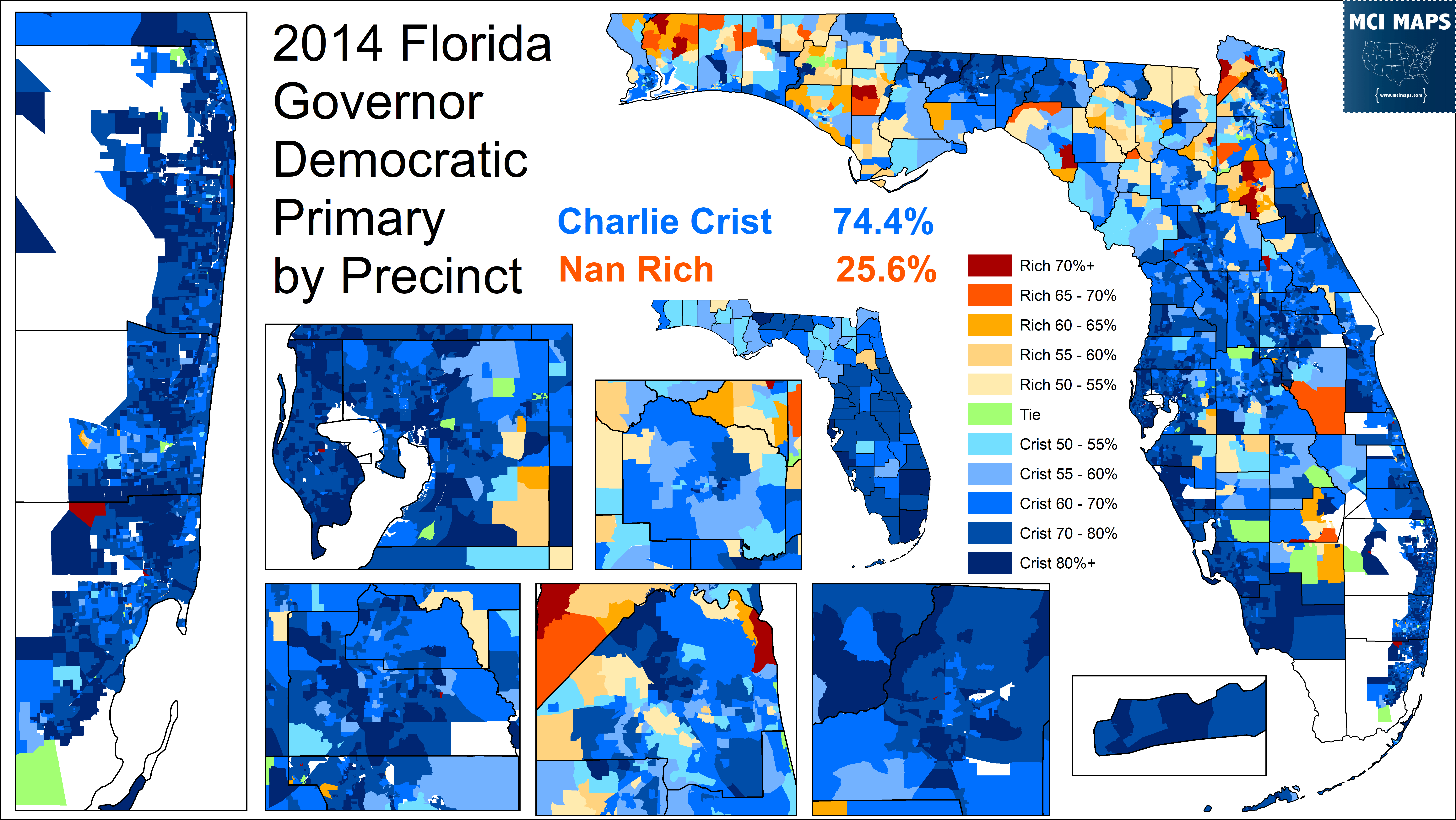
Crist easily won the primary in 2014, winning moderate and progressive communities. Even the campuses were in Crist’s camp, as were several lefty suburbs.
2018 Democratic Primary for Governor
By far the most successful progressive candidate in Florida statewide primaries was Andrew Gillum in 2018. That year, Gillum, the progressive Black mayor of Tallahassee, faced off in a five-way primary for Governor. The race was really a battle of three serious candidates: Gillum, former Congresswoman Gwen Graham, and Miami Beach Mayor Philip Levine. Lurking in fourth was self-funding businessman Jeff Greene. Gillum’s win in the primary was a shocker to most, as the contest really began to be viewed as a clash between Levine and Graham. However, in the end, Gillum secured a narrow victory in the primary.
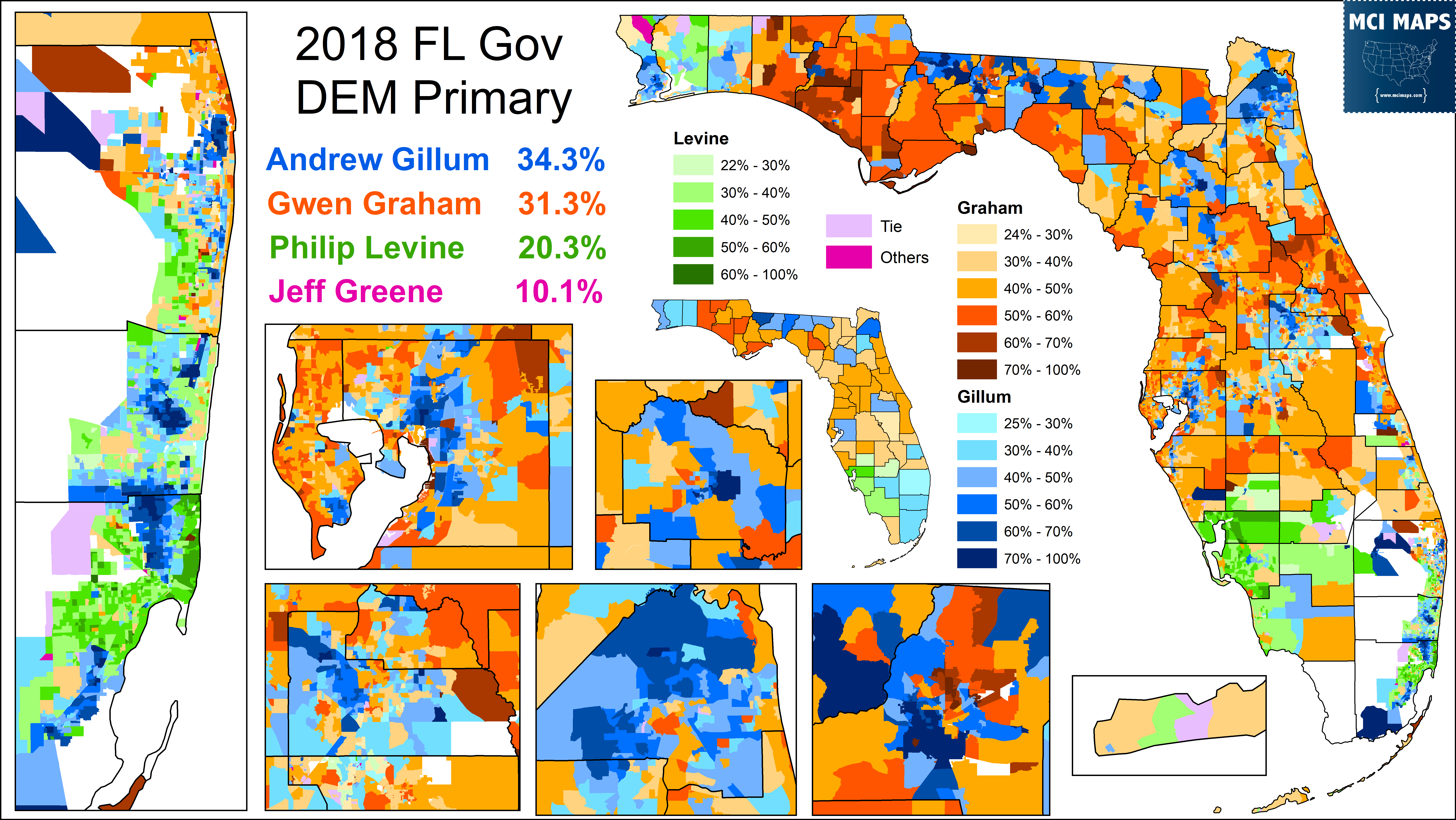
Gillum’s win, edging past better funded opponents, was impressive, but its hard for progressives to learn much from it. Gillum’s win was with a 34% plurality and was based strongly off Black voters and batches of progressive white suburbs. However, the coalition of retirees, working class whites, and suburbanites all split between Levine and Graham. Most of Levine’s voters would have gone to Graham, and vice versa, had one of them dropped out or a runoff been instigated. It leaves 2018 as a weird case of a progressive victory but with the combined vote still leaning much more moderate.
2022 Democratic Primary for Governor
Florida had two big statewide Democratic primaries in 2022. However, the US Senate primary was Congresswoman Val Demings vs rando candidates, so we don’t have much to learn from there. However, the Governor primary offered another marked contrast.
The primary that year was less ideological, but perhaps more generational. Charlie Crist, who was finishing up six years as a Democratic Congressman from Pinellas County, ran against Nikki Fried, the state Agriculture Commissioner. Both elected officials were broadly left-of-center, but Fried framed herself as a new generation of candidate and argued Crist was from a time of the past. This message resonated with many, but it still struggled to get past Crist’s strong appeal with retirees, Black voters, and most of the white suburbs and working class communities.
The final result was a solid Crist win. he did not achieve the height of 2014, but he still managed a convincing win.
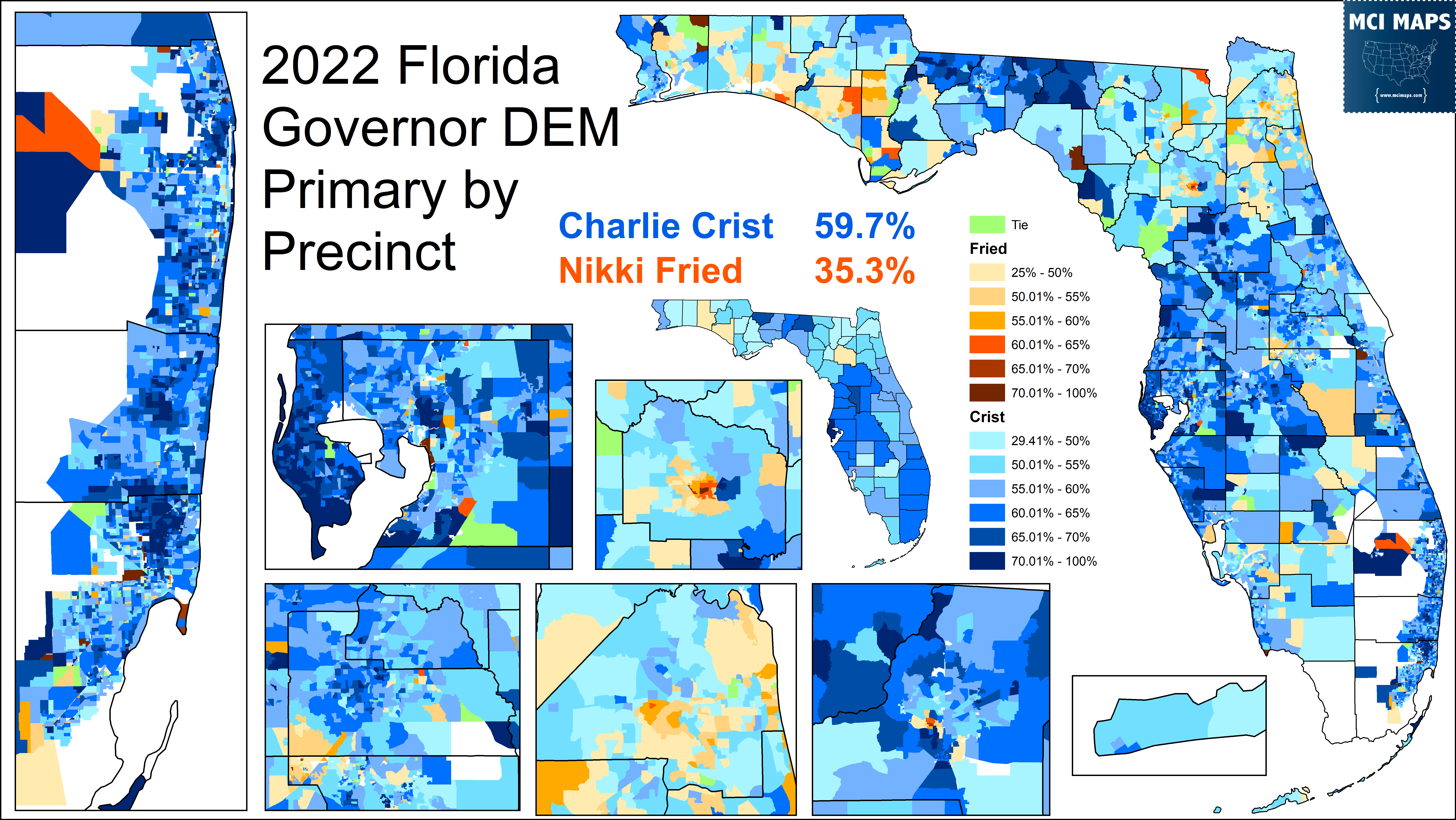
Fried, for her part, did very well with college students, some white liberals, and did not lose in areas as bad as Nan Rich had eight years earlier. Fried narrowed Crist’s margins in many white communities, but struggled much more in the Black community.
Speaking of the Black community….
Consolidating the Black Vote
One distinction from some of the previous primaries I have discussed is that this time, both insurgent progressive candidates are Black women; a dynamic that can reshape how the Black community may vote in the primaries. Since the Black vote is likely to be around 30% of the vote cast, if a candidate consolidates it, that can get you more than halfway to a majority.
As I talked about with Gillum’s race, he was very successful in consolidating the Black vote. Now I have expressed skepticism he could have secured a majority, but to be far his campaign was operating under the notion that a multi-way primary would mean a plurality vote was needed. Either way, Gillum focused heavily on Black voters, students, and white liberals, and secured his plurality win. The question then is, does a Black candidate automatically consolidate the Black vote?
The answer is, not really, and we have two key examples to look at.
One race is a totally forgotten primary, but an informative one. In 2014, as Crist was easily besting Rich, the Democrats had a primary for Attorney General. Many democrats rallied around George Sheldon, a white attorney that was a former state lawmaker and the former head of the Department of Children and families. He saw a primary from outgoing Black State Representative Perry Thurston; who hailed from Broward. Neither Thurston or Sheldon had much cash for the race. However, Sheldon’s higher profile and earlier press coverage aided him. This race was very much NOT some moderate vs progressive dynamic, as neither candidate had high profiles or money. It became a fight of who could get their name out there the most. The final result saw Sheldon pull 61% of the vote.
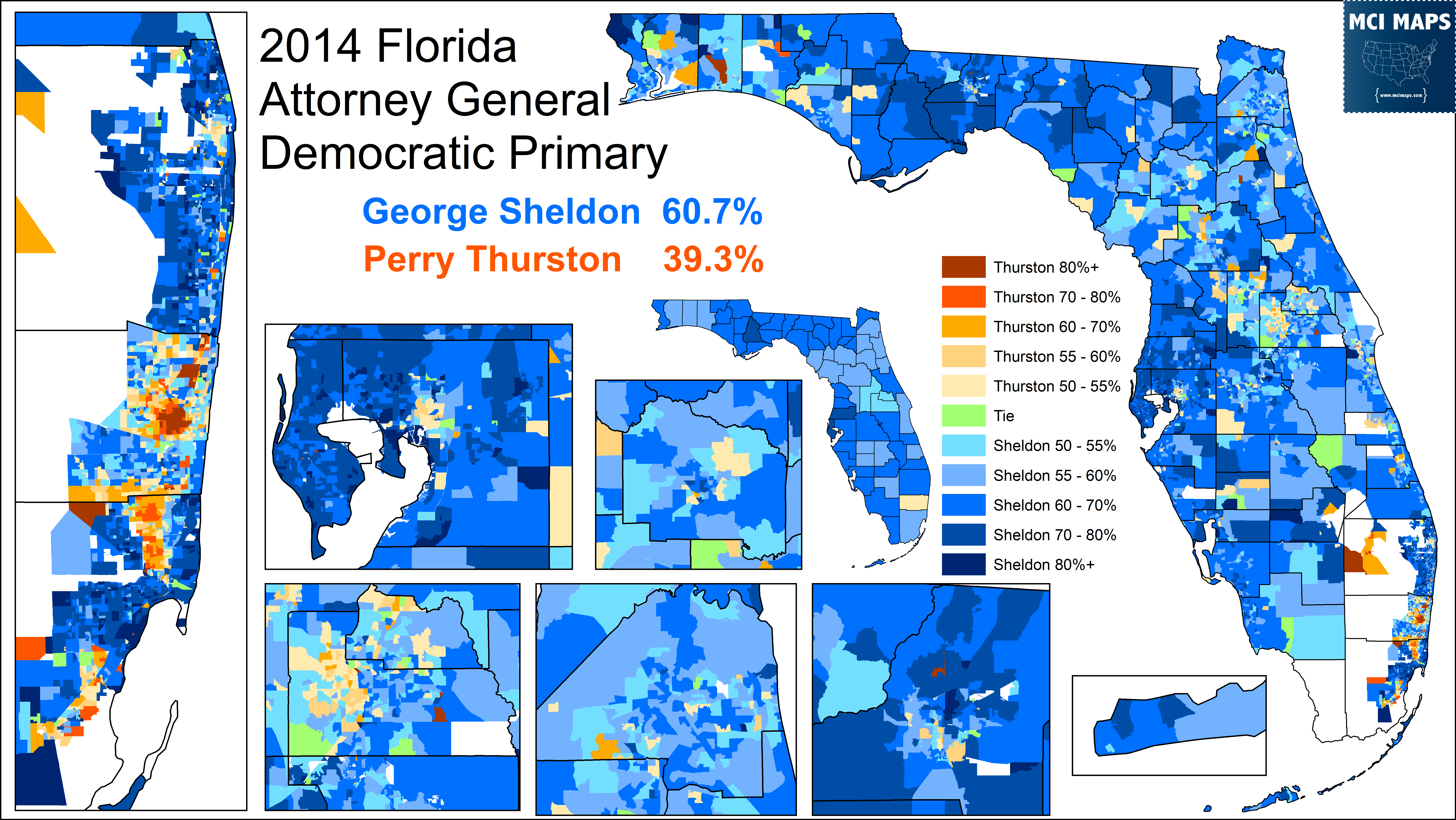
Sheldon won the primary, largely winning modest shares across the state. Thurston did win 40%, but it did not come from consolidating the Black vote. Thurston did win Black voters easily in Miami and Broward, his home base. He likewise narrowly won the Black vote in Tampa and Orlando, but struggled in Jacksonville, St Pete, and Tallahassee. Sheldon easily won rural Black voters as well. Thurston did well by not tanking in suburbs like Nan Rich did. I would say this primary doesn’t say much about progressive/moderate dynamics, but rather the issue for a Black candidate with lower name ID and funds. Thurston did very well with Black voters who knew of him, but those in the northern counties did.
The other primary example is from just the last cycle. In 2024, the Democrats had a primary for US Senate. There, former Congresswoman Debbie Mucarsel-Powell easily defeated self-funding businessman Stanley Campbell. Self-funding over $1,000,000 - Campbell did make an aggressive campaign - especially in the Black community. However, he was a brand new face and was still heavily eclipsed by the attention DMP got. In the end, Powell easily won the primary.
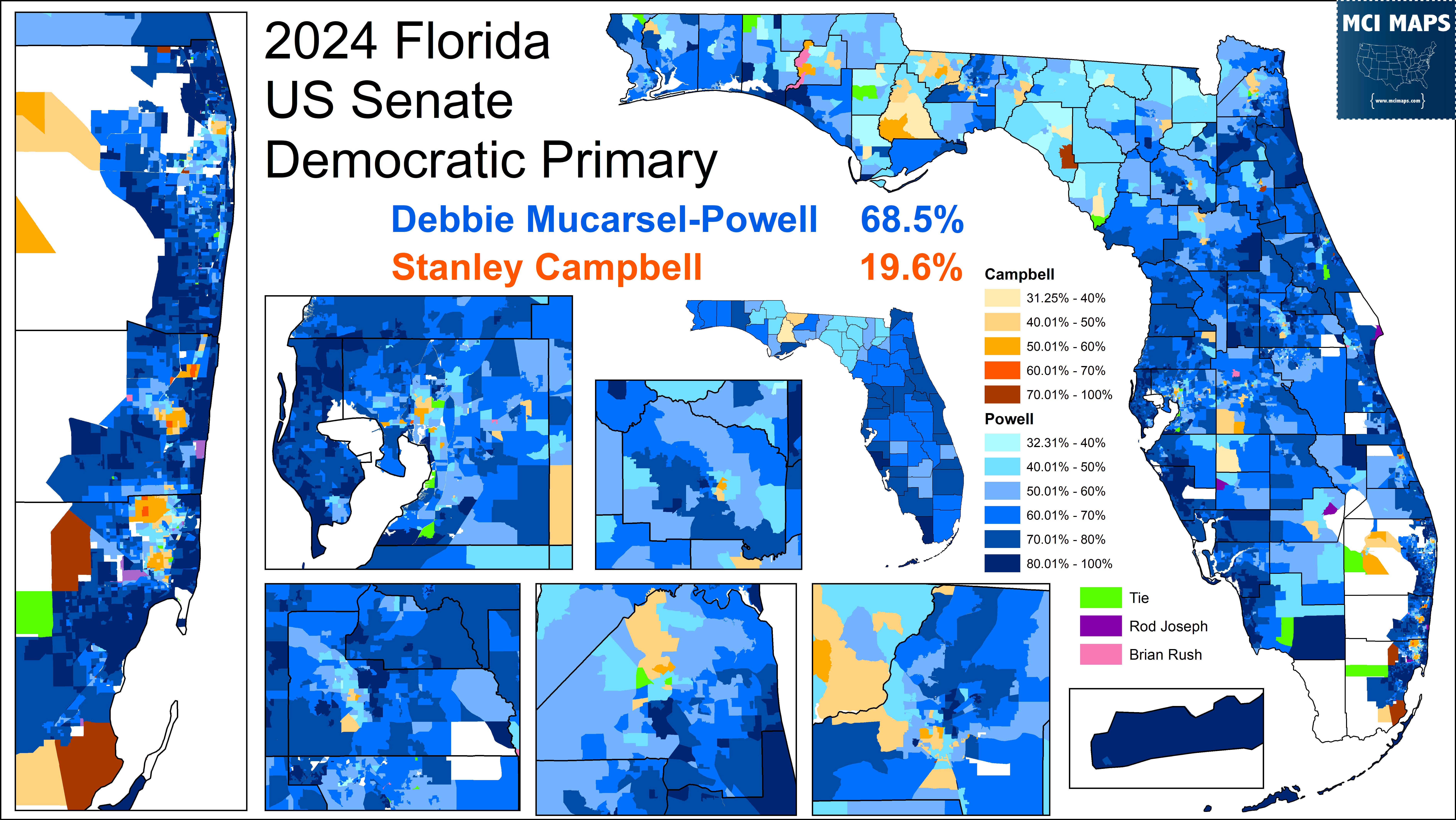
The primary results showed him winning pockets of Black support, and some white rural communities, but he did not do as well as Thurston had done in Miami/Broward back in 2014. Powell was strongest with Black voters, but was often only narrowly winning them at best. He barely took some Black precincts in Tallahassee, an area I can vouch for he had yard signs with his face on everywhere. However, just because he was a Black candidate does not mean Black voters automatically swept to him.
Now these results are specific to the races, but I highlight them because they do show that either do to being brand new (Campbell) or underfunded/unknown (Thurston) - the Black community will not always rally to the Black candidate by default. In this context, Dotie Joseph is likely to the most at risk to hit the Thurston path, where her lesser name ID outside of Miami could hurt her trying to consolidate Black voters. Angie Nixon, meanwhile, with a longer campaign and more funding, is in a stronger position to win in the Black community beyond her Jacksonville base; and expand past that.
I just wanted to be sure to highlight this dynamic with Black consolidation of the vote, as its something people have asked me about.
Final Thoughts on the Primaries
With early voting beginning across Florida, and tens of thousands of absentee ballots in, to me the main question is the US Senate Primary. On the Governor front, I feel Jolly has developed more trust with the Democratic base while Joseph has just gotten in very late and has low name ID. If she does lose, I hope she remains in electoral politics. She is absolutely one of the best political figures out of Miami-Dade.
The Senate race is where the real action is. Don’t get me wrong, I do feel Vindman remains a modest favorite. Nixon has raised $600,000 - which is still very low for a primary that could see over 1,000,000 ballots cast, and press coverage of the race is still modest. However, there are many Democrats who have made it clear they are backing Jolly for Governor and Nixon for Senate; with several local slate cards showing that same layout. If you also want to know, my personal vote will be for Jolly and Nixon in these respective races.
The recent attack on Nixon about her attire will only aid Nixon in bringing more votes to her, but the issue is how well known the attack has been. The Senate race may well come down to the fact Vindman is better known already. This is why he didn’t want to debate her - as it would only aid her name ID. Nixon is building momentum as we get closer to the final vote, and it could be a matter of not having enough time. Vindman’s argument that he is more electable holds less weight as he trails in polls for the general election, and many voters like myself are deciding to back Nixon. That said, I recognize the reality of the dynamics of the primary, and do feel Vindman has the advantage. However, I don’t feel he has it locked up the way Jolly seems to for Governor. Also, if Vindman does win, he will emerge with many democrats outright hostile to him, and I’m not sure that rift can be mended (or if he even cares).
We will see how these races shake out. Expect a full post-primary analysis afterward, and keep an eye out for my primary previews of other races to come!
Maps this out of Context . Nixon support have nonstop harassing Vindman his events for his stance on Gaza and Isreal. You are better than this Maps. Nixon will lost by 20 point and there will be no unity.