
Issue #278: Previewing Florida's March 24th Special Elections
Three districts will go to the polls

On Tuesday, March 24th, Florida will be holding special elections in three state legislative districts. Voters in Hillsborough, Polk, and Palm Beach will be casting ballots to replace three Republican lawmakers, all who represented Trump-backing districts in the 2024 elections.
The districts in question are…
Senate 14: A Trump +7 district located in the Tampa region of Florida. Here Republican Jay Collins has vacated the seat to become Florida’s Lt Governor
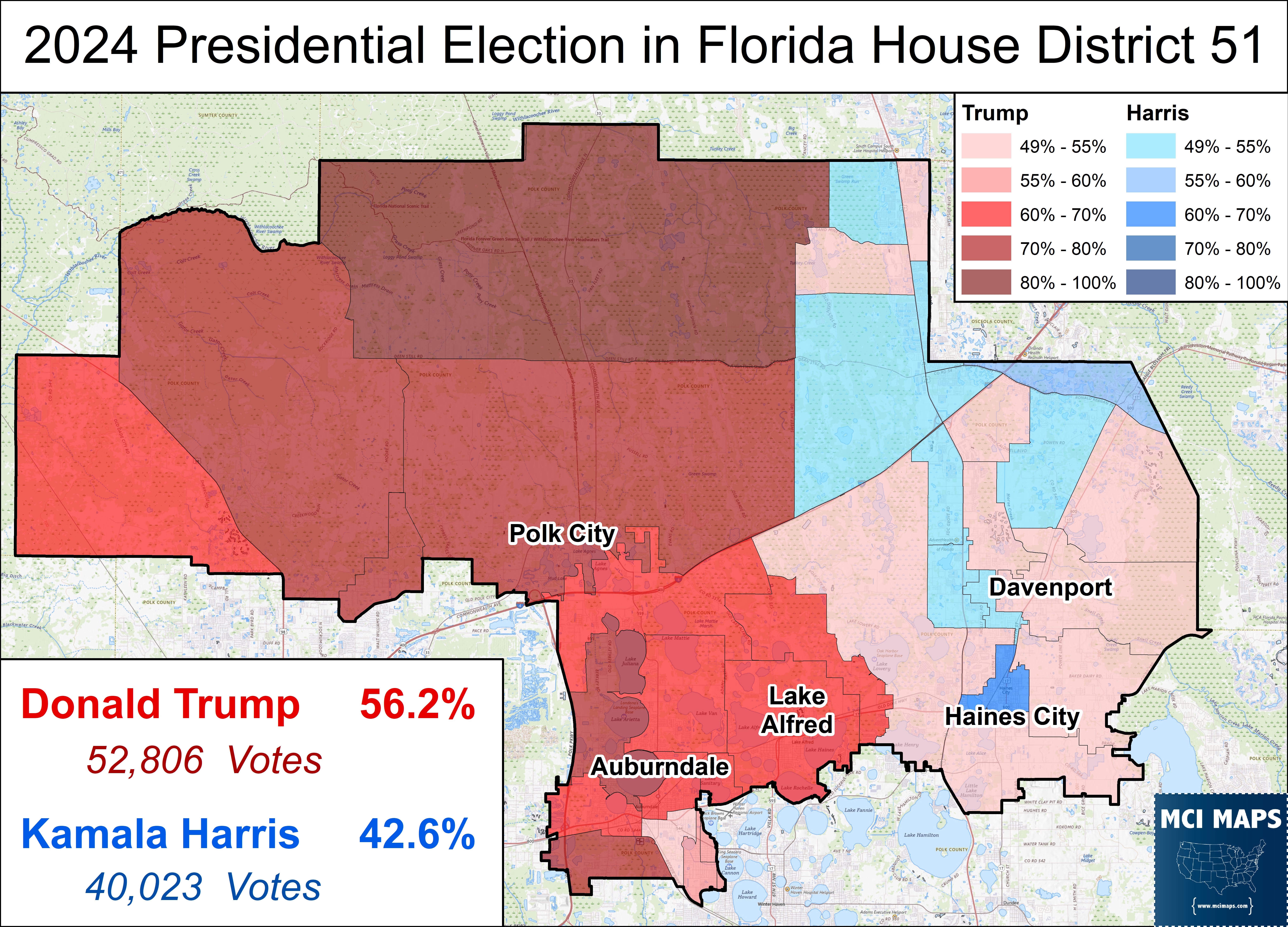
House 51: Covering northern Polk County, this seat voted for Trump by 13%. It is being vacated by Republican Josie Tomkow, who is running in the Senate 14 special election.
House 87: This Trump +10 seat covers northern/coastal Palm Beach and includes the Mar-a-Lago resort that Donald Trump resides at! It is being vacated by Mike Caruso who has been appointed Palm Beach Clerk of Court.
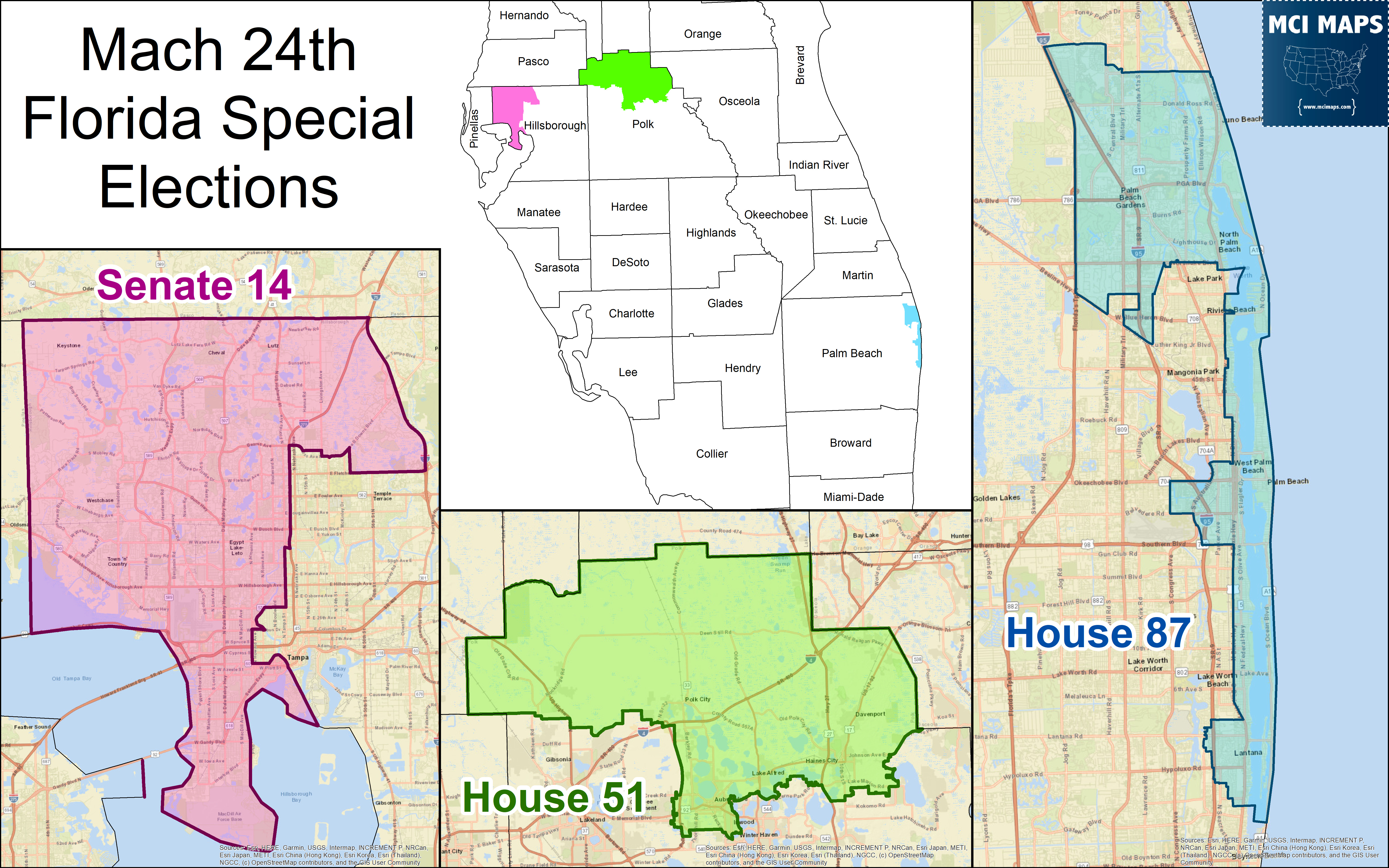
While all three of these seats voted for Trump in 2024, none are as deeply red as many of the districts that held special elections in Florida last year. Senate District 14 was a Biden district in 2020 and House 87 was a virtual tie that same year.
In this article, I will look at each of the districts in question, mainly focusing on their partisan characteristics and offering some resources on campaign coverage. Before I begin my district-by-district look, I’ll go over a few key “macro” trends to keep in mind with all of these races.
Statewide Trends
Heading into these special elections, there are two broad trends pulling on both parties. One issue, registration, is bad news for Democrats. The other issue, special election swings, is bad news for Republicans. Here I want to discuss both before we dive into each district.
Statewide Registration Issues
One of the big issues for Democrats in Florida, and an issue in all of these districts, has been the registration trend we have seen in many parts of the state. I wrote about this in more detail right before the 2024 election, but registration has been trending badly for Florida Democrats for some time. Thanks to a combination of voter registration suppression laws and a lack of financial resources, Democratic groups and the party have not been able to register large batches of people.
As a result, the natural drop in voter rolls that happens (people fall off the roll for all sides every year) has hit Democrats and independents more. Republicans, with their stronger financial resources, can run voter registration programs that keep their numbers up with new sign-ups. Statewide, the total number of active voters as actually gone down.

There are large batches of voters in the “inactive” roll; which is where you go if you have not voted in some time. However, these inactive have very low turnout, often under 10%. So for the purpose of this analysis we are sticking with active.
I will be planning an article later in the spring on statewide registration issues, but I recommend the link above for more info on this topic in the meantime. I will talk about the registration trend in each district as I discuss them. The key issue is, every district holding a special election has a voter registration makeup that is notably more Republican than the 2020 Presidential election and the 2024 Presidential election. Each has large numbers of potential-but-unregistered voters.
Special Election Over-performances
Thanks to registration issues, the electorate casting ballots in these specials is likely to be more Republican-leaning than 2020, and maybe even 2024. However, the 2025 special elections in Florida did give Democrats reason for hope. I discussed EVERY special election that Florida had in 2025 in this article deep dive here.
A total of nine districts, two congressional and seven legislative, held specials in 2025. All these seats were either heavily Democratic or heavily Republican, but all districts saw major swings to the Democrats compared to the 2024 Presidential contest.
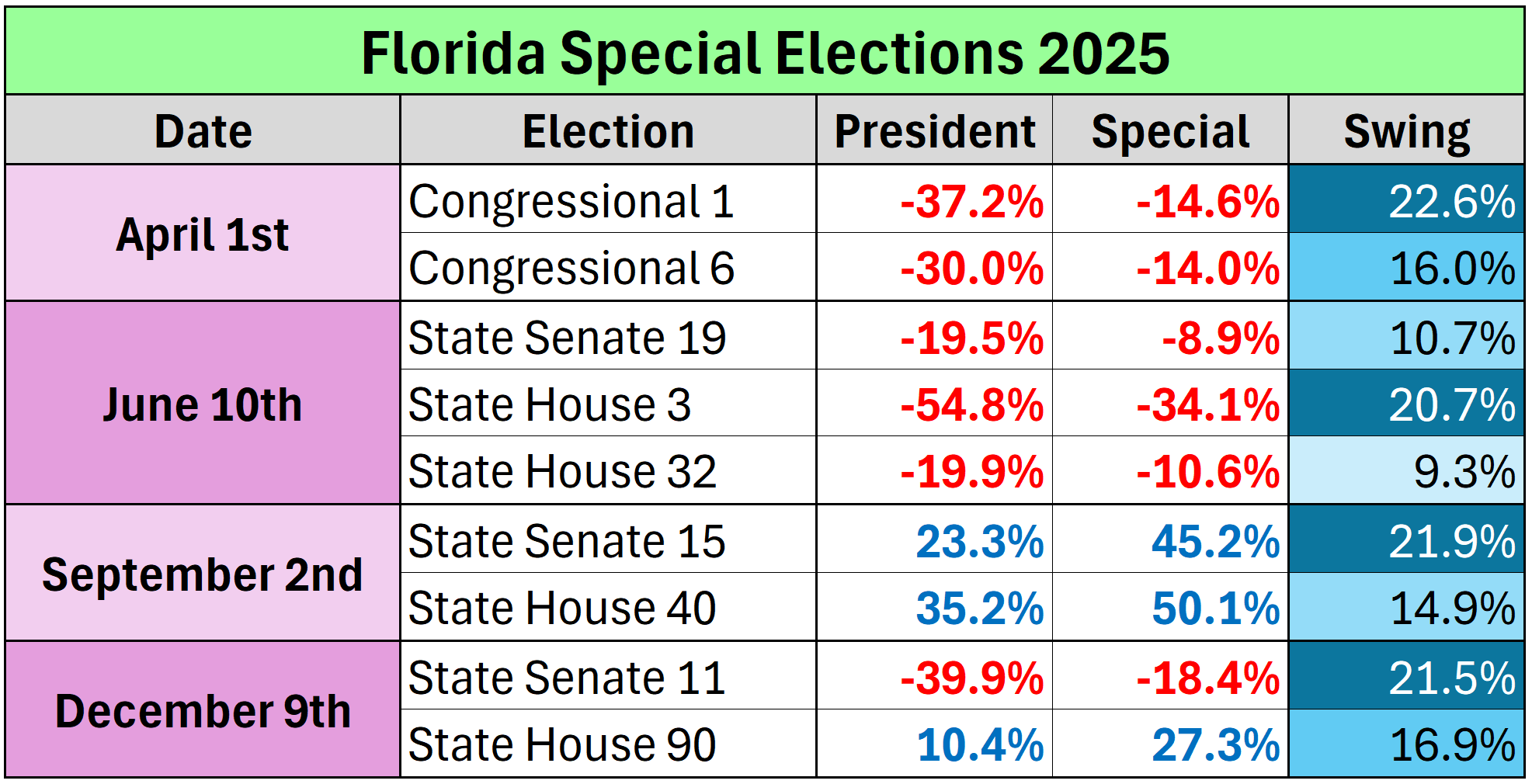
In every district, Democrats had a stronger turnout compared to Republicans; while Republican turnout had been stronger in the Presidential contest.
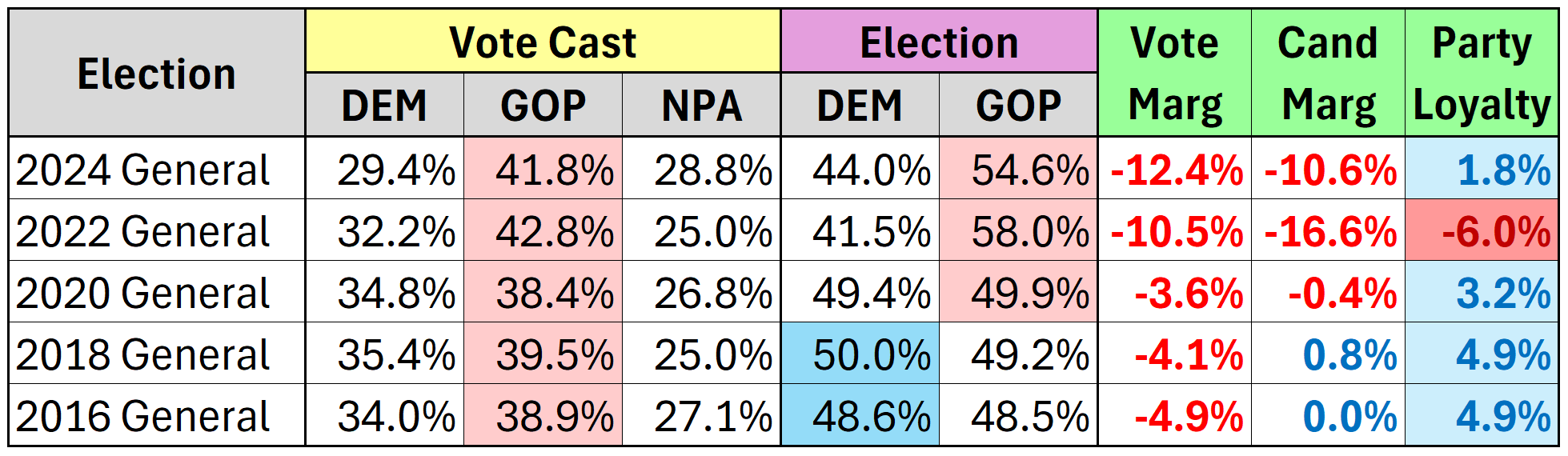
In addition, Democratic candidates outperformed the party makeup of the vote cast. This table below shows the party ID of ballots cast in each special and how the candidates performed. The “Party Loyalty” score at the end is how much the Democratic candidate margin compared with the Democratic margin for votes cast.
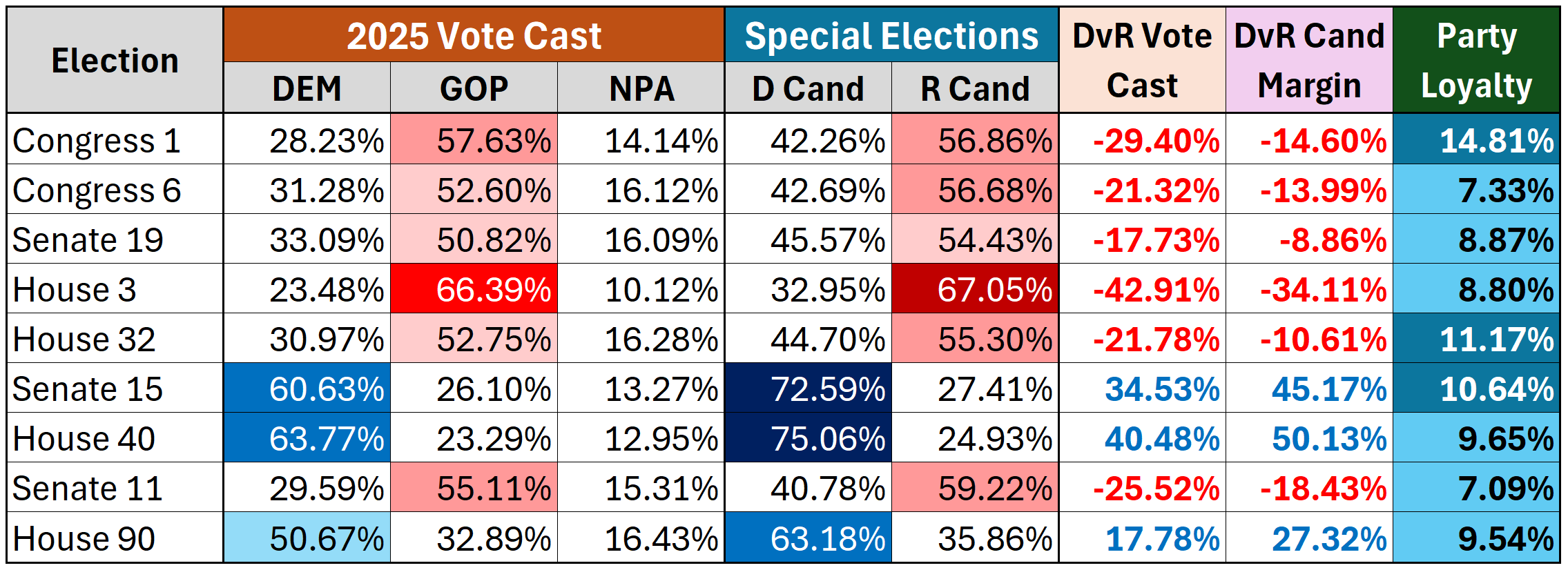
These strong over-performances mean the Democratic candidates easily won NPA voters and likely siphoned off batches of Republicans as well. Compare the “Party Loyalty” metric for the same districts in the 2024 Presidential election, and you see much closer scores. It highlights how much strong the special elections were in out-performing party metrics.
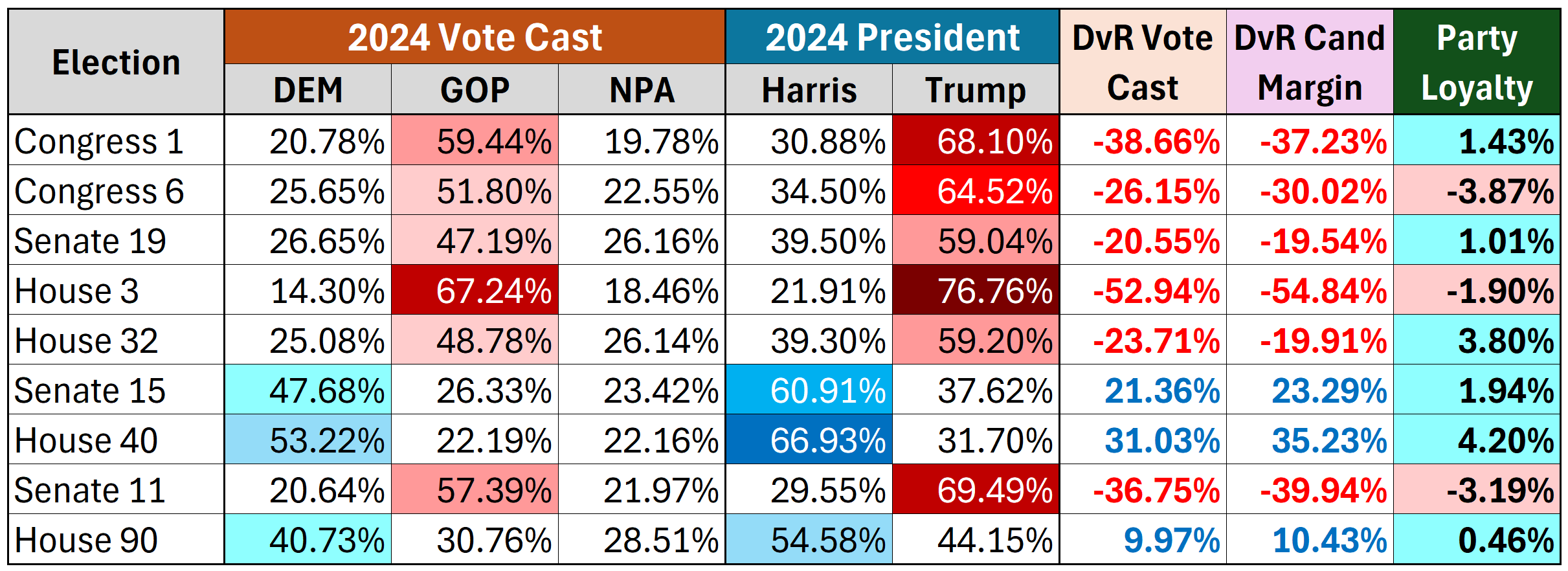
The over-performances seen in 2025 are what Democratic candidates in these races would need to pull off victory. All three specials will see more Republican than Democratic ballots cast.
Partisanship of Vote Method
One final point I want to touch on is for any of you tracking absentee and early voting reports leading up to Tuesday. Historically, as in the last 6 to 8 years, Democrats have dominated with absentee voting and Republicans dominated with in-person voting. This was exacerbated by the COVID pandemic and continued after lockdowns came to an end. However, Florida law changes have shifted this dynamic. A few years back, Florida’s legislature passed a law that caused the absentee ballot list to RESET after every election. As a result, anyone on the absentee ballot list now is someone who had to sign up post-2024.
The result is that the current absentee roll is far less Democratic-heavy than in previous years, making comparisons with past elections much harder. Below is the absentee ballot requests and returns for the three legislative races up Tuesday.
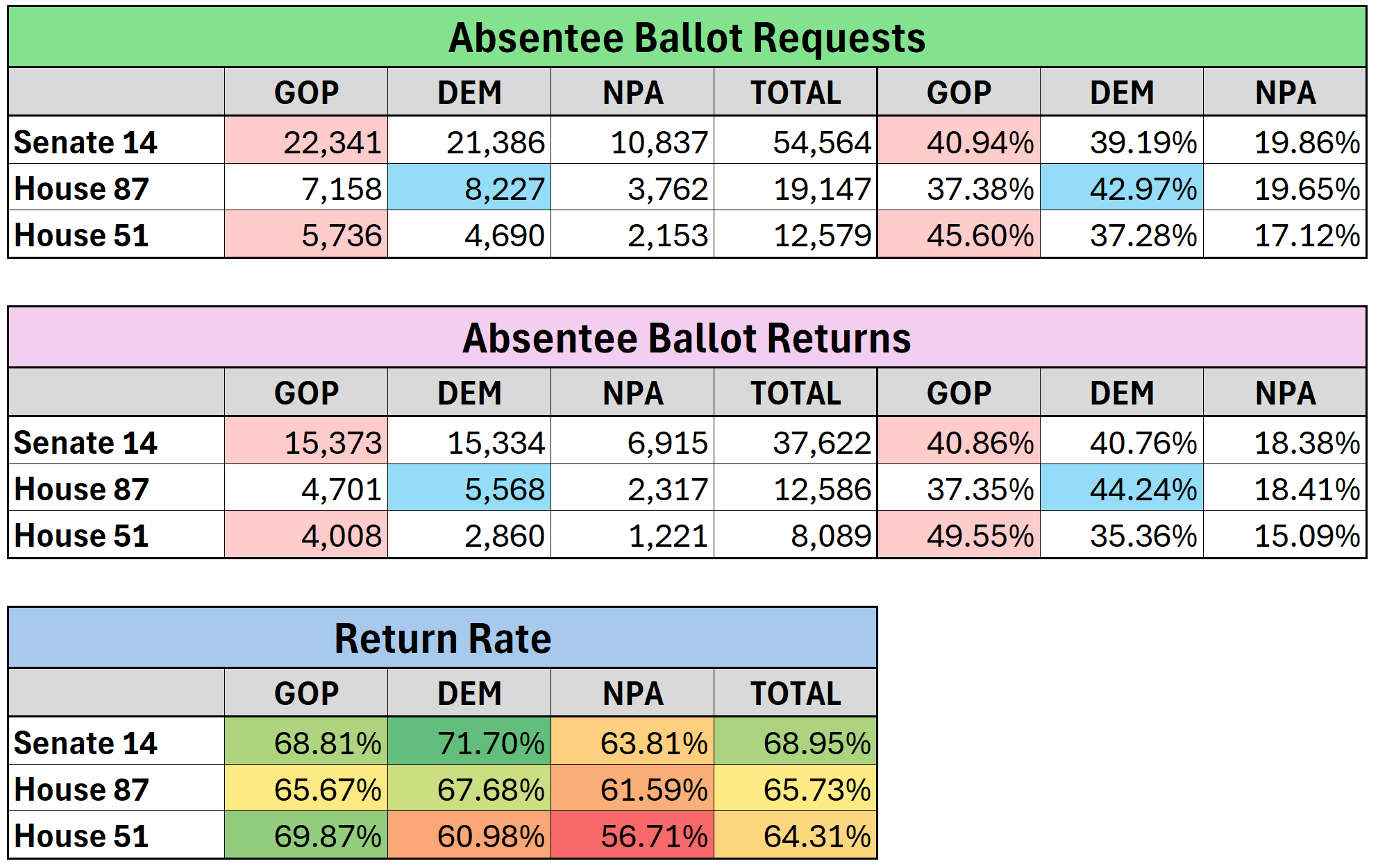
We see great variety in the requests depending on the district. Senate 14 has a narrow Republican lead in requests and a narrower lead in returns (thanks to a slight Democratic edge in return rate). House 87, based on Palm Beach where older Democrats historically vote by mail, has a more sizeable Democratic lean. Finally, House 51, where little Democratic campaign infrastructure exists, is much more Republican in requests and return rates.
As a result of this absentee ballot dynamic, predicting election day can be much trickier. Republicans are still voting more in in-person early voting; but both sides have large batches of voters who could show up on election day. The day-of voting could vary by district. I expect HD87 will see a more Republican election day, but Senate 14 is trickier to predict. In Miami last December, election day was Democratic-leaning. Meanwhile a special election for HD90 that same day was Republican-friendly.
Since Republicans have the registration advantage in all three districts, I fully expect the final vote cast to be more Republican-friendly. As I discussed in the party loyalty section, the issue then will be how NPAs break.
With that out of the way, lets dive into each district up.
Senate District 14
State Senate District 14 sits in western Hillsborough County, covering part of the City of Tampa. The district is majority-White, but has a sizable Hispanic community located in its Egypt Lake-Leto and Town n’ Country neighborhoods. In terms of voter registration, 21% of the district is Hispanic and 62% is white.
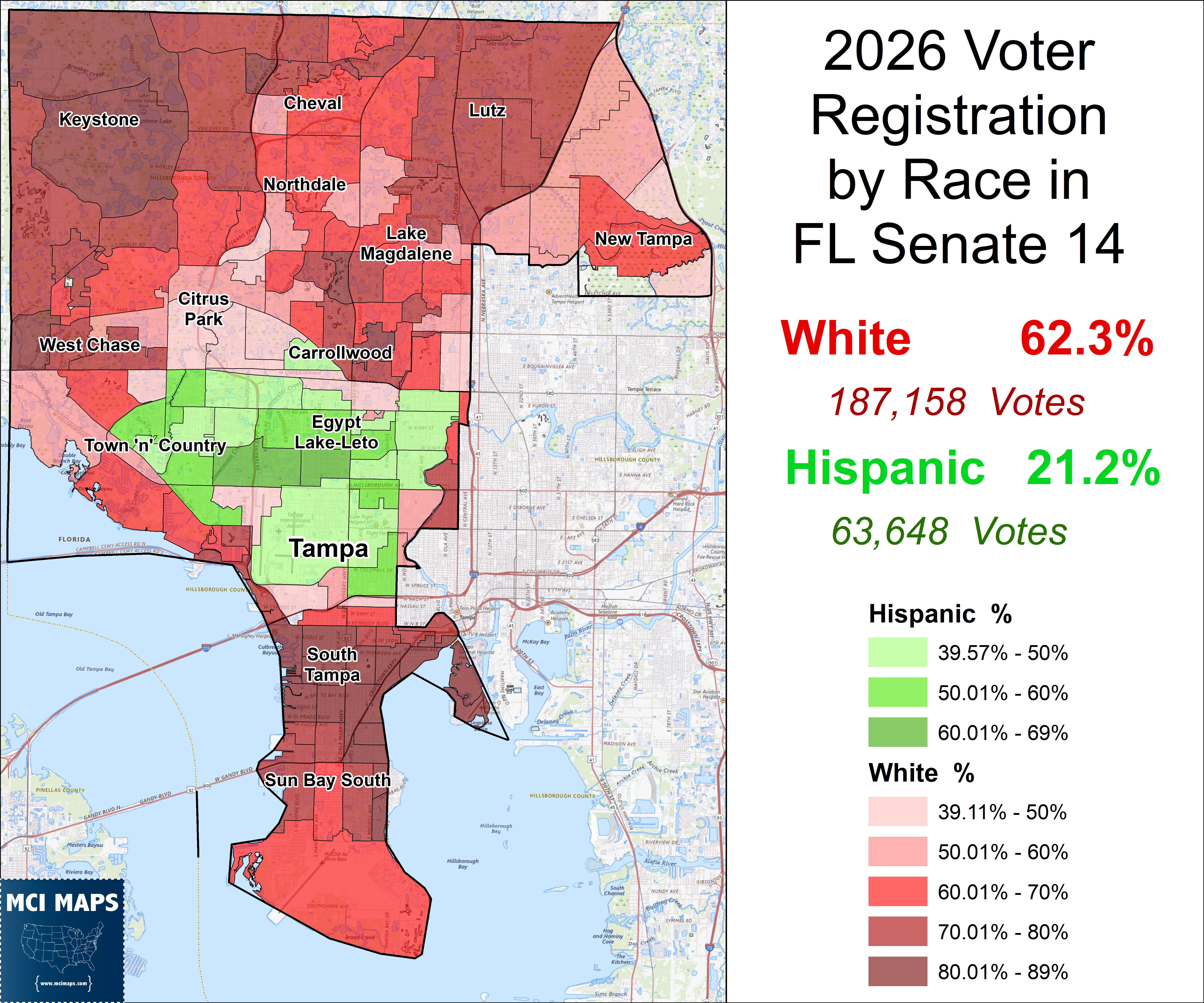
The district’s Hispanic community is historically Cuban, dating back to the Cigar Industry in the Tampa area from over a century past. Cubans make up around 38% of the Hispanic population, with Puerto Ricans making up an estimated 22%. This is the largest concentration of Cuban voters north in Central Florida.
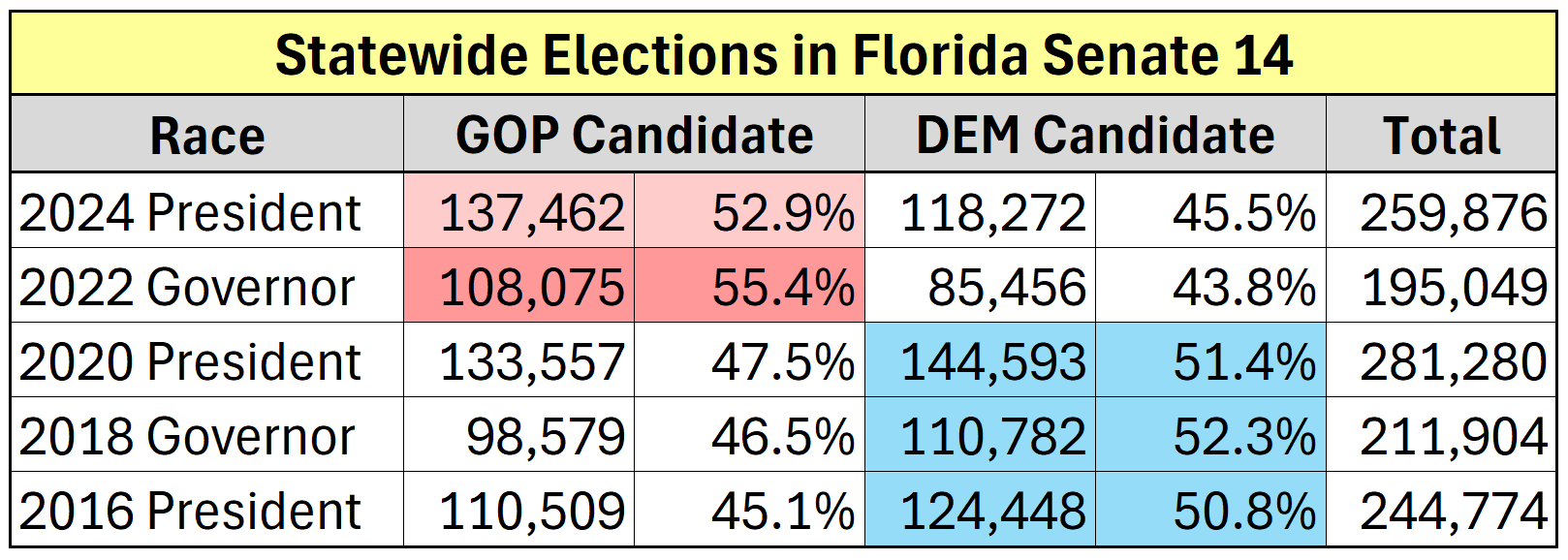
Historically this district leaned Democratic. Increasing Democratic strength in the suburbs and upper-income “South Tampa” region allowed both Hillary Clinton and Joe Biden to win the district. Biden won the district by 4% in the 2020 election; losing ground with the Hispanic community, namely losing the Egypt Lake-Leto area, but holding strong in the white suburbs.
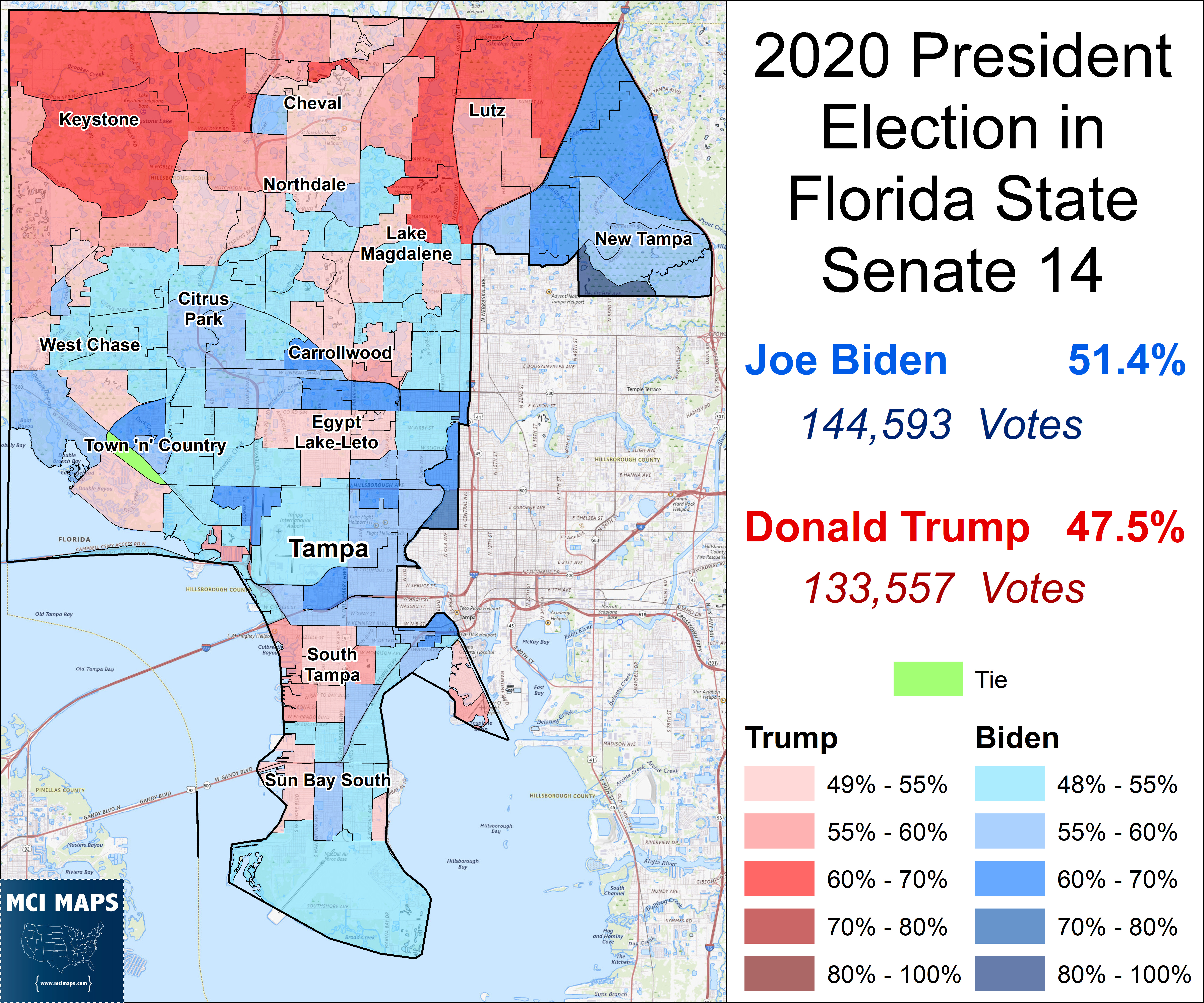
Two years before this, Janet Cruz won the district for Democrats in the 2018 midterm; defeating Republican Incumbent Dana Young. However, as Democrats were plagued with bad turnout in the 2022 midterm elections, Cruz lost her re-election to Republican Jay Collins as DeSantis won the district by over 10 points in the Governor’s contest.
While the loss of the district in 2022 could be heavily attributed to turnout issues, that was not the case in 2024. That year, despite decent turnout for both sides, Donald Trump easily won the district by 7%. This came thanks to a big win in the Hispanic community and narrowly reversing some of the upper-income suburban Democratic shifts.
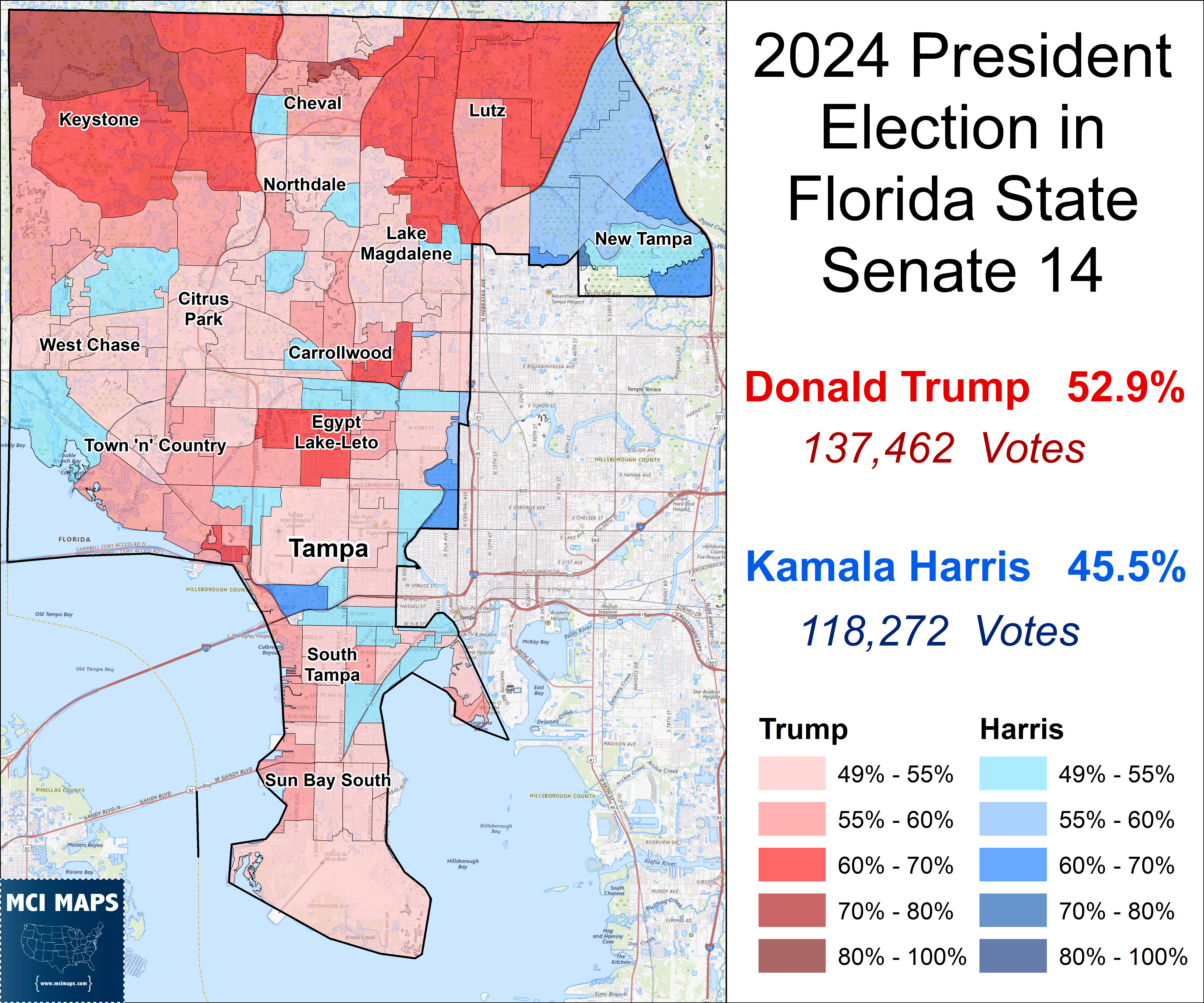
You can see the political trend in the district below. The seat has never been a landslide-type seat; with 2022 being the lone double-digit margin.
Trump’s win in Senate 14 came amid a bad round of elections of Hillsborough Democrats across the board. Their efforts to win back the State Attorney post came up empty, as well as efforts to win several countywide posts. Shortly after the 2024 election, Democratic State House member Susan Valdes, who represented the majority-Hispanic HD64 that lied in the heart of the district, switched parties. This came as her district went from being Biden +16 to Trump +3.

We have seen major swings back to Democrats among Hispanic voters in the last year. We saw this in Miami back in December; which I covered here. So the 2024 election is not a permanent status quo.
The biggest issue for Democrats in flipping back this district has been the registration trend in the district. As the table below shows, the Republican total has largely remained the same, but the Democratic numbers and no-party numbers have dropped. The total active roll has dropped by 40,000 people and the registration gap is up to 7%.
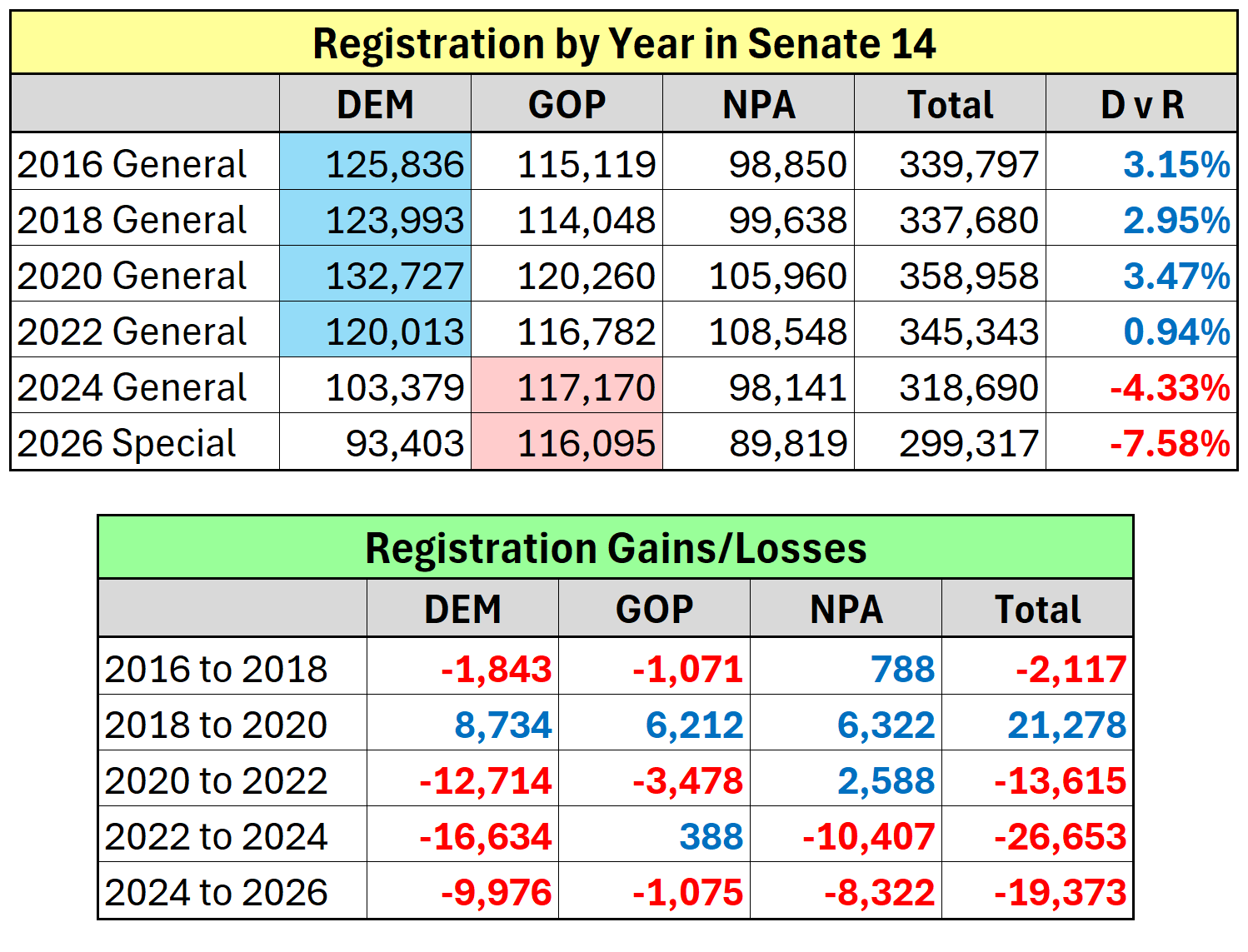
When Biden won the vote in SD14 back in 2020, the Democrats had a 3.5% voter registration lead. However, by the time we got to 2024, the Republicans had a lead of 4.3%. The shifts in registration have a strong correlation with the support candidates get in the elections; which you can see in the table below. It shows the Dem vs GOP margin in vote cast and how the President/Governor candidates got in the district. The gap between the two “party loyalty” never got past 6%.
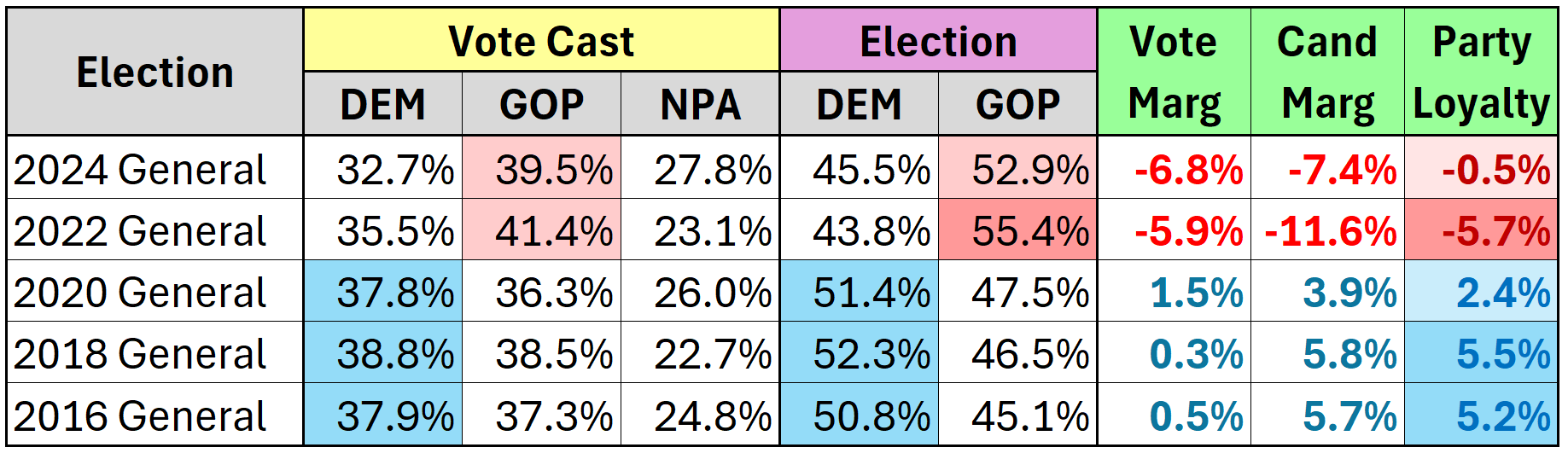
We did see in 2022 and 2024 that the Democratic candidates (Crist for Governor and Harris for President) under-performed the vote cast margin. This was partly due to Hispanic Democrats defecting; especially in 2024. The 2022 midterm gap was also driven by more conservative-leaning independents showing up compared with liberal-leaning ones. To flip the seat, Democrats will need a strong “party loyalty” showing, as the final vote will almost surely lean Republican.
The democratic candidate here is Brian Nathan, who serves as Vice President of the International Brotherhood of Electrical Workers local 915. He is facing Republican State Representative Josie Tomkow. A profile of the race can be seen here. A big issue in the campaign has been that Tomkow has been the representative for a Polk County state house seat, which is not in the district - or even in the same county. Nathan has made this a major issue.
However, Tomkow benefits from far more financial backing. Between her official campaign and a political committee, she has raised AT LEAST $600,000. Nathan, meanwhile, has pulled in $100,000.
As of Friday night, here is the turnout report. Republicans have held a solid lead in early voting, while absentees are a near-tie. Democrats have stronger turnout as a %, but Republicans already have the vote-cast lead, something I don’t expect to change.
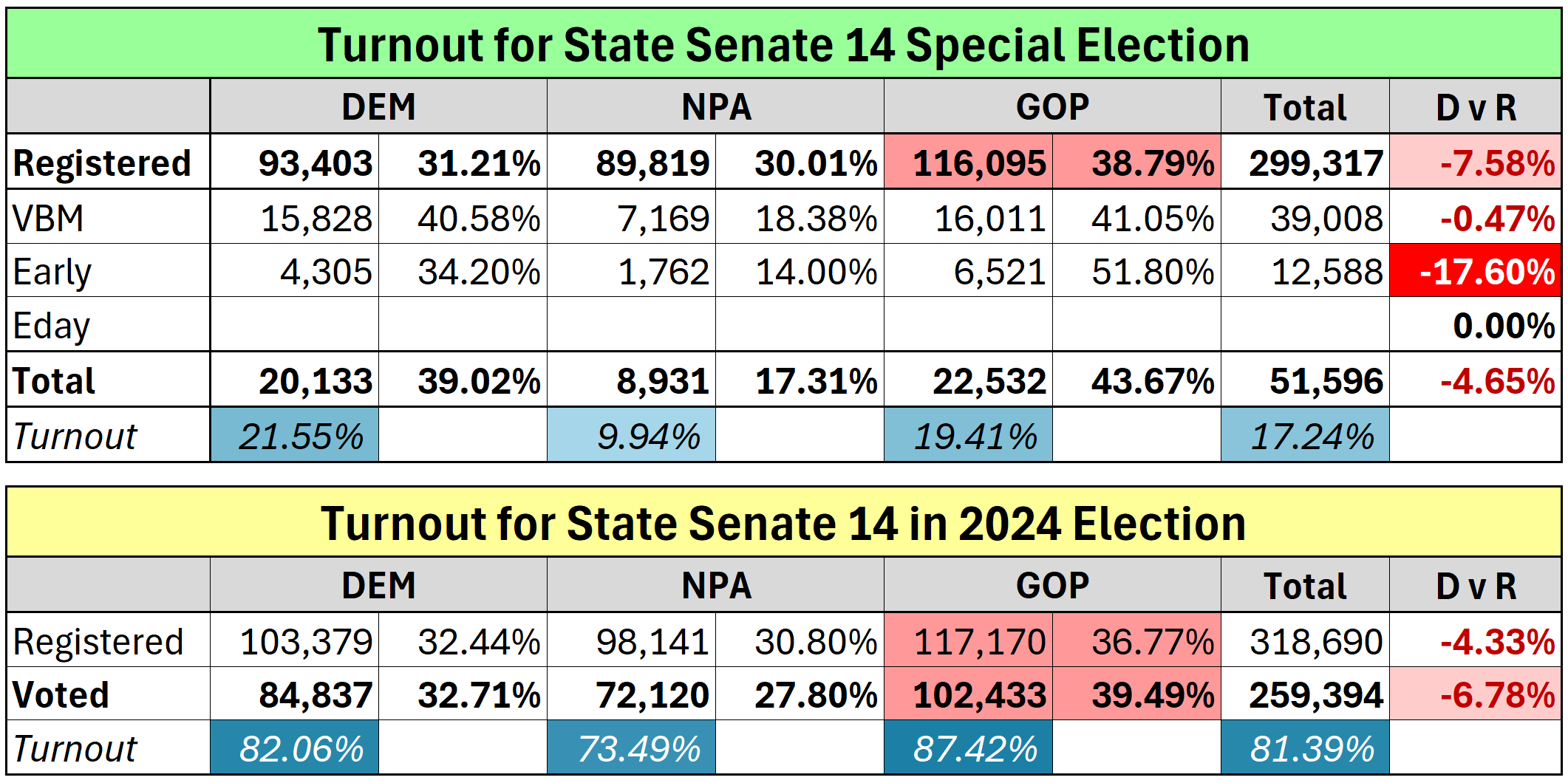
Democrats will want to come in at least with a final vote cast that is no higher than 2024’s 6.6% lead; hoping that a NPA swing to the left (and Hispanic democrats coming home) can propel an upset win.
Regardless of the outcome here, the district will be up again in November. If you asked me for a ratings, I’d say Lean Republican. Democrats would need a decent election day, not a guarantee, to have a chance. The financial disparity here is massive. A democratic win would be the result of a monumental Hispanic shift. Not out of the realm of possibility, but this is still a GOP-favored seat at the moment.
House District 87
Next up for discussion is the special election being held down in Palm Beach County. Of all three seats up, this is the district that Democrats have expressed the most optimism about potentially flipping. The coastal district goes from the Jupiter region in the north and stretches down into Lake Worth. Its shape is dictated by a neighboring Black-access seat that includes much of West Palm Beach. By looping around the more racially diverse parts of the county, the district is 72% white. The seat backed Trump by 10 points in 2024. It is also notably home to Trump’s Mar-a-Lago resort.
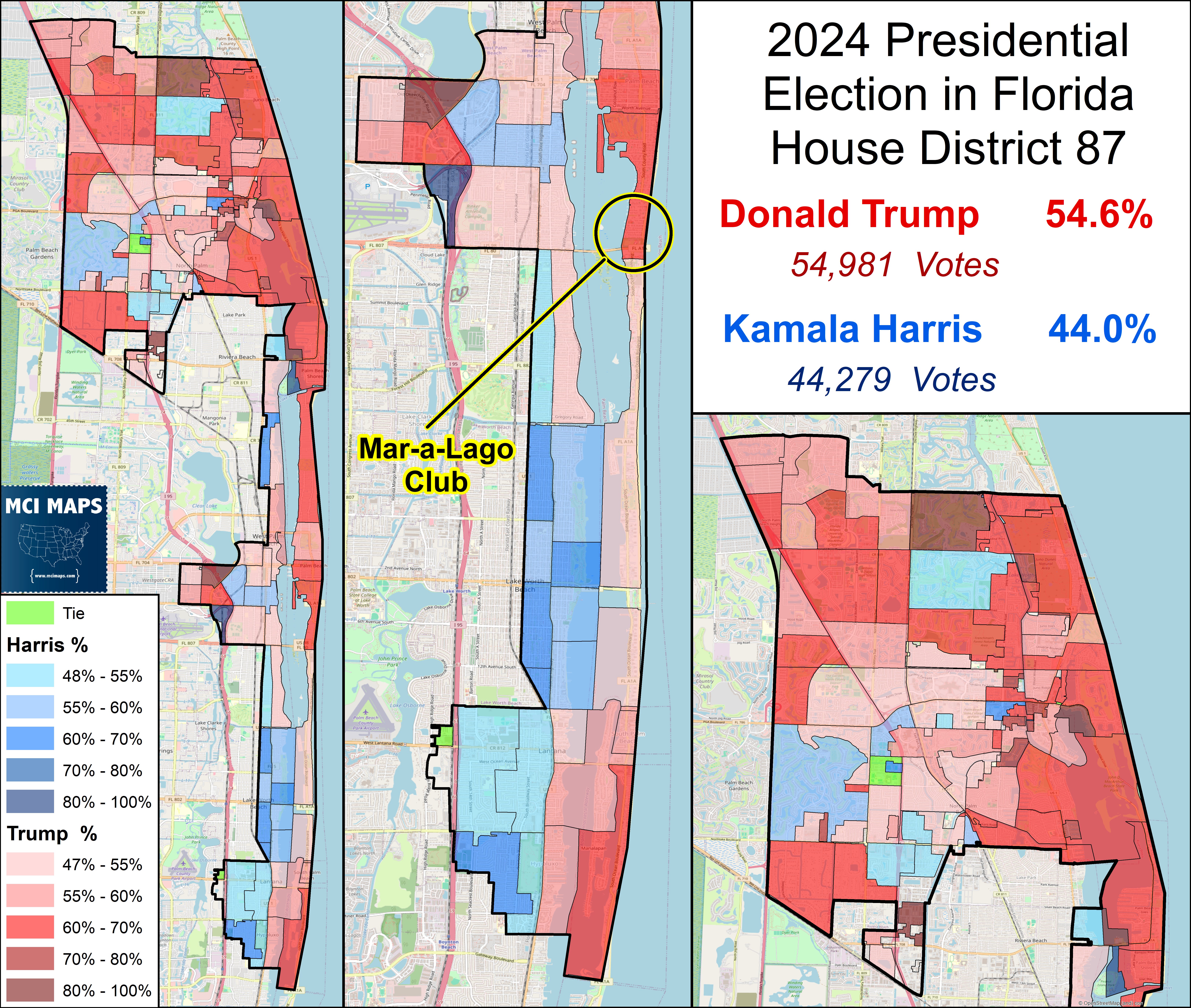
The district being home to Trump’s Florida residency makes it a tantalizing target for Democrats. The headline of “Democrats flip Trump’s own state house district” would definitely capture national attention.
In the 2020 election, the district was neck-and-neck, with Trump only winning the seat by 400 or so ballots.
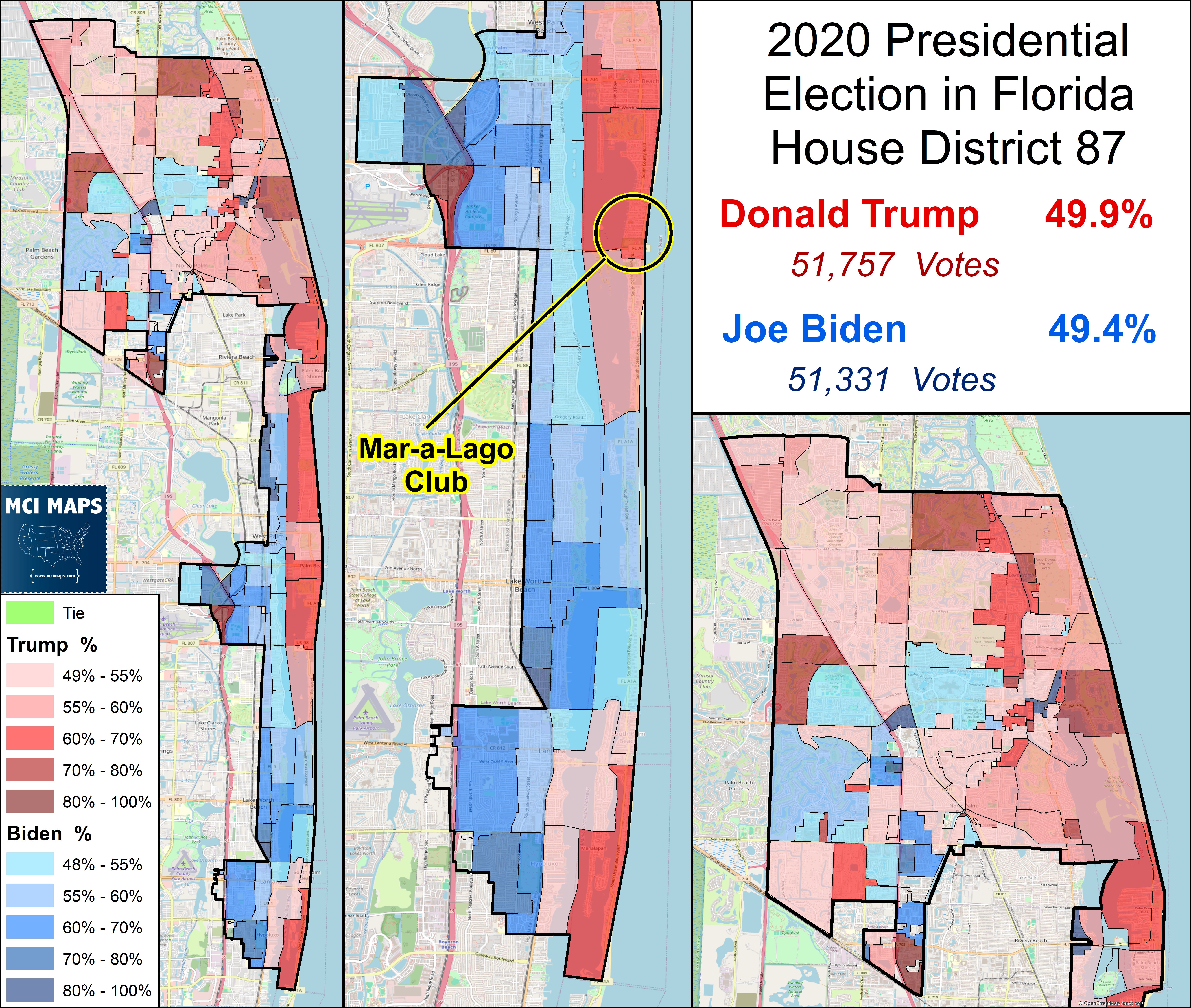
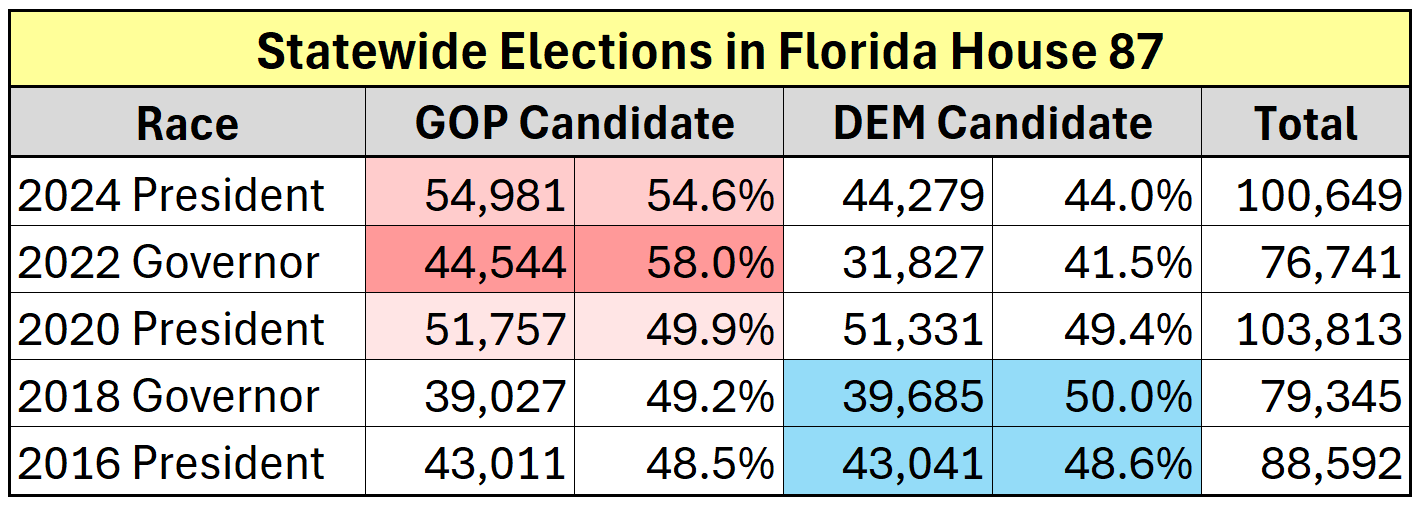
Historically the district has been competitive, narrowly voting for both parties in major races. However, in recent years it has trended much more to the right. The 2022 Governor election aside, a product of turnout, the Trump +10 win in 2020 was far greater than previous narrow margins.
Like the story with Senate 14, the big culprit for shifting partisanship is the shift in voter registration. Republicans have always had a registration lead in this district. However, in recent years, the drop in Democratic registration has taken a narrow GOP lead into what is now a 13% lead in registered voters.
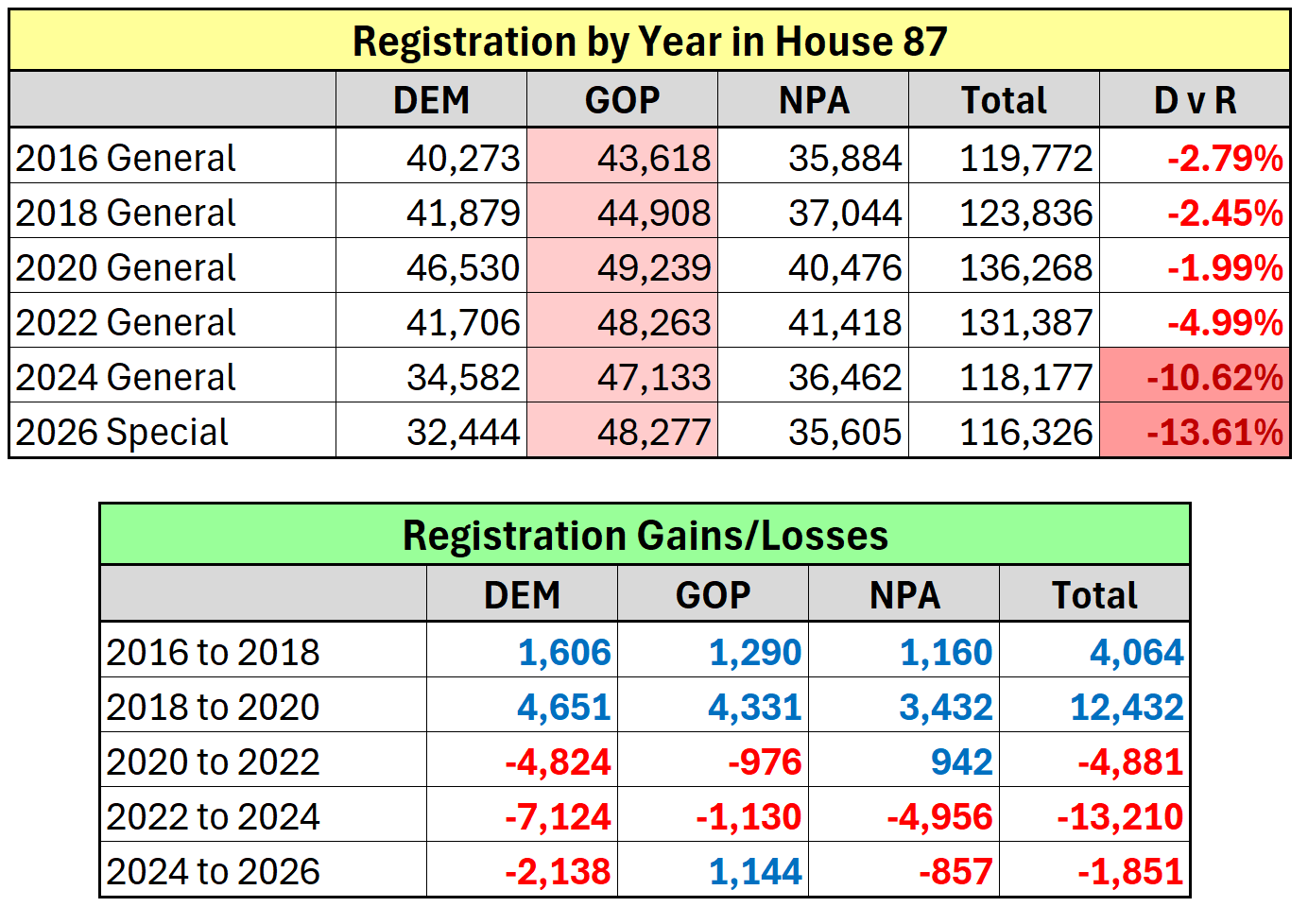
Even more so than in the case of Senate 14, the party makeup of vote cast has very closely mirrored how the district votes. With the lone exception of 2022, Democrats historically outperform the party metrics in this seat.
Both party candidates in this race have raised significant money. Democrat Emily Gregory, a business owner, has over $400,000 via her official campaign and a political committee. She has endorsements from many prominent Democrats and the state party has invested in the race; spending money and sending down staff to help with outreach efforts. Republican Jon Maples has raised over $400,000 and likewise has seen his party use resources for his campaign; with at least another $400,000 coming in from the state Republican party.
Maples, similar to Joe Tomkow, has seen issues of his residency come up in the contest. He was registered to vote at an apartment, but he insists his family has recently bought a house in the district. Republicans clearly feel the district is at risk, as a slew of direct mail from the state party has poured into the race. This race is really seeing both parties invest.
In contrast with Senate 14, the absentee ballot voting here leans Democratic. As mentioned earlier, this is driven by a larger Democratic retiree population, and they have re-signed up for vote by mail at a greater rate. This has, however, made in-person early much redder.
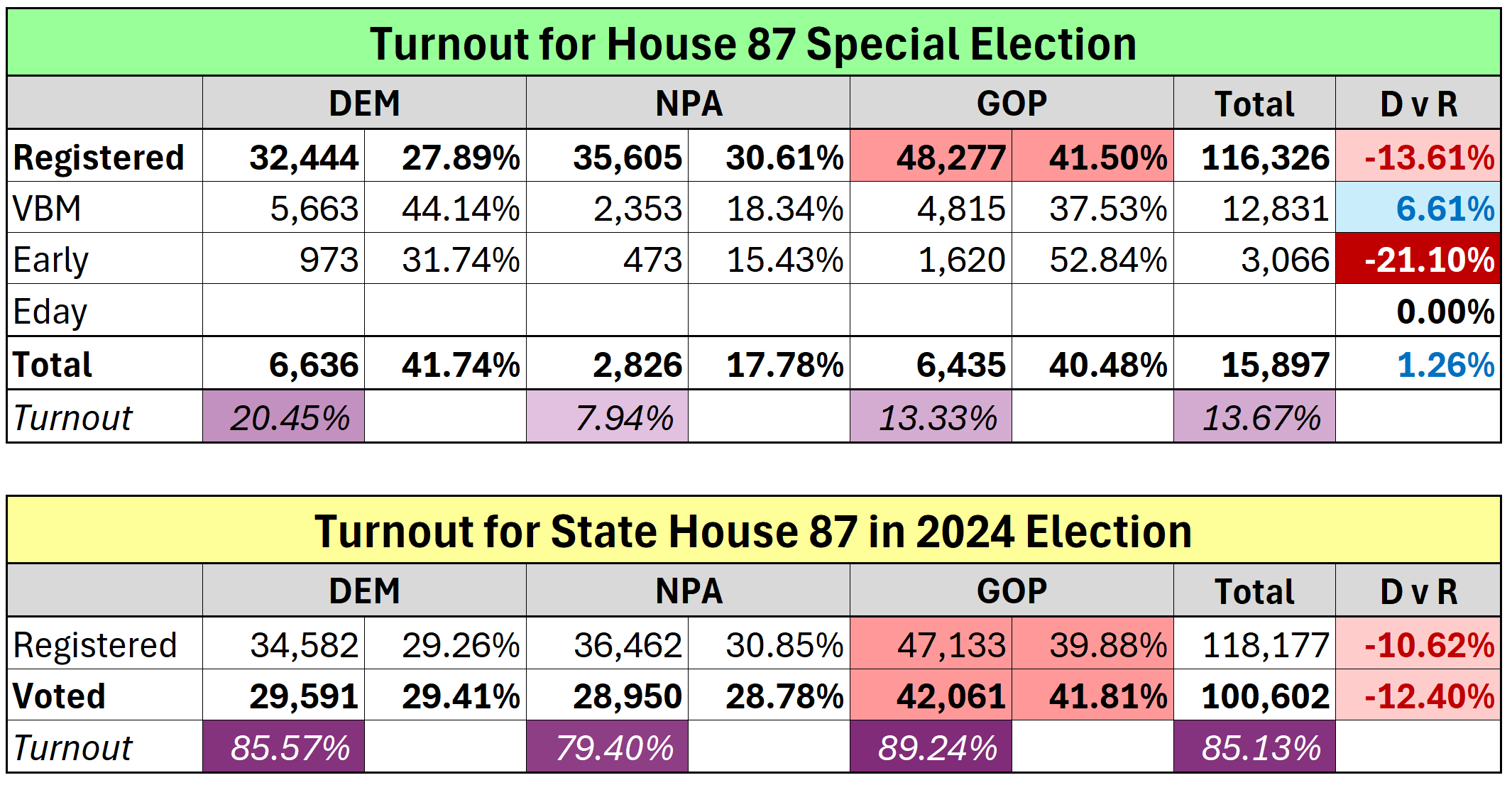
Right now the Democrats have a vote cast lead, but do NOT expect that to hold. Election Day will be red and Republicans will claim the lead. Remember the registration here is GOP +13. The issue for Democrats will be if the have a final vote that is less red than 2024 and how NPAs break.
I view this race as a tossup. Both parties are clearly taking it serious and the Democratic candidate is proving to be a real force.
House District 51
Of the three special elections being held on Tuesday, the race for Polk County’s House District 51 has been the most low profile. This district, which covers the north end of the county and includes several towns like Polk City and Davenport, is an increasingly diverse district that is 53% white and 29% Hispanic.
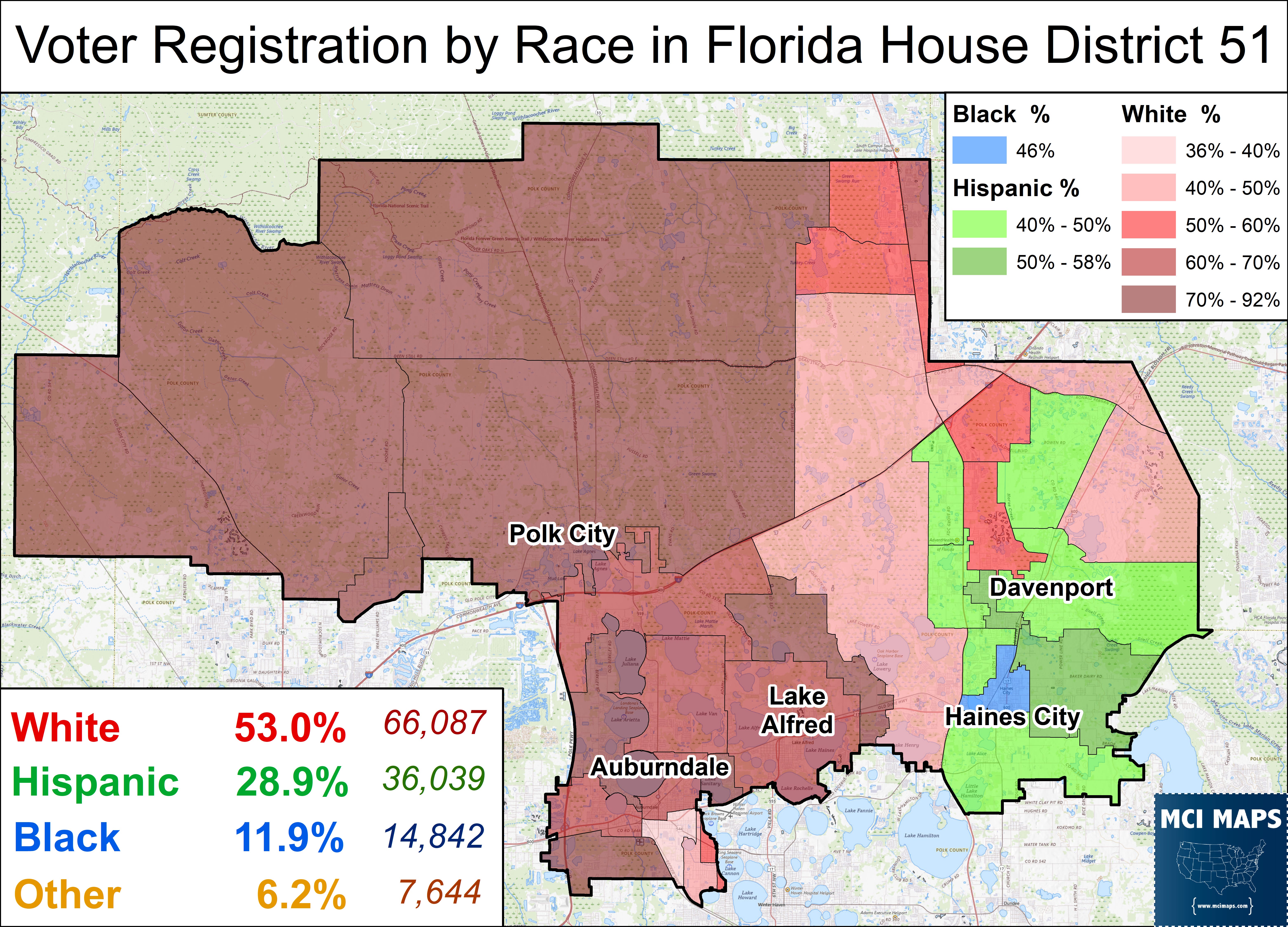
Unlike the Hispanic population over in Senate 14, the population here is heavily Puerto Rican. Estimates put Puerto Ricans at 45% of the Hispanic population, with Mexicans at 22%. However, since Puerto Ricans have a higher citizenship rate, they are likely over 50% of the Hispanic voter base.
The district has always leaned Republican, but often by modest margins. In the 2020 election, Donald Trump won the district by 6%; largely winning the whiter areas while Joe Biden won the Hispanic communities.
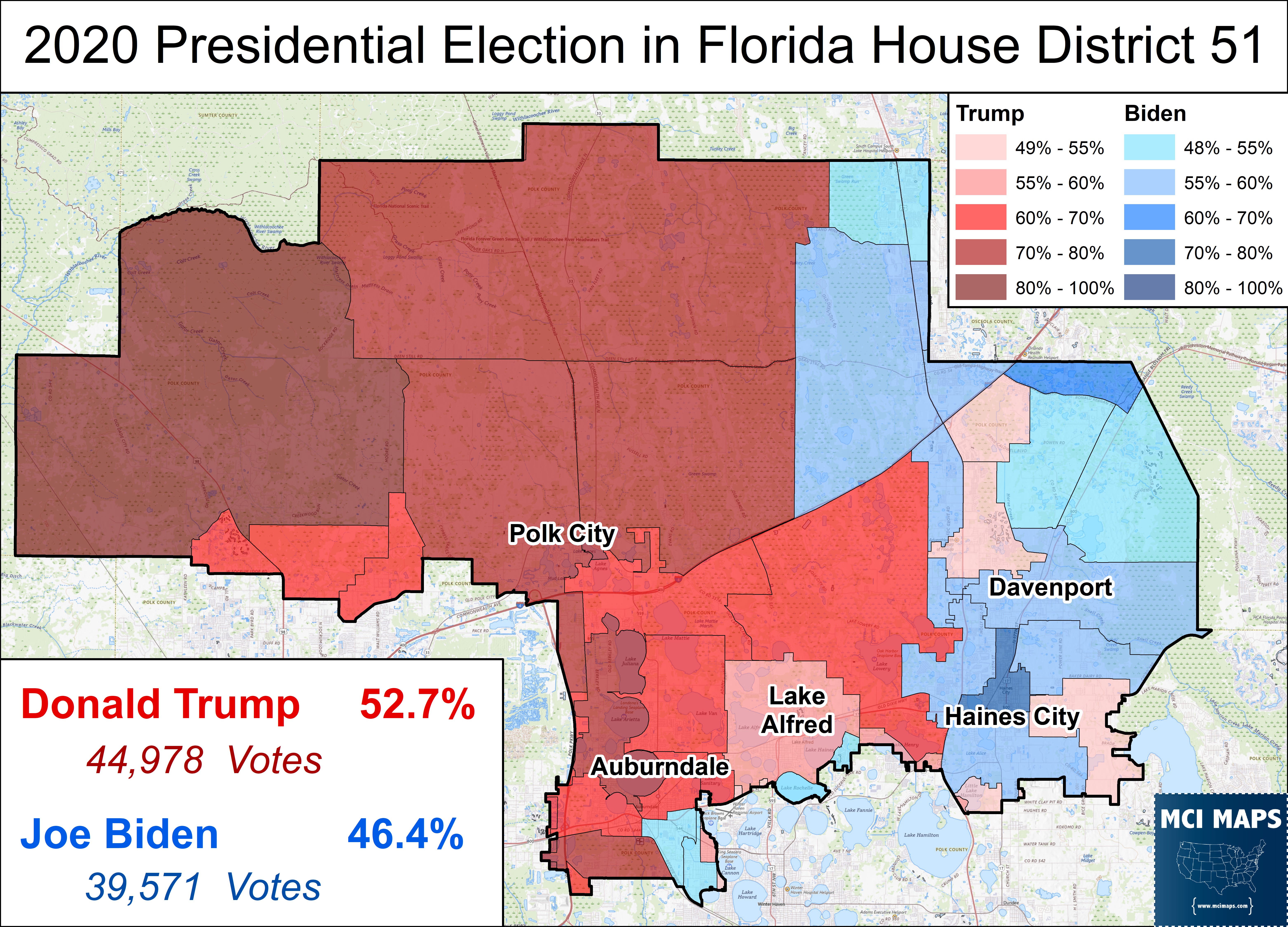
The 2024 election, however, saw a sizeable swing to the right; with Trump taking the district by 13.6%. Trump further consolidated rural white voters and won over many of the Puerto Rican community; who found affordability their main issue in the election. I covered the swing of Puerto Rican voters in my piece on neighboring Osceola County. You can read that post here.
Polk County does not have a strong bench for Democrats. The last Democratic official, Elections Supervisor Lori Edwards, lost re-election as an independent in 2024. As a result, this race has been a quite affair that most expect Republicans to win.
The two candidates for this race are Republican Hilary Holley and Democrat Edwin Perez. Holley, who once worked for Agriculture Commissioner Adam Putnam and currently works at the Florida FFA Foundation, was the Republican establishment pick for the seat. Perez, meanwhile, jumped in the race at the last minute to ensure the party had a candidate for the special, notably driving to Tallahassee the morning of qualifying to ensure he made the ballot. A former Haines City Commission candidate, Perez is a big underdog.
This sleeper race has generated much less money. Holley has raised $120,000 while Perez has raised just $15,000. With a quieter campaign, turnout is lower here, but the vote cast is decidedly Republican. It is the only race, as of right now, where Republicans have a higher % of their voters turning out.
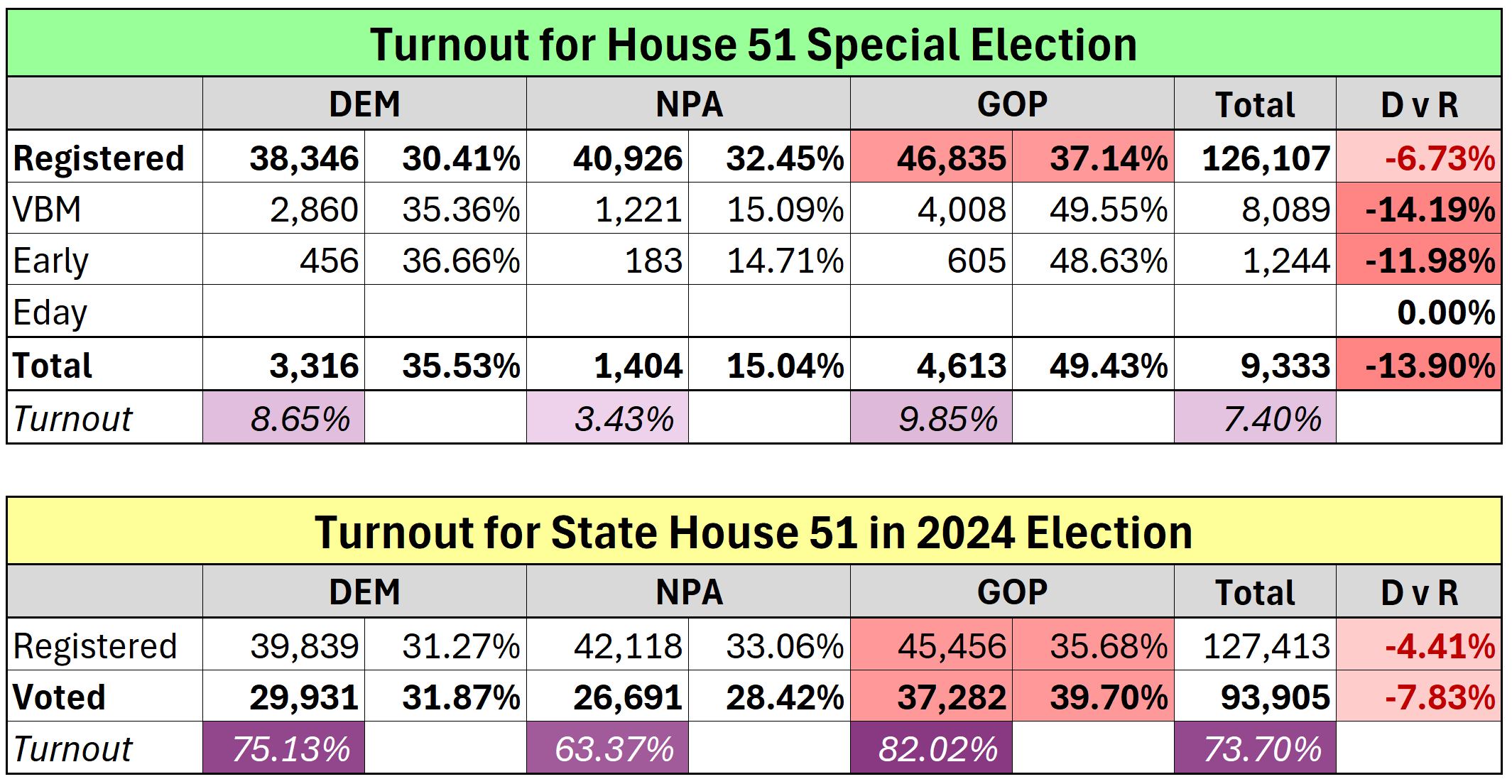
Right now the vote in House 51 is solidly more Republican than the registration. This reflects the lack of Democratic resources to get the vote out. This is not Perez’s fault, as he is doing what he can. It reflects the lack of any real Democratic infrastructure in Polk County. With Senate 14 and House 87 dominating attention, this race has fallen to the wayside.
Barring a crazy swing in party loyalty, and a better-than-expected election day, this race will stay with the GOP. I’d say Likely Republican. Its not “safe” because of the inherent unpredictability of special election turnout. The GOP has a very clear advantage, however.
Final Notes
We will see how these races shake out on Tuesday. If Democrats fail to flip any race, or come flip HD87 but come painfully close in SD14, then alot of attention needs to turn to the voter registration dynamics. To me, the registration shifts in each district is a sign of a growing problem. Districts once much closer in 2020 are no longer easy to win because the electoral pool is redder than ever before.
Win or lose, Democrats need to get the registration shifts under control. This is something I will be writing about more in the spring and summer.
In the meantime, if you need some reading before Tuesday, check out my Florida History series on Reconstruction in Florida toward the rise of Jim Crow. I am currently still working on the next chapter of this detailed look at the rise of Black voting rights after the Civil War and the eventual crushing start of the Jim Crow era.
Perhaps worth reading as our modern democracy cracks under this autocratic President.